Dissonance Reduction
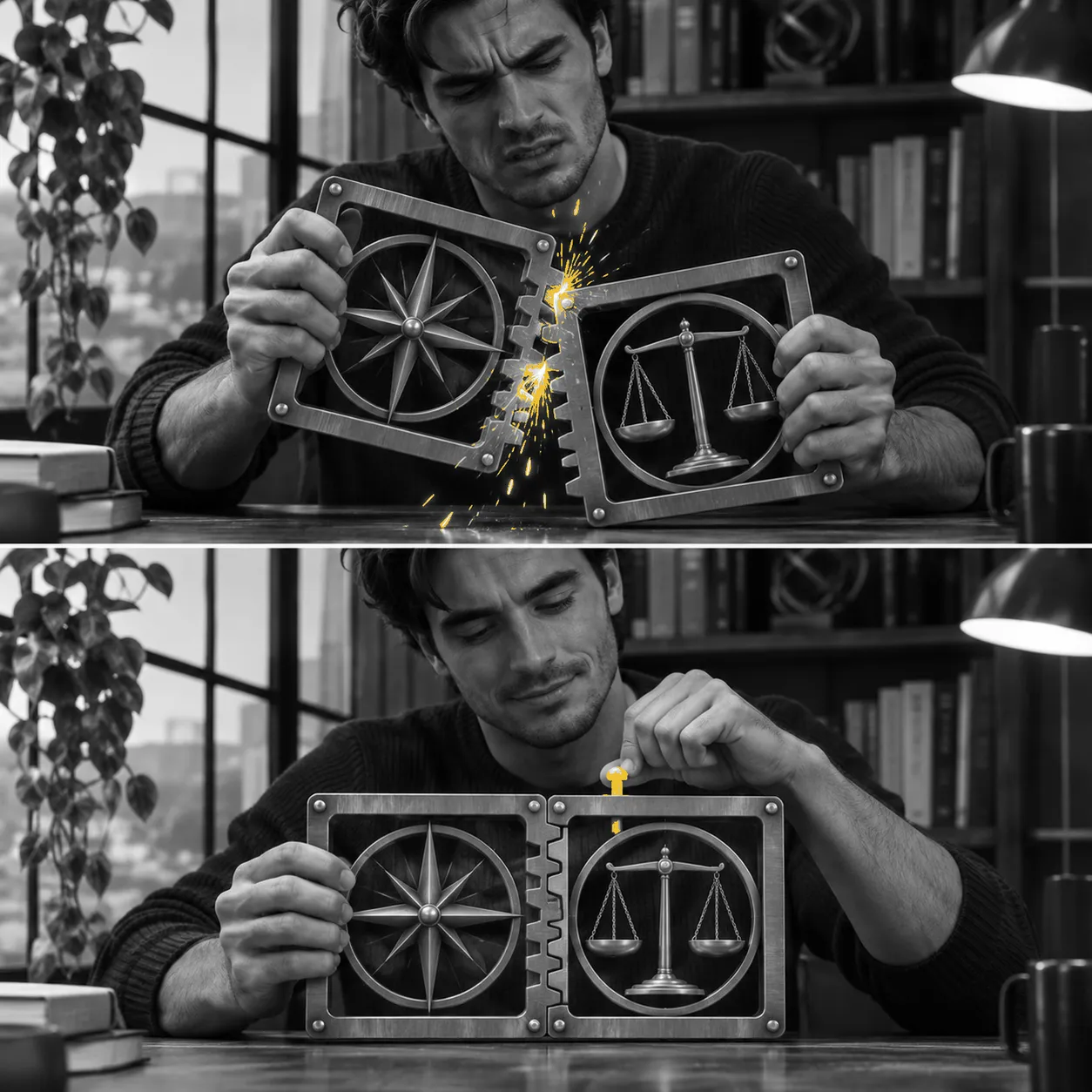
Easing the discomfort of a clash between belief and behaviour, most often by changing the belief.
What it is
When what a person does and what they believe pull apart, the tension can be eased by changing the behaviour, changing the belief, or adding a reason that makes the two fit. In the 1959 forced-compliance study, people paid a small sum to call a dull task enjoyable later rated it more favourably than people paid a large sum, who had an outside reason for what they had said. Jack Brehm proposed in 1956 that choosing between options works the same way, with the chosen option raised and the rejected one lowered afterwards.
In effect
In the article on cognitive dissonance, it names the step after the clash: the change of view that lets a person keep acting as they did.
What it does not say
It describes a tendency, not a rule. A 2024 multilab replication of the induced-compliance design did not find the difference between high and low choice that the theory predicts, so the size of the effect in that design is an open question.
Sources
- Festinger, L., & Carlsmith, J. M. (1959). Cognitive consequences of forced compliance. Journal of Abnormal and Social Psychology, 58(2), 203-210.
- Brehm, J. W. (1956). Postdecision changes in the desirability of alternatives. Journal of Abnormal and Social Psychology, 52(3), 384-389.
- Vaidis, D. C., Sleegers, W. W. A., van Leeuwen, F., DeMarree, K. G., et al. (2024). A multilab replication of the induced-compliance paradigm of cognitive dissonance. Advances in Methods and Practices in Psychological Science, 7(1).