Eucatastrophe
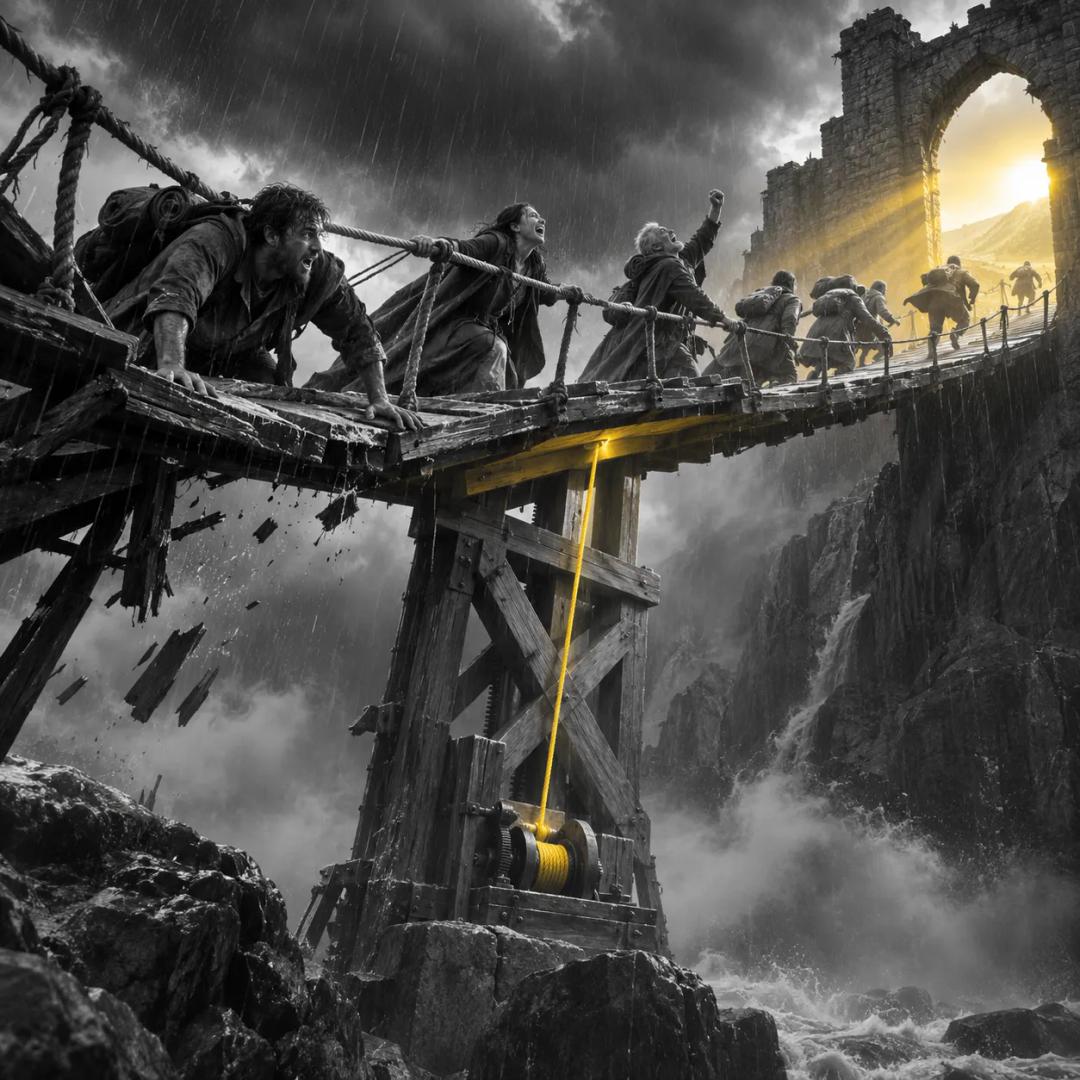
Eucatastrophe is J. R. R. Tolkien's word for a sudden upward turn in a story, a reversal that changes what looked like a falling course into joy. He coined it in his essay On Fairy-stories, which grew from a lecture of 1939 and was published in 1947.
What it is
Tolkien used the word for the moment when sorrow turns to joy against what the story had led the audience to expect. In his account the turn works only if disaster has seemed a real possibility. A rescue that was never in doubt carries no weight, because there was nothing to be turned.
He set the term down in an essay about fairy-stories, and the essay grew from a lecture he gave in 1939 before it appeared in print in 1947.
In effect
In the article on why readers call The Lord of the Rings the best book ever written, eucatastrophe is linked to the book's ending and to research on media enjoyment. Melanie Green, Timothy Brock and Geoff Kaufman wrote in 2004 that enjoyment of a story can come from the immersion itself and from what follows it, including bonds with characters and personal change. A reader who has been fully absorbed and then meets a turn that resolves the story's long dread may feel both. The link between Tolkien's term and that research is an interpretation made on this site; the research did not study the term or the book.
What it does not say
It does not name a measured psychological effect. It is a term from a literary essay, and no experiment cited here tests it. It also does not describe every happy ending. In Tolkien's usage the turn follows a real sense of possible defeat, which is what separates it from an ending that was never in question.
Sources
- Tolkien, J. R. R. (1947), On Fairy-stories.
- Green, M. C., Brock, T. C. and Kaufman, G. F. (2004), Understanding media enjoyment, Communication Theory.