Expert Intuition
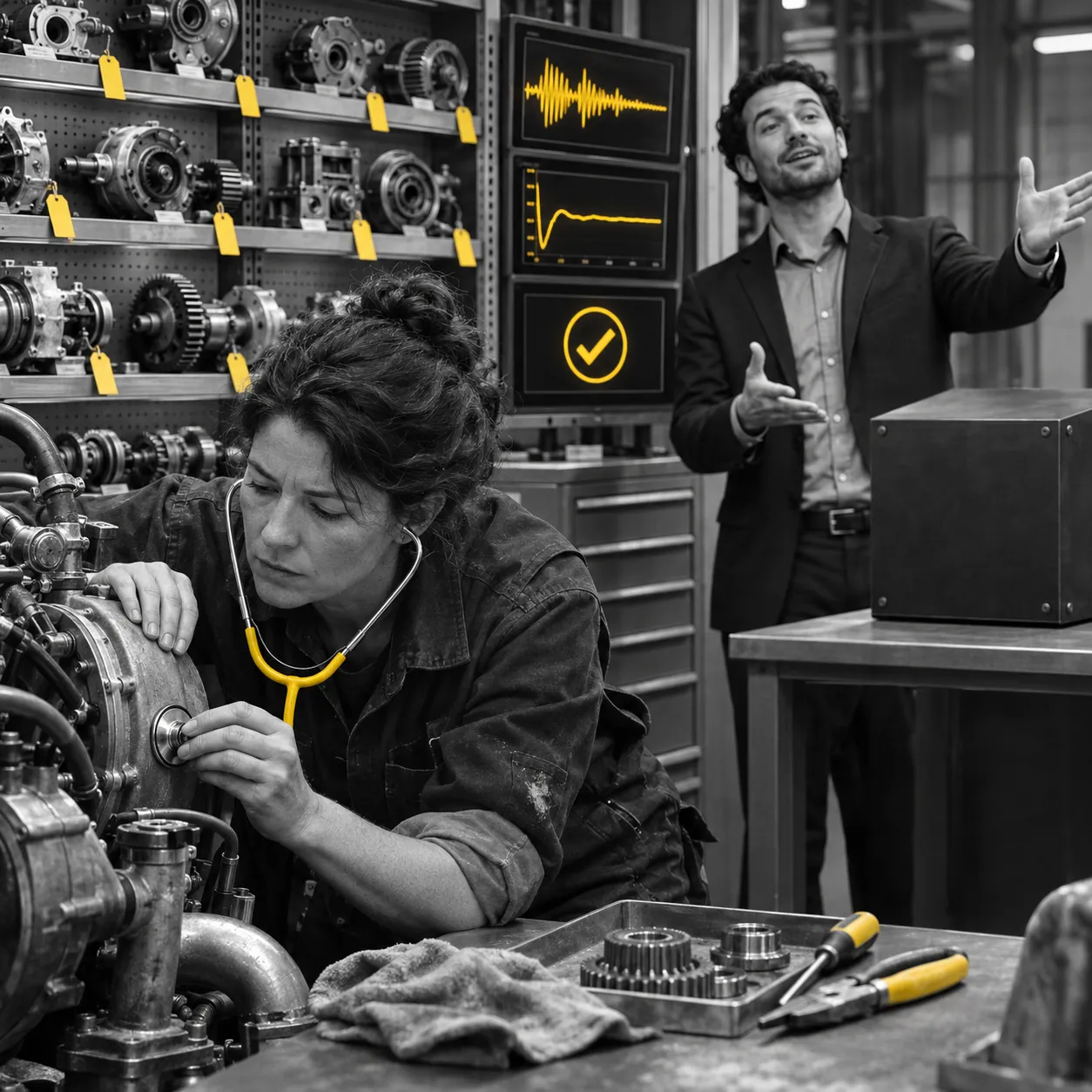
Expert intuition is the name for a practical question: when can a professional's immediate, unreasoned judgement be trusted? Daniel Kahneman and Gary Klein answered it in a 2009 paper in American Psychologist. They concluded that the likely quality of an intuitive judgement depends on how predictable the environment is and on whether the person has had the opportunity to learn its regularities. They also concluded that how sure an expert feels is not a reliable indicator of how accurate the judgement is.
What it is
The paper, Conditions for Intuitive Expertise: A Failure to Disagree, came out of an effort to compare two approaches to intuition and expertise that are often viewed as conflicting. One is the heuristics and biases tradition, which Kahneman helped to found. The other is naturalistic decision making, the field Klein founded. The collaboration ran for six years, and the title records the outcome: on the central question the two sides found that they did not disagree.
The starting point was a plain observation. Professional intuition is sometimes marvellous and sometimes flawed. Instead of arguing over which description is the true one, the authors set out to map the boundary conditions that separate real intuitive skill from overconfident and biased impressions.
Two conditions carry the answer. The first is that the environment must be predictable enough to contain cues that carry real information. The second is that the person must have had the opportunity to learn those regularities, through practice in which the results come back to them. Where both hold, an immediate judgement can be a skilled one. Where either is missing, the same feeling of knowing can arrive without the skill behind it.
The third conclusion is the one that does the most work in practice. Subjective experience is not a reliable indicator of judgement accuracy. An expert who feels certain is not, for that reason alone, more likely to be right, which is why the test is applied to the environment and to the learning history and not to the feeling.
In effect
The conditions turn a general worry about experts into questions that can be asked of any particular judgement. How regular is the setting in which this judgement is made? Has the person had a fair chance to see what happened after earlier judgements of the same kind?
Domains with a stable structure and quick, clear results, such as chess, flying or anaesthesia, fit the conditions well. Domains in which results arrive slowly, arrive in noisy form or never arrive, such as long-range forecasting, fit them less well. Many real roles contain both kinds of judgement, so the practical consequence is that the conditions apply to a judgement and not to a person. The same professional can be well placed to judge one thing and poorly placed to judge another.
The idea is useful to anyone who has to choose an expert on the strength of how they present. A buyer cannot assess the inner workings of a specialist's judgement, but can ask how the specialist finds out whether earlier work performed, how soon that information returns, and what changed as a result. The article on choosing a branding partner uses exactly this step, and it is an application of the paper, not something the paper itself says about branding.
The idea sits close to two others. Substitution describes how a pitch can stand in for the quality of the work, and Source Calibration describes how listeners appear to weigh a source's confidence against its record.
What it does not say
It does not say that experts are generally reliable or generally unreliable. The paper's contribution is a way of telling which situation applies.
It does not treat years of experience as sufficient on their own. The conditions concern the environment and the opportunity to learn from it, and time served does not supply either by itself.
It does not give a score or a checklist for ranking professions. The authors describe boundary conditions, and judging how closely a given field meets them is left to the reader.
It does not address branding, design, consulting or any other specific line of work, and the examples on this page are illustrations of the two conditions and not findings of the paper.
Sources
- Kahneman, D., & Klein, G. (2009). Conditions for intuitive expertise: A failure to disagree. American Psychologist, 64(6). https://doi.org/10.1037/a0016755
- Kahneman, D. (2011). Thinking, Fast and Slow.
- Lee, H. The Art of Clear Thinking.