Fear Dose Management
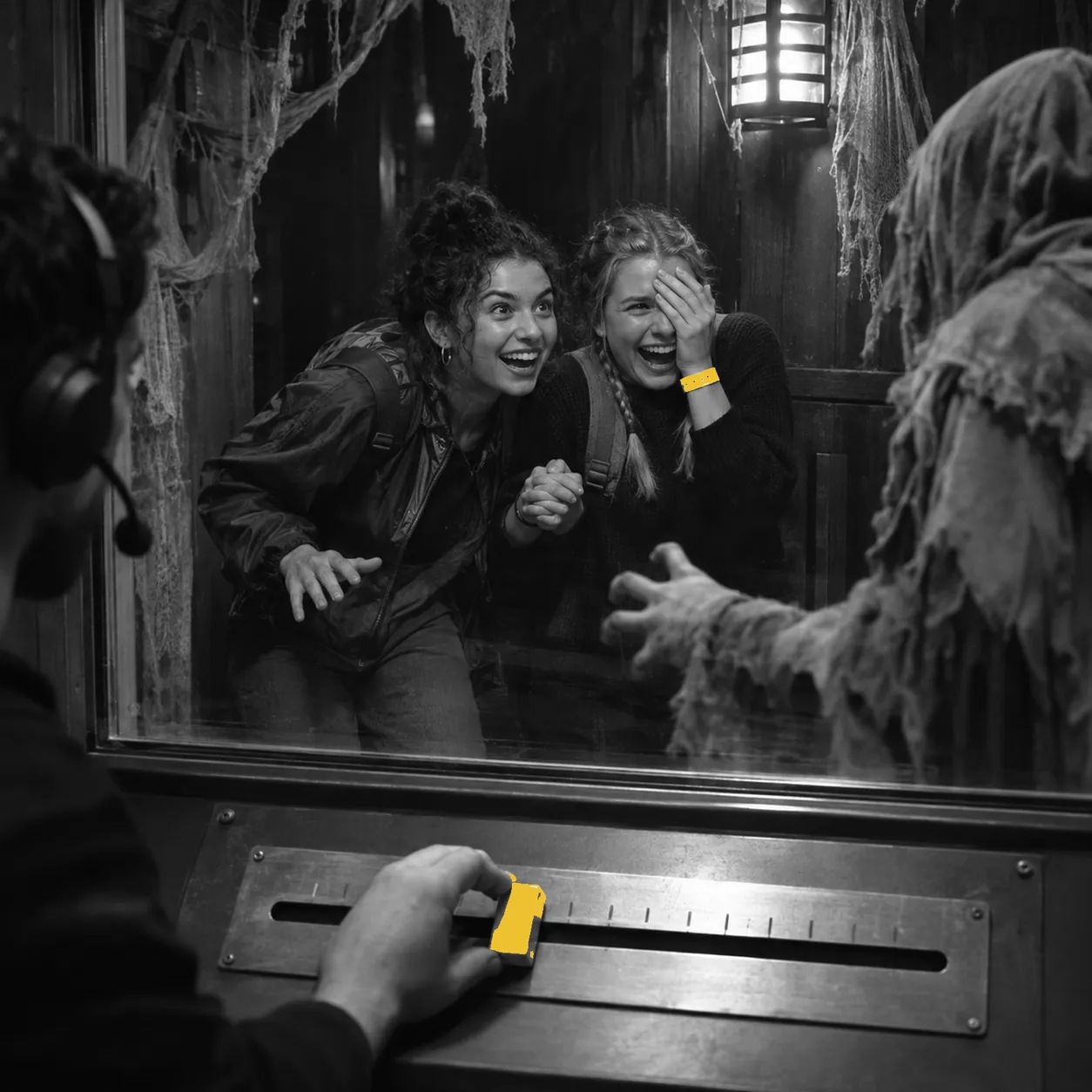
Fear dose management is the set of strategies people use to raise or lower their own fear. A 2019 study of haunted attraction visitors found that thrill-seekers and fear-avoiders both used cognitive, behavioural and social strategies, and that enjoyment was similar across the two groups.
What it is
Mathias Clasen, Marc Malmdorf Andersen and Uffe Schjoedt asked haunted house visitors to try to maximise or minimise their fear, and then collected interviews and questionnaires. Both groups used strategies applied before the scare and strategies applied in response to it; these included thinking differently about what was happening, changing what they did and looking to others for support. The thrill-seekers also used some strategies that heightened fear, and they reported stronger fear overall.
The notable result is that enjoyment was similar in both groups. People who set out to reduce their fear enjoyed the experience about as much as people who set out to increase it.
In effect
In the article on why we enjoy horror films, the idea shows that viewers shape the scare they receive. A person who covers their eyes, talks through a scene or sits close to a friend is adjusting the dose. The everyday examples in the article are our illustration and were not tested in the study.
What it does not say
It does not say that any one strategy works best, and it does not show that managing fear leads to more enjoyment.
Where it comes from
The term is used on this site for findings from Clasen, Andersen and Schjoedt, published in Poetics in 2019, volume 73. The authors studied haunted attraction visitors, people who pay to be frightened, and asked how they regulate the fear they feel. Their work belongs to a group of studies of horror consumption, with Andrade and Cohen's 2007 paper on coactivation of feelings an earlier example.
What the research found
Visitors were asked to maximise or minimise their fear, which created groups of thrill-seekers and fear-avoiders, and interviews and questionnaires were collected. Both groups used strategies before the scare and in response to it, whether cognitive, behavioural or social. Thrill-seekers also used some strategies that heightened fear. They reported stronger fear overall. Enjoyment was similar across the groups.
A second study by Andersen, Schjoedt, Price, Rosas, Scrivner and Clasen, in Psychological Science in 2020, followed 110 visitors aged 12 to 57 with heart rate monitors, video of scare points and repeated self-reports. Enjoyment followed an inverted U against fear, rising and then falling. Feeling frightened tracked large-scale changes in heart rate in a straight line, and enjoyment followed an inverted U with small-scale fluctuations. The authors suggest the pattern reflects arousal that is just right.
Where opinion differs
Whether managing fear makes the experience better is not shown. The 2019 study found similar enjoyment across groups who aimed for different levels, which suggests that people can reach a pleasant level from different starting points, and the 2020 study suggests a middle range of arousal is best. Andrade and Cohen's account stresses the co-presence of positive and negative feelings with a protective frame. These readings are compatible, and this site presents them side by side.
How this site uses it
The Why We Project uses fear dose management in the article Why We Enjoy Horror Films, to show that viewers shape the scare they receive. The everyday examples, such as covering the eyes or sitting close to a friend, are the site's own illustration and were not tested in the study.
Sources
- Clasen, M., Andersen, M. M., & Schjoedt, U. (2019). Poetics, 73, 61-71.
- Andersen, Schjoedt, Price, Rosas, Scrivner and Clasen (2020). Psychological Science, 31(12), 1497-1510.
- Andrade, E. B., & Cohen, J. B. (2007). Journal of Consumer Research, 34(3), 283-300.