Film Music and Memory
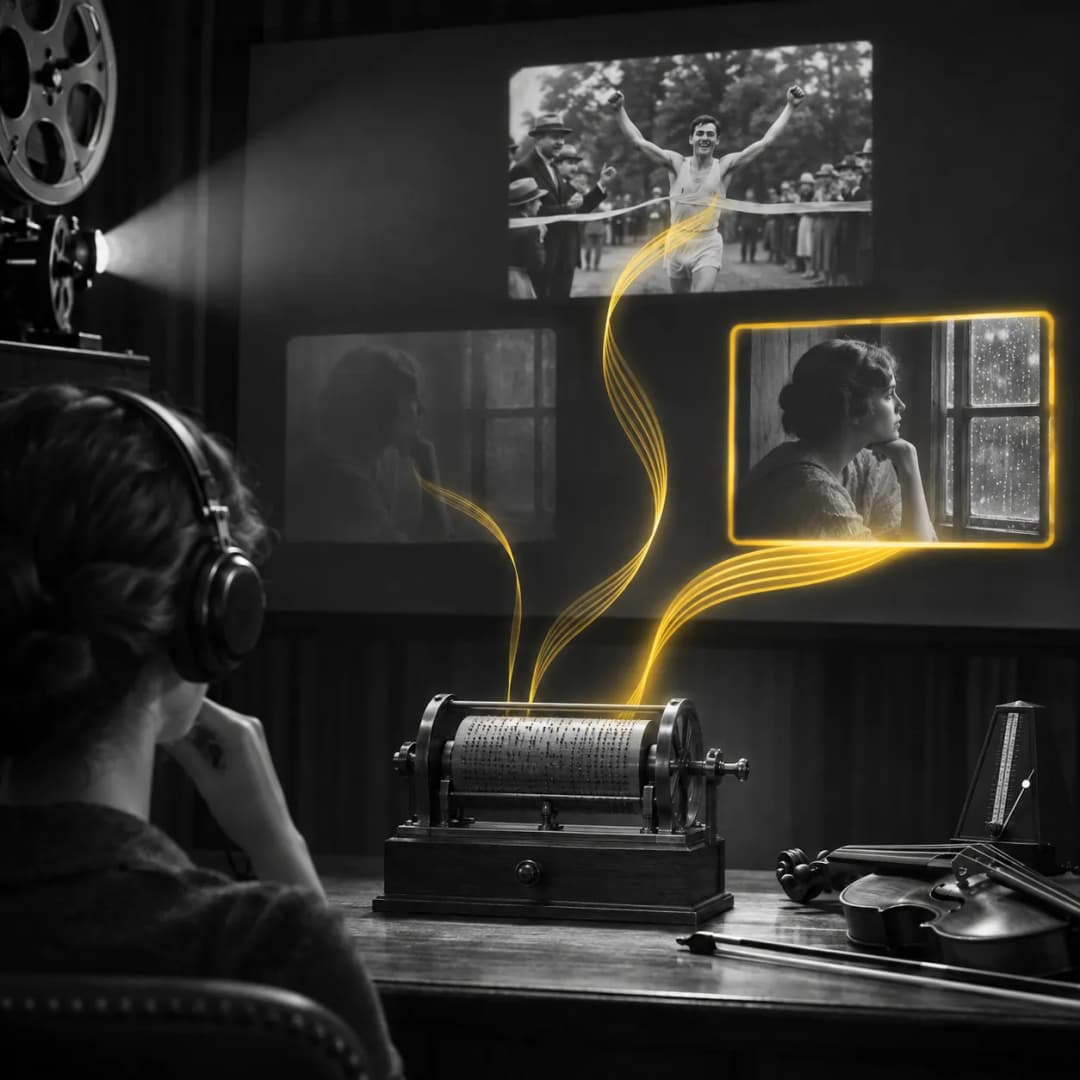
Film music and memory is the experimental finding that music played with filmed scenes changes what viewers remember. In a 1991 study, Marilyn Boltz, Matthew Schulkind and Suzanne Kantra found that music matching a scene's outcome helped remembering, and that clashing music played before a scene helped as well.
What it is
The researchers used background music in films to study schematic processing, the way viewers use expectations about how a scene will go. Music that matched the mood of a scene's outcome and was played with it aided remembering. Music that clashed with the mood and was played before a scene also aided remembering. Scenes that participants could not recall were recognised when they heard the music that had accompanied them.
The authors attributed the effects to music directing selective attention: it points the viewer toward some parts of a scene, and what is attended is what is stored.
In effect
In the article on why The Lord of the Rings movies are so good, the findings are used to explain how a recurring theme can tie scenes together in memory. A theme heard with one scene and again with another gives both a shared cue, and Charan Ranganath's account in Why We Remember, in which distinctive, attended experiences last, fits the same picture. The step to a feature-film trilogy is an interpretation made on this site, because the experiments used other films.
What it does not say
It does not show that any particular score improves memory for a particular film. The study tested the effect of music on remembering filmed events in a research setting. It also does not say that music is the only route to memory for film; it describes one route, attention, that the authors proposed.
Sources
- Boltz, M., Schulkind, M. and Kantra, S. (1991), Background music and the remembering of filmed events, Memory and Cognition.
- Ranganath, C., Why We Remember.