First Come, First Served
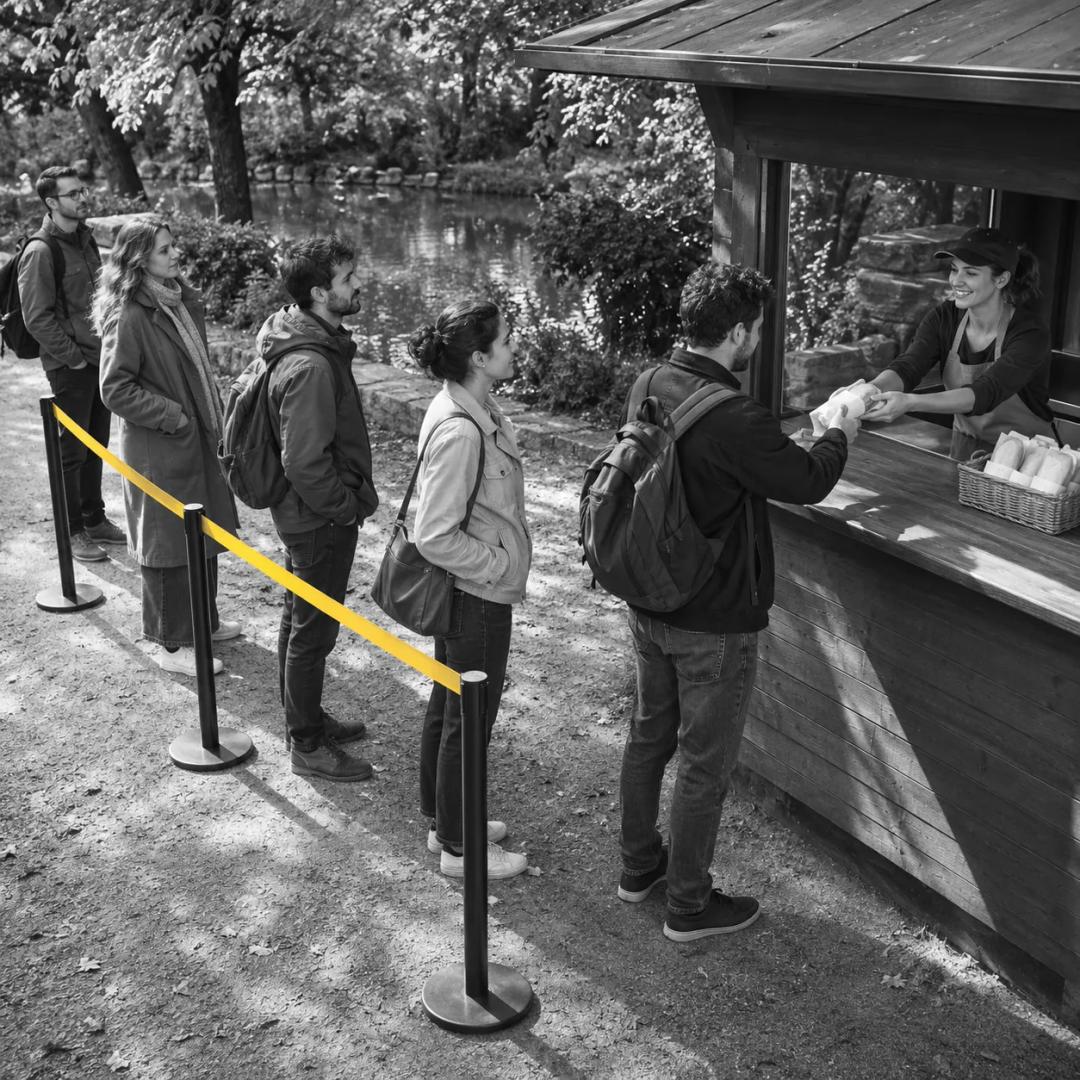
First come, first served allocates a scarce good or service by order of arrival, so everyone pays in the same currency, time. In a public survey it was the allocation method most often judged fair.
What it is
The rule gives the place to whoever arrived first. It is the logic of the queue, a small social contract in which strangers stand in order and police it together.
In effect
Bruno Frey, Pommerehne and Gygi described a hiking spot with a well selling bottled water, where on a hot day demand exceeded the 100 bottles available. In the general population, 76 per cent judged first come, first served fair, against 27 per cent for raising the price, 13 per cent for a random procedure and 42 per cent for allocation by the local administration. Economics beginners judged the price rise fair at 65 per cent and advanced students at 49 per cent.
What it does not say
The figures come from one scenario with bottled water, not from queues for airport lanes or tickets. Fairness views differed by group, as the economics students show. The rule is also not free of cost: it asks everyone to spend time.
Sources
- Frey, B. S., Pommerehne, W. W., & Gygi, B. (1993). Economics indoctrination or selection? Some empirical results. The Journal of Economic Education, 24(3), 271-281. https://doi.org/10.1080/00220485.1993.10844799
- Ariely, D. Predictably Irrational.