Flow State
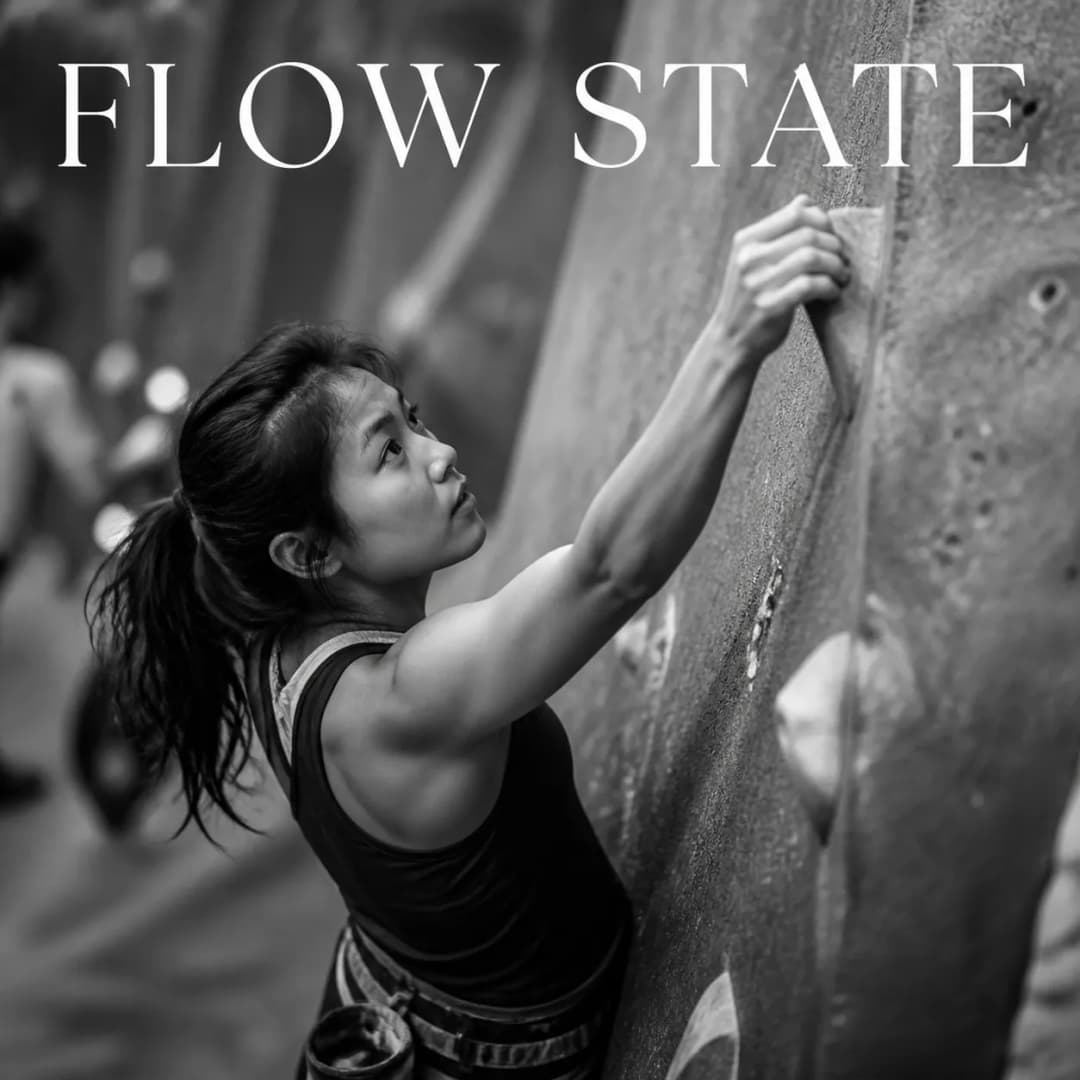
Flow is Mihaly Csikszentmihalyi's name for optimal experience: the total absorption that arrives when a task's difficulty sits just past your current skill, close enough that you might fail and near enough that you can just about win. It is a genuinely good state on its own terms. It is also an engineering target, because the same difficulty-tuning that produces flow in a well-made game produces it in a well-made slot machine. The state carries no verdict on the thing producing it.
What it is
Csikszentmihalyi spent decades asking people when they felt most alive, and the answers kept describing the same conditions rather than the same activities. A surgeon, a rock climber, a chess player and a violinist gave structurally identical accounts: a task with clear demands, feedback arriving continuously, difficulty pitched at the edge of what they could currently manage, and a resulting absorption in which self-consciousness and the sense of time both drop away. He called it optimal experience, and named the state flow. The full account is in Flow: The Psychology of Optimal Experience (1990).
The mechanism people carry away is the calibration. Too easy and the mind wanders into boredom; too hard and it tips into anxiety; between them runs a narrow channel where attention has nowhere else to go. What makes the idea travel so far is that the channel moves. As skill rises, the difficulty that produced flow yesterday produces boredom today, so anything that wants to keep a person in the channel has to keep raising the bar. That is a description of what mastery feels like from the inside, and it is also, word for word, a specification for a difficulty curve.
This is where the concept stops being purely benign, and it is the reason this page exists. Adam Alter builds progressive difficulty into his model of behavioural addiction on exactly this foundation, pairing Csikszentmihalyi's flow channel with Vygotsky's zone of proximal development: sit just past what someone can currently do and you dodge both boredom and anxiety. Alexey Pajitnov's Tetris is the clean version, a game that is nothing but that curve, speeding up until you fail and then resetting. Terry Cavanagh's Super Hexagon pushes the same logic to its edge, unforgiving from the first level with no ramp at all, and Cavanagh has said the difficulty was what hooked him during his own testing.
The uncomfortable conclusion is that flow does not come with a built-in ethic. Being in it tells you the calibration was right. It tells you nothing about who did the calibrating, or why. A person absorbed in a language they are learning and a person absorbed in a machine designed to hold them there are, at the level of the experience, in the same state. Whether that state is good for them depends entirely on what the designer built it to do, which is not information the state contains.
Two neighbouring ideas sharpen this. Flow sits close to the intrinsic-motivation end of the spectrum described by self-determination theory, which is precisely why so much engagement design is imitating it rather than creating it: a product that cannot actually deliver mastery can still deliver the tuning that mastery feels like. And Nir Eyal's third variable-reward category, rewards of the self, is built on the same appetite for competency and completion sought for their own sake, grounded in Deci and Ryan's work on intrinsic drive. Clearing an inbox to zero pays out in that currency. So does levelling up alone.
A caution about the evidence. This page is tagged unreviewed, which in our vocabulary is a statement about our sourcing rather than a verdict on the research: the definition is well established, and nobody here has traced the flow literature to its primary sources or assessed how well it has replicated. Flow is also a construct built substantially on self-report and on experience sampling, which is a real methodological limitation, and it should not be cited as though it carried an effect size.