Forward Inference in Neuroimaging
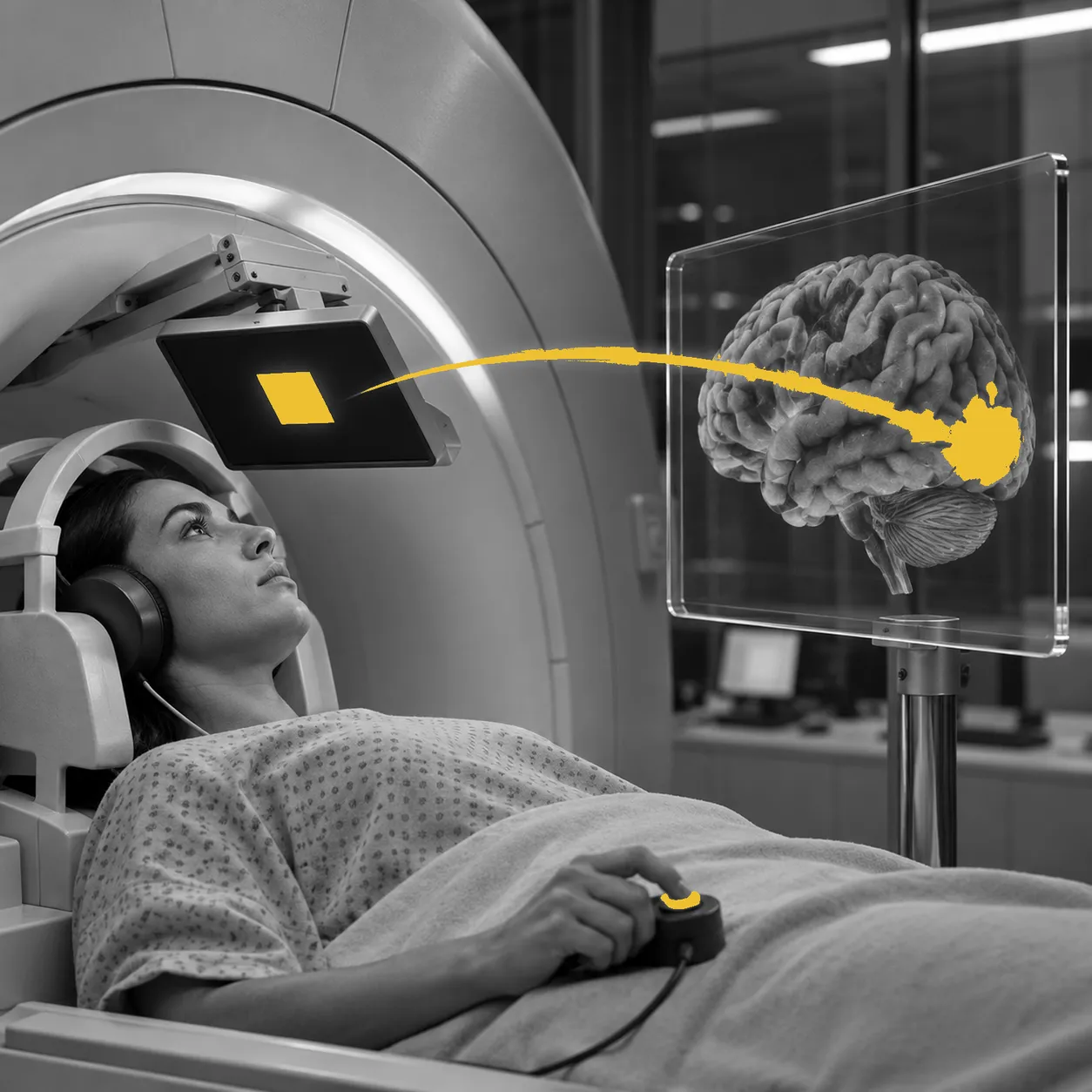
The usual direction of an imaging study: a task is set and the map of activity it produces is measured.
What it is
A forward result says that a task engaged a region. It does not by itself say that activity in the region always means the process the task was built to evoke, which is the question reverse inference addresses.
In effect
In the article on reverse inference in neuroscience, the starting example is a forward result: identical wine tasted at a higher stated price was rated as more pleasant, and activity in the medial orbitofrontal cortex rose with it.
What it does not say
It is a description of study design and not a finding in itself. A clean forward result does not settle what activity in the same region means in another study.
Sources
- Plassmann, H., O'Doherty, J., Shiv, B., & Rangel, A. (2008). Marketing actions can modulate neural representations of experienced pleasantness. Proceedings of the National Academy of Sciences, 105(3), 1050-1054.
- Yarkoni, T., Poldrack, R. A., Nichols, T. E., Van Essen, D. C., & Wager, T. D. (2011). Large-scale automated synthesis of human functional neuroimaging data. Nature Methods, 8(8), 665-670.