Functional Leadership
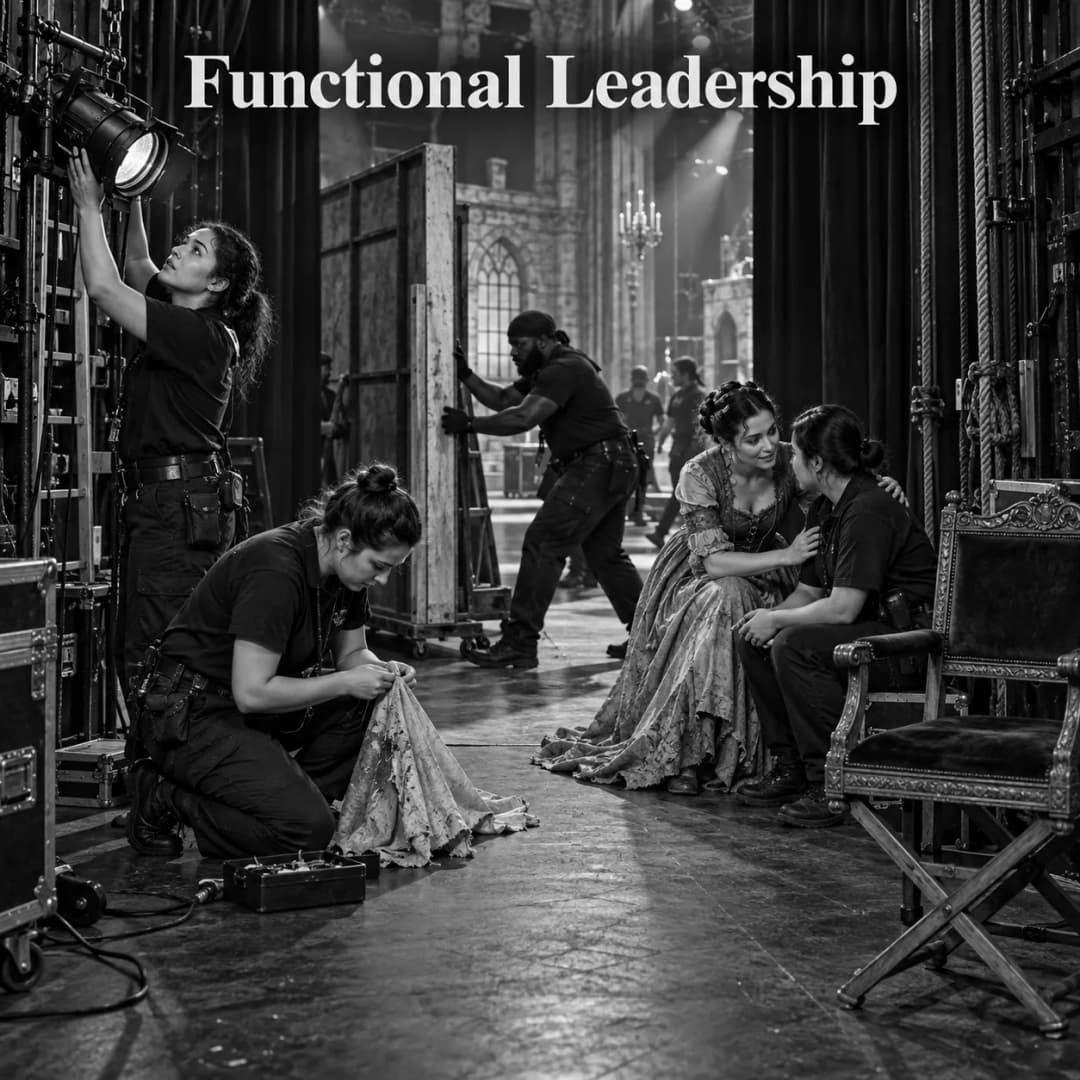
Functional leadership treats leadership as a function rather than a position. On this account leadership is any proactive act that meets a group need, performed by anybody in the group, and it is therefore shared and distributed rather than vested in a role. The question shifts from who the leader is to whether the needs are being met and by whom. The negative half of the argument is well supported. The positive half is a reframing rather than a result, which is why this page is marked mixed.
What it is
The negative half is the dismantling of great-man leadership, and it has the better evidence behind it. People wildly over-attribute collective outcomes to leaders, a finding James Meindl, Sanford Ehrlich and Janet Dukerich published as the romance of leadership in Administrative Science Quarterly in 1985. If a group's performance is read off the person at the front, then firing that person looks like a remedy, and usually it is not.
The positive half says that if leadership is a set of needs rather than a chair, then anybody can meet one, and the useful design question becomes which needs are going unmet. That is a reframing. It is a good one, and nothing in the literature establishes it as a finding.
Origin is not settled here. Functional leadership has a long and diffuse lineage and this publication's verification pass did not establish a single originating paper. It is not credited to the author who reports it in the book this page draws on.
The image the argument usually reaches for is the orchestra: an archaic structure with a highly visible leader and very low member autonomy, held up as what the alternative is not.