Gambler's Fallacy
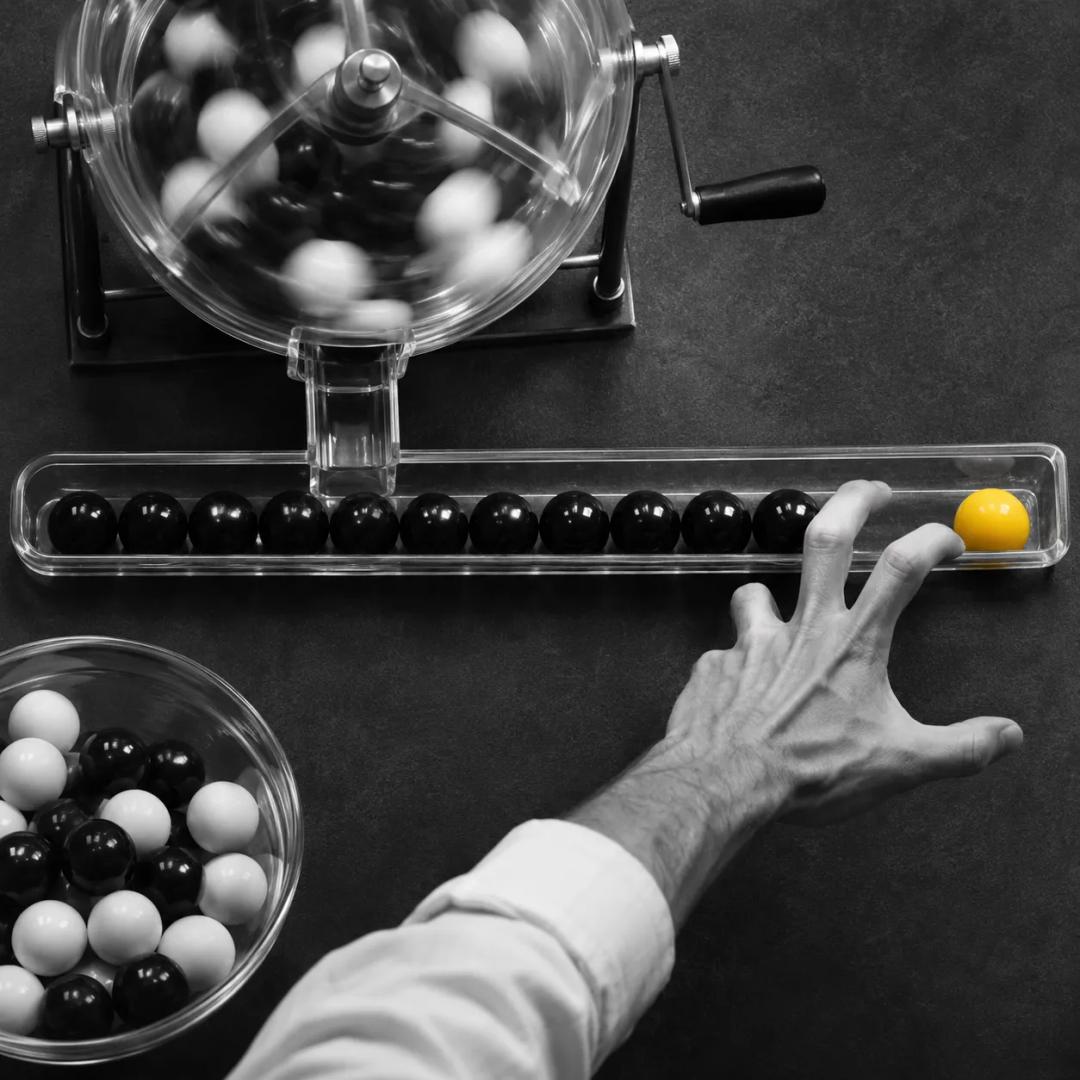
The belief that chance corrects itself, so that a run of one outcome makes the other feel due.
What it is
The gambler's fallacy treats independent events as if they kept a ledger. A coin has no memory, yet after a run of heads many people expect tails. Tversky and Kahneman argued in 1971 that people expect even a small random sample to look like the population it comes from, so a short run that departs from the expected share seems to call for a correction. Clotfelter and Cook reported in 1993, from a state numbers game, that the amount staked on a number dropped sharply right after it was drawn and recovered only gradually over several months.
In effect
In the article on why a run of reds feels due for black, the fallacy is the core idea: a streak is read as a debt the next outcome must repay.
What it does not say
It does not say every expectation of a reversal is wrong; where outcomes are not independent, a change can be due. Rao and Hastie reported in 2023 that predictions depended on what people believed was generating the sequence.
Sources
- Tversky, A., & Kahneman, D. (1971). Belief in the law of small numbers. Psychological Bulletin, 76(2), 105-110.
- Clotfelter, C. T., & Cook, P. J. (1993). Notes: The Gambler's Fallacy in Lottery Play. Management Science, 39(12), 1521-1525.
- Rao, K., & Hastie, R. (2023). Predicting Outcomes in a Sequence of Binary Events: Belief Updating and Gambler's Fallacy Reasoning. Cognitive Science, 47(1), e13211.
- Kahneman, D. Thinking Fast and Slow.