Group-Serving Bias
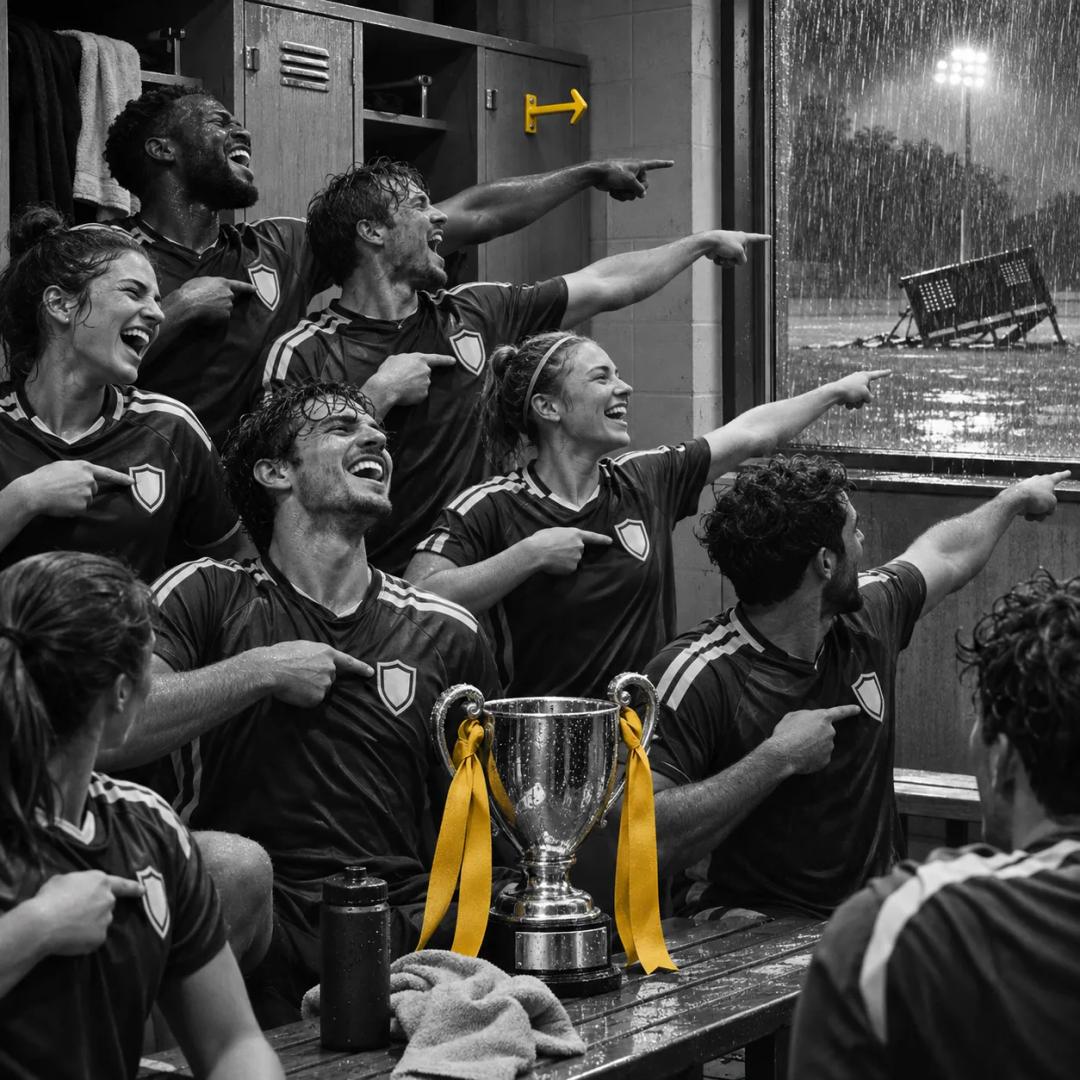
The group-serving bias is the pattern in which members of a group credit the group for its successes and attribute its failures to outside factors. It is the group-level counterpart of the self-serving bias.
What it is
A 2008 review of the causes of the self-serving bias, by James Shepperd, Wendi Malone and Kate Sweeny, describes the group-serving bias in a short passage: members credit the group for successes and blame external factors for failures. The review treats it as a related pattern, with the group in the place of the individual.
The review's main subject is the individual bias, and it argues that the individual bias has several causes working at once, motivational and cognitive. Self-presentation is one of the motivational ones. People manage how others see them, claiming credit can win approval, and a claim that is too large can seem boastful. For that reason the review reports that people often tone their claims down in public.
In effect
The review cites one study that bears directly on credit within groups: members claimed more credit for a group's success when their claims were private than when they were public. The finding places the audience inside the pattern. What a member says about who deserves credit depends in part on who is listening.
Related work on responsibility in joint efforts comes from Michael Ross and Fiore Sicoly. In 1979 they reported five experiments with undergraduate discussion groups, married couples, intercollegiate basketball players and laboratory groups, in which people found their own contributions easier to recall and claimed more responsibility for a joint product than their teammates credited them with. That work concerns shares of credit between members, which is a different question from how a group as a whole explains its outcomes, and the two are kept apart here.
What it does not say
It does not say that groups always explain their outcomes this way. The review describes the pattern briefly and does not give a measure of its size.
It does not fix an originator. The sources read for this page do not name who first described it, so none is given.
It does not compare groups, organisations or cultures, and this page makes no such comparison.
Sources
- Shepperd, J., Malone, W., & Sweeny, K. (2008). 'Exploring causes of the self-serving bias.' Social and Personality Psychology Compass, 2(2), 895-908. doi:10.1111/j.1751-9004.2008.00078.x
- Ross, M., & Sicoly, F. (1979). 'Egocentric biases in availability and attribution.' Journal of Personality and Social Psychology, 37(3), 322-336. doi:10.1037/0022-3514.37.3.322