Happiness Clusters
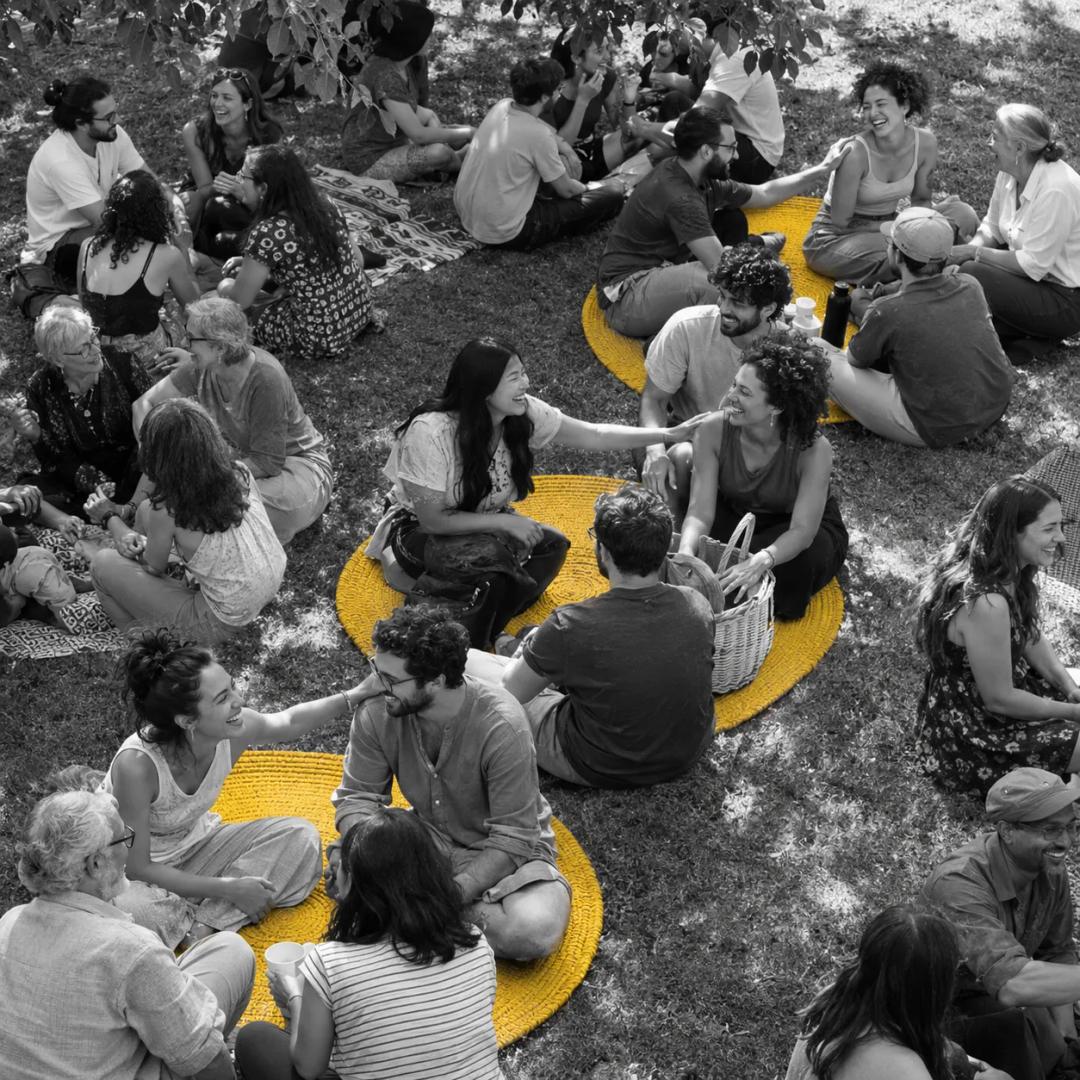
Happiness clusters are sets of connected people in a social network who share the same state, here happiness. In a 2008 analysis of the Framingham Heart Study social network, James H. Fowler and Nicholas A. Christakis found that happy people formed clusters reaching up to three degrees of separation, and that people surrounded by many happy people were more likely to become happy later.
What it is
A social network is a set of people joined by ties such as friendship, marriage, kinship and living nearby. A cluster is a part of the network where the people are close together and share a state. The 2008 paper asks whether happiness behaves this way, and whether the clustering reflects happiness spreading from person to person.
The data came from the Framingham Heart Study social network, a long-running record of a community. The analysis followed 4,739 people from 1983 to 2003. Degrees of separation are steps along ties: one degree is a direct friend, two is a friend of a friend, and three is one step further. The clusters in the analysis reached up to the third step.
In effect
People who were surrounded by many happy people, or who were central in the network, were more likely to become happy later. Closeness mattered. A friend living within a mile who became happy raised a person's probability of being happy by about 25 per cent. Smaller effects appeared for spouses, for siblings living nearby and for next-door neighbours, and no effect was found between coworkers. The influence weakened over time and with greater geographic distance.
The authors conclude that a person's happiness depends on the happiness of the people they are connected to, and they present happiness as a collective phenomenon. In the article on emotional contagion, this is the third rung of a ladder that starts at the face and moves through the team: the same word, contagion, is applied at a scale of thousands of people over twenty years.
What it does not say
The analysis is a longitudinal study of a real community and not an experiment. It shows a pattern across the network, and the authors read that pattern as spread. The reading of the pattern as spread is the authors' interpretation, and the paper's findings are about happiness as reported in that community, not a statement about any individual's choices. Nothing in the analysis is advice.
Sources
- Fowler, J. H., & Christakis, N. A. (2008). Dynamic spread of happiness in a large social network: longitudinal analysis over 20 years in the Framingham Heart Study. BMJ, 337, a2338. https://doi.org/10.1136/bmj.a2338