Illusion of Courage
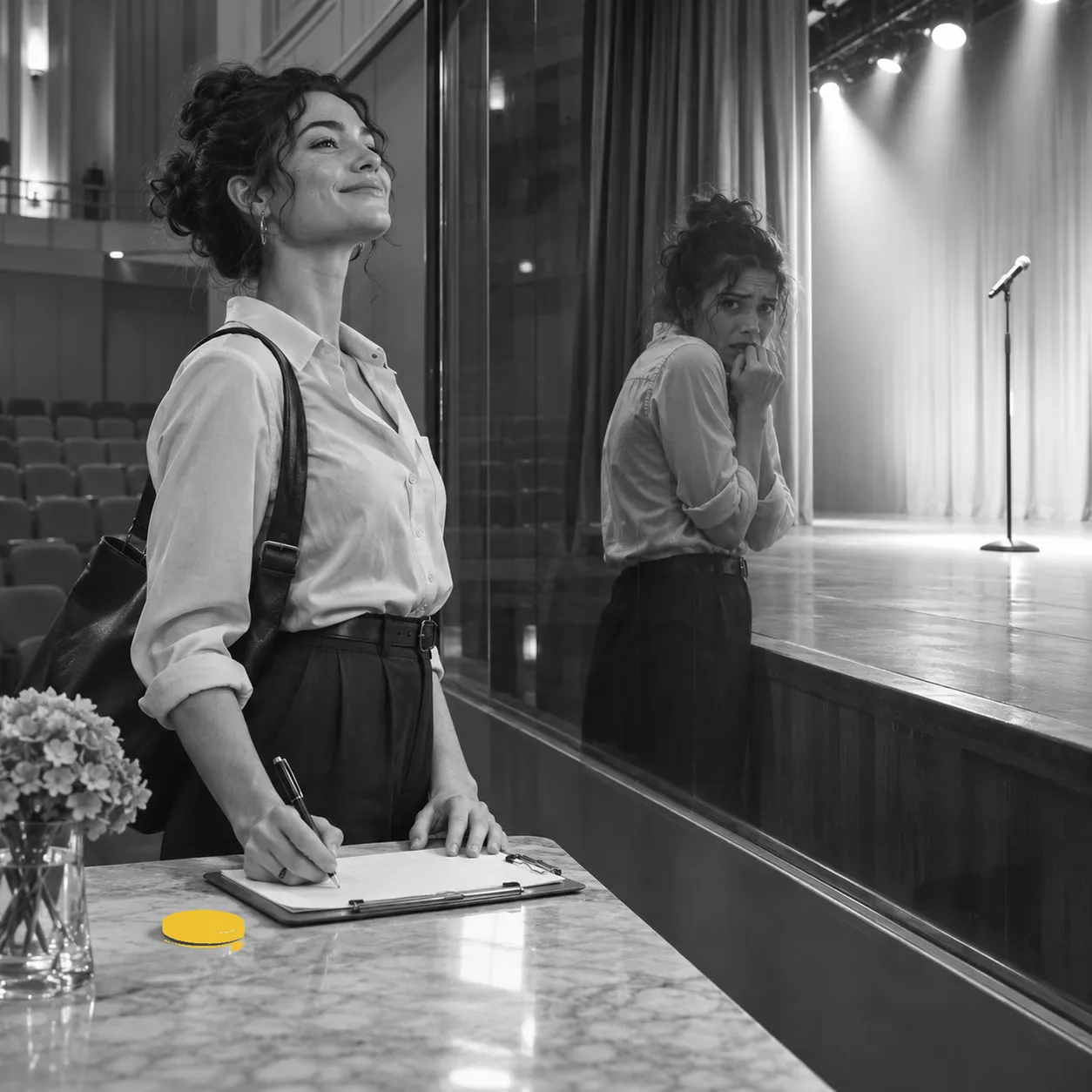
Overestimating willingness to act in a frightening or embarrassing situation when the situation is distant.
What it is
Across three experiments, Leaf Van Boven, George Loewenstein, Edward Welch and David Dunning found that people overestimated how willing they would be to give an embarrassing public performance for money when the performance was hypothetical or far off. The authors attribute this to an empathy gap between calm and nervous states. Inducing fear or anger lowered willingness to perform, and aerobic exercise, which the authors link to lower nervousness and higher confidence, raised it.
In effect
In the article on the hot-cold empathy gap, it is the case where the cold state predicts more boldness than the hot state delivers.
What it does not say
It does not say people are cowards or that predictions of courage are always wrong; the experiments measured willingness to perform for money in specific settings.
Sources
- Van Boven, L., Loewenstein, G., Welch, E., & Dunning, D. (2012). The illusion of courage in self-predictions: Mispredicting one's own behavior in embarrassing situations. Journal of Behavioral Decision Making, 25(1), 1-12.