Image and Quality Appeals
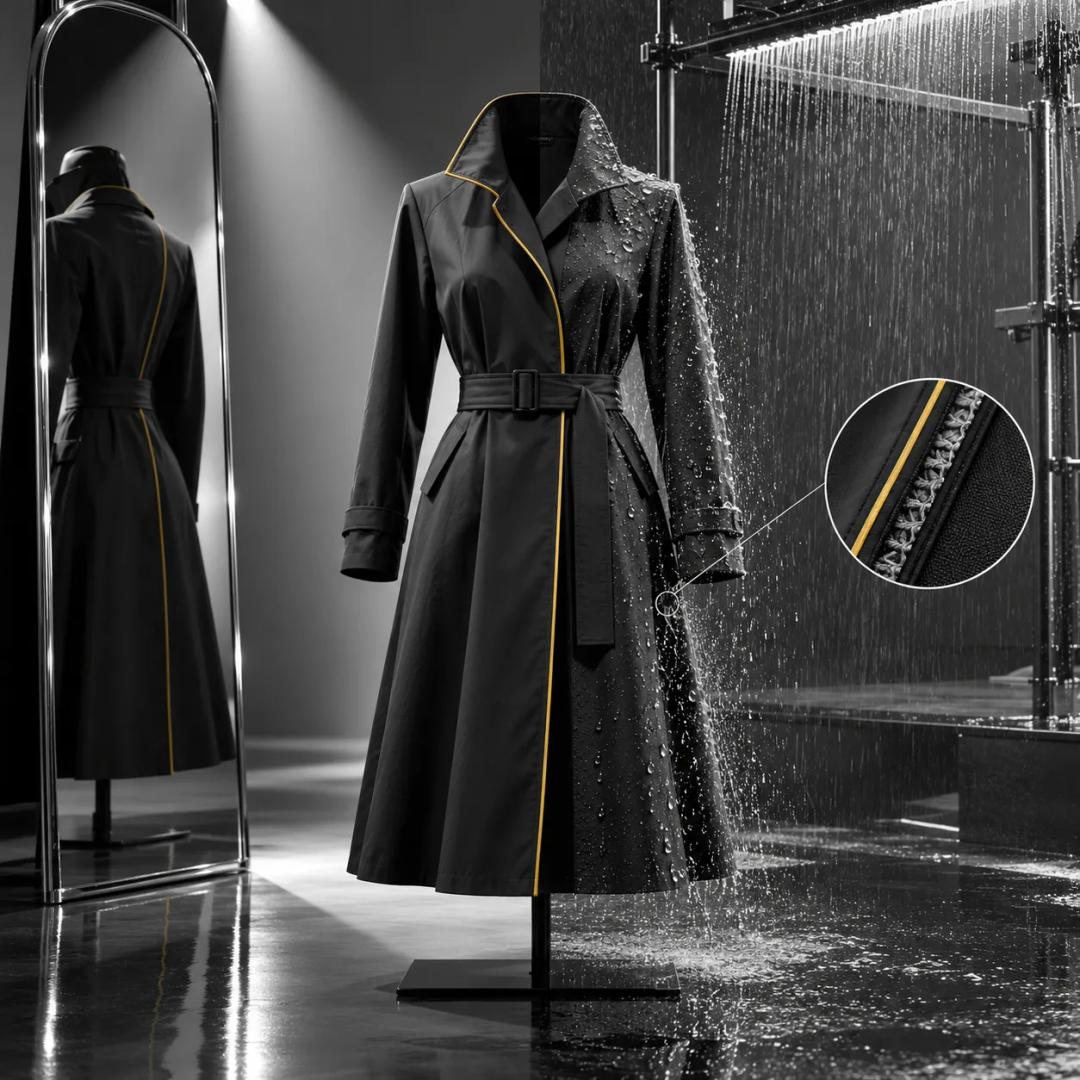
Image and quality appeals are the two kinds of advertisement that Mark Snyder and Kenneth DeBono set against two kinds of shopper in 1985. An image appeal says what owning a product says about you. A quality claim says what the product does. The reported pattern is that high self-monitors respond more to image appeals and low self-monitors to quality claims. The direction is repeated across the literature, and the size of the effect is not given in the sources read for this page.
What it is
Advertising can address a buyer in two broad ways. It can talk about the product: what it is made of, how it performs, how long it lasts. Or it can talk about the person who owns the product: the kind of person, the setting, the company they keep. The first is a quality claim. The second is an image appeal. Real advertisements mix the two, so the distinction sorts emphasis and does not describe a rule about content.
Snyder and DeBono's paper, "Appeals to image and claims about quality: Understanding the psychology of advertising", appeared in the Journal of Personality and Social Psychology in 1985 (volume 49, issue 3, pages 586 to 597). Its subtitle states the ambition, which was to explain part of the psychology of advertising through a difference between people. The difference is self-monitoring, the trait Snyder introduced in 1974. High self-monitors take their cue from the situation, and an image appeal speaks to the situation, because it describes how the owner appears to others. Low self-monitors take their cue from their own feelings and judgements, and a quality claim speaks to those. That is the reasoning behind the pairing as secondary summaries give it.
What the sources read for this page report is a direction. High self-monitors respond more favourably to image appeals, and low self-monitors respond more favourably to quality claims. Kenneth DeBono reviewed about twenty years of studies on self-monitoring and consumer behaviour in the Journal of Personality in 2006. The 1985 paper itself could not be opened for this page, so its design, its sample and its effect sizes are not reported here.
A later paper by DeBono and Snyder, from 1989, concerns the role of form and function in product evaluation. Form and function sit close to the same split: form is the image a product projects, and function is the work it does.
The outcome measured in this literature is mostly a preference between advertisements or an attitude to a product. That is one step short of a purchase, and the gap matters when the concept is used to explain what people buy.
In effect
A research example: the pattern as summarised in 2010
Daniel O'Keefe's 2010 conference paper on persuasive appeal variations states the pattern in one sentence: high self-monitors react more favourably to image-oriented advertisements than to product-quality-oriented ones, and low self-monitors show the opposite. He cites Snyder and DeBono (1985), with a 1987 paper by DeBono, for the point. His reading is that high self-monitors value an image more, so an appeal built on image persuades them more than one built on product attributes they value less. The paper does not report the design or the size of the 1985 effect, and nor do the other sources read for this page.
An everyday illustration, constructed
The following is built to show the distinction and is not a finding. Two colleagues each need a new coat. One says she chose hers because it is what people in her field wear. The other says he chose his because the seams are sound and it keeps the rain out. The first reason is the logic of an image appeal and the second is the logic of a quality claim. The trait account says the two answers reflect a difference between the colleagues. The audience account, described below, says both buyers may be partly buying for an audience, and that the second is giving the answer that sounds best.
A commercial example: Corona and the Marlboro Man
In their chapter on consumption, Kevin Simler and Robin Hanson discuss lifestyle advertising, citing Corona's "Find your beach" and the Marlboro Man (pp. 179 to 180 of The Elephant in the Brain). They argue that such advertising cannot be explained as information about the product or as a promise about its quality. Their account is that it works partly by changing what a buyer's peers think of the brand (p. 181), and they predict that the easier a product is to judge someone by, the more it is sold with cultural imagery (p. 183). That makes image appeals a feature of products as well as of shoppers.
What it does not say
The concept does not say that image appeals cause purchases. The measured outcome in the sources read is a preference or an attitude.
It does not give an effect size. The direction of the effect is reported in summaries of the literature, and the sources behind this page contain no figure for how large it is.
It does not say that shoppers fall into two clean types. Self-monitoring is measured by a self-reported scale of 25 true-or-false statements, revised to 18 items in the 1980s, and the construct was reviewed again in 2000 in a paper called "Self-monitoring: Appraisal and reappraisal". Neither end of the scale is the good end.
It does not settle the dispute between the trait account and the audience account. Simler and Hanson argue that people prefer to think their purchases are for themselves (p. 181), so a shopper who says only quality matters is giving the answer their theory expects from anyone. The experiment their chapter leans on, by Vladas Griskevicius and colleagues in 2010, found that status motives pushed people towards green products when they shopped in public and not in private. A collaborative registered replication published in 2025 ran a status-motive story with 3,774 participants in 24 groups across six countries and found no evidence that it raised hypothetical pro-environmental choices. Its abstract does not mention the public and private contrast. The authors of the book say they expect readers to accept about seventy per cent of what they argue (p. 107). No source read for this page tested the trait account and the audience account against each other.
Who developed it
Mark Snyder and Kenneth DeBono, in the 1985 paper. See Mark Snyder and Kenneth DeBono.
Sources
- Snyder, M., & DeBono, K. G. (1985). Appeals to image and claims about quality: Understanding the psychology of advertising. Journal of Personality and Social Psychology, 49(3), 586-597. doi:10.1037/0022-3514.49.3.586. Citation confirmed; the paper was not opened.
- DeBono, K. G., & Snyder, M. (1989). Understanding consumer decision-making processes: The role of form and function in product evaluation. Journal of Applied Social Psychology, 19(5), 416-424.
- DeBono, K. G. (2006). Self-monitoring and consumer psychology. Journal of Personality, 74(3), 715-738.
- Gangestad, S. W., & Snyder, M. (2000). Self-monitoring: Appraisal and reappraisal. Psychological Bulletin, 126(4), 530-555.
- Simler, K., & Hanson, R. (2018). The Elephant in the Brain: Hidden Motives in Everyday Life. Oxford University Press. Chapter 10, pp. 169 to 185, and p. 107.
- Griskevicius, V., Tybur, J. M., & Van den Bergh, B. (2010). Going green to be seen: Status, reputation, and conspicuous conservation. Journal of Personality and Social Psychology, 98(3), 392-404.
- Lazarevic, L. B., and colleagues (2025). Collaborative registered replication of Griskevicius et al. (2010): Can pro-environmental behavior be promoted by priming status motivation? Collabra: Psychology. doi:10.1525/collabra.143773.
- O'Keefe, D. J. (2010). The argumentative structure of some persuasive appeal variations. ISSA Proceedings 2010, Rozenberg Quarterly. https://rozenbergquarterly.com/issa-proceedings-2010-the-argumentative-structure-of-some-persuasive-appeal-variations/