Inclusive Design
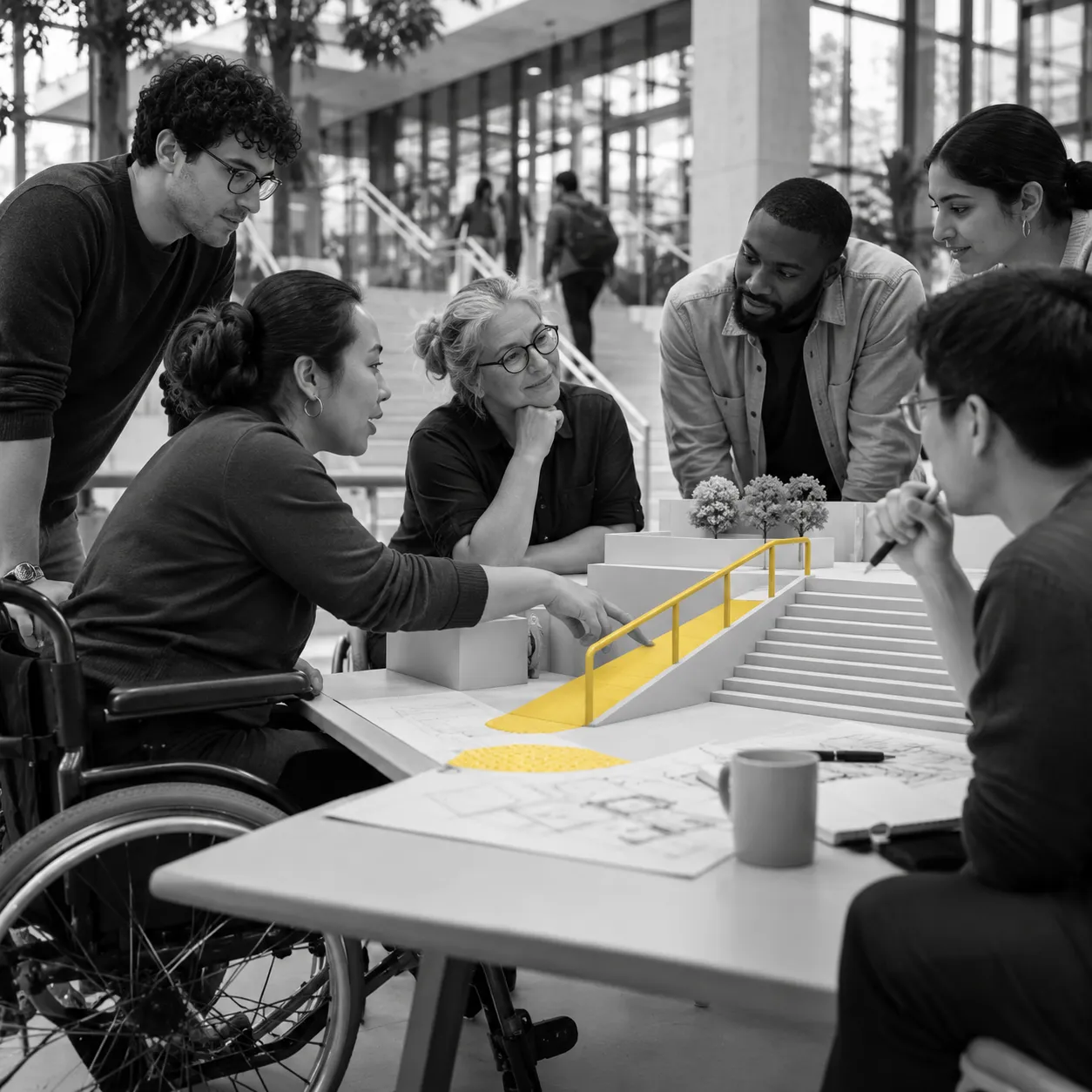
Inclusive design starts from the people a product currently excludes and works with them, on the expectation that the result serves others too.
What it is
Cliff Kuang, in User Friendly, describes a shift inside design. For much of the twentieth century, he argues, products were measured against an average body, and the people at the edges were treated as exceptions. Inclusive design, as Kat Holmes and her colleagues practised it, reverses the order and begins with the person the average leaves out.
Holmes, the author of Mismatch: How Inclusion Shapes Design, describes it as working with people a design excludes, expecting that solving their problem improves the design for others.
In effect
The method rests on the curb-cut effect. A fix that removes friction for the person who struggles most usually removes it for people who struggle a little, and a fix built into the ordinary version of a thing carries no label.
Don Norman reaches a similar place in The Design of Everyday Things, where features made for special needs usually help everyone and there is no average person to design for.
What it does not say
Inclusive design is a method and a claim about spillover, not a guarantee that every fix helps everyone. The evidence used on this site comes from captions, websites and teaching, and it differs in strength between them. Universal design is a related but separate approach, aiming for one design that works for as many people as possible without adaptation. The page makes no claim about diet or health.
Sources
- Kuang, C., with Fabricant, R. User Friendly.
- Holmes, K. (2018). Mismatch: How Inclusion Shapes Design. MIT Press.
- Norman, D. The Design of Everyday Things.