Incremental Validity
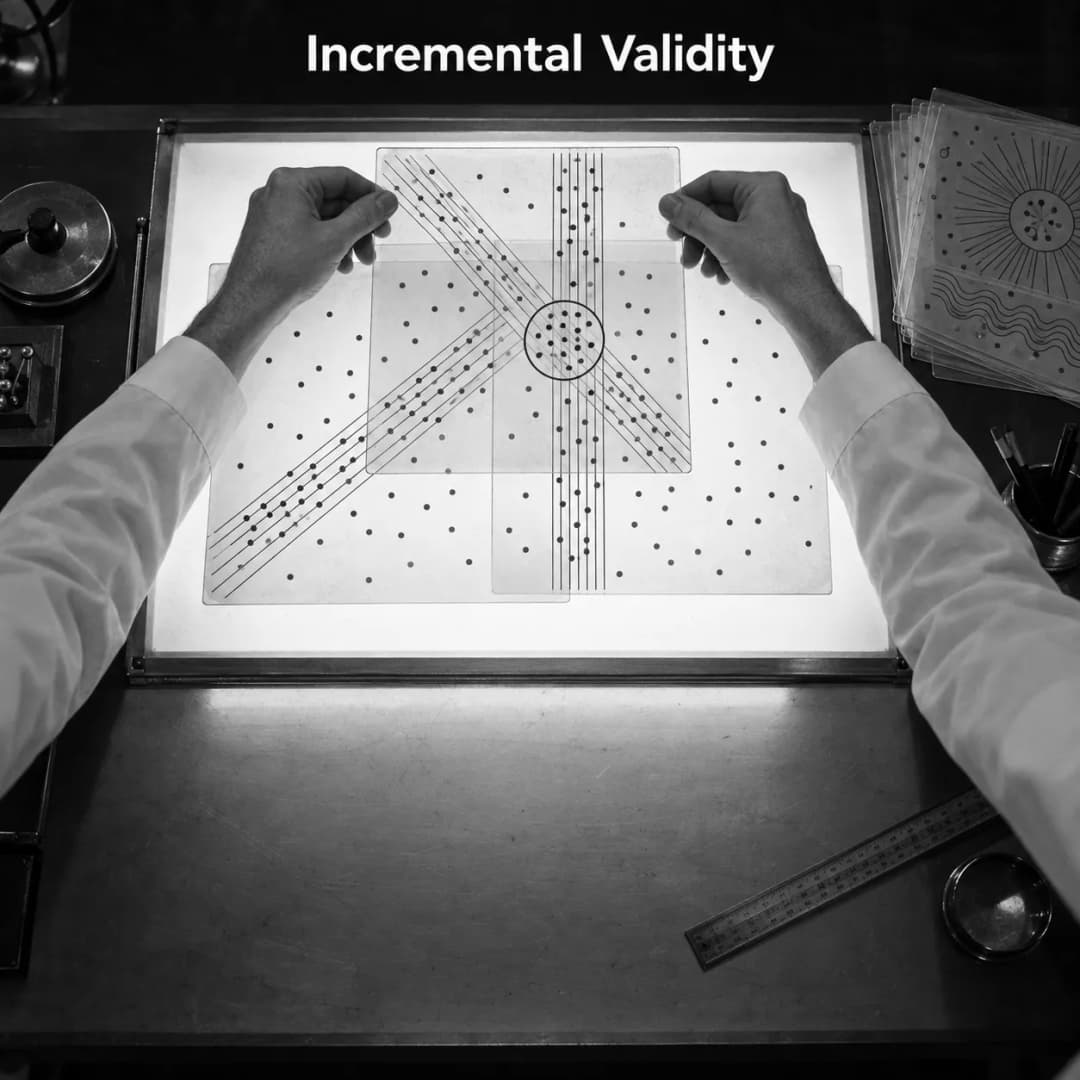
Incremental validity is the question of whether a construct predicts an outcome over and above the predictors already established. Not whether grit correlates with achievement, which almost everything does, but whether grit tells you anything once you have already measured conscientiousness and cognitive ability. If the answer is no, the construct is not wrong. It is redundant, which for a paid assessment is worse. It is a psychometric criterion rather than a finding, and it is the test that separates a genuine addition to psychology from a rebranding.
What it is
The logic is subtraction. Almost any plausible measure of a desirable quality will correlate with a desirable outcome, because desirable qualities travel together and because self-report scales share item wording. Correlation is therefore cheap. What is expensive, and what the criterion demands, is variance explained after the established predictors have had their turn.
That is also why the test collapses fastest where the new scale and the old one share phrasing. If the items on a new questionnaire could be moved onto a conscientiousness inventory without anybody noticing, the answer is already known.
Attribution has to be flagged rather than asserted. The criterion is conventionally credited to Lee Sechrest in 1963, building on the Paul Meehl tradition of asking what a new measure adds to a prediction you could already make. That identification is this publication's, not the source's. The book this concept was extracted from names no originator, no year and no methodological citation for the criterion itself, and this page does not fill the gap with a figure it has not checked.
Note also that a construct can pass replication perfectly and still fail this test. The two questions are independent, and a literature can be in excellent health on the first while the second was never asked.