Information Leakage
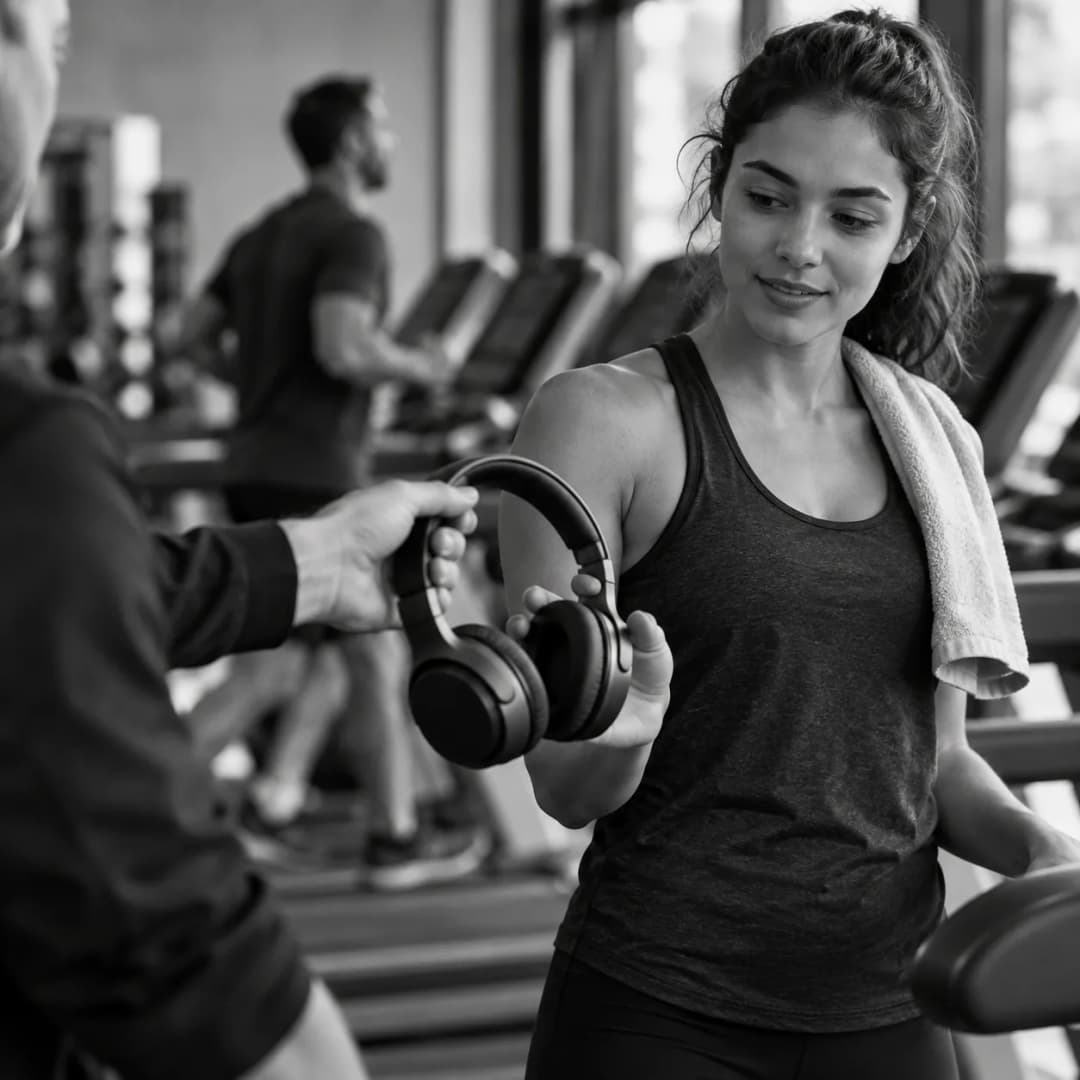
Information leakage is the idea that the design of an offer or programme tells people something its designers never said out loud. Erika Kirgios and colleagues used it in 2020 to explain a puzzle in their temptation bundling experiment: handing gym members a free audiobook worked nearly as well as handing it over with explicit advice to bundle.
What it is
People read intentions from context. If a gym programme gives you an audiobook, it is reasonable to infer that you are meant to listen to it while exercising, even if nobody says so. In that case, teaching the strategy adds little, because the gift has already leaked it.
Kirgios and colleagues tested this inside StepUp, a four-week exercise programme run with the 24 Hour Fitness chain. Among 6,792 members, a free audiobook plus encouragement to temptation bundle raised the likelihood of a weekly workout by 10 to 14 per cent compared with members who received no audiobook. But compared with a free audiobook alone, the encouragement had only a modest additional effect. The authors propose information leakage as the reason, and report follow-up studies suggesting that people given a free audiobook by a gym programme infer that they should use it to temptation bundle.
In effect
For anyone designing a product or programme, the idea is a reminder that the offer itself communicates. A free audiobook from a gym, a podcast subscription bundled with running shoes or a reading app that only unlocks chapters at certain times each carries a hint about how it should be used. The examples are illustrations rather than tested cases.
What it does not say
Information leakage does not show that the gift alone causes the behaviour. In the 2020 study only about 14 per cent of members in either audiobook group downloaded the book, and the authors could not check whether members actually listened while exercising. Goodwill, reminders or the bundling itself could each account for part of the effect.
Nor does it mean that explicit advice is useless. In the original 2014 study by Katherine Milkman and colleagues, the clearest gain came when audiobooks were physically locked at the gym, a restriction that no hint could supply.
Sources
- Kirgios, E. L., Mandel, G. H., Park, Y., Milkman, K. L., Gromet, D. M., Kay, J. S., & Duckworth, A. L. (2020). Teaching temptation bundling to boost exercise: a field experiment. Organizational Behavior and Human Decision Processes, 161(Supplement), 20-35. doi:10.1016/j.obhdp.2020.09.003
- Milkman, K. L., Minson, J. A., & Volpp, K. G. M. (2014). Holding the Hunger Games hostage at the gym: an evaluation of temptation bundling. Management Science, 60(2), 283-299. doi:10.1287/mnsc.2013.1784