Intrinsic versus Instrumental Privacy Preference
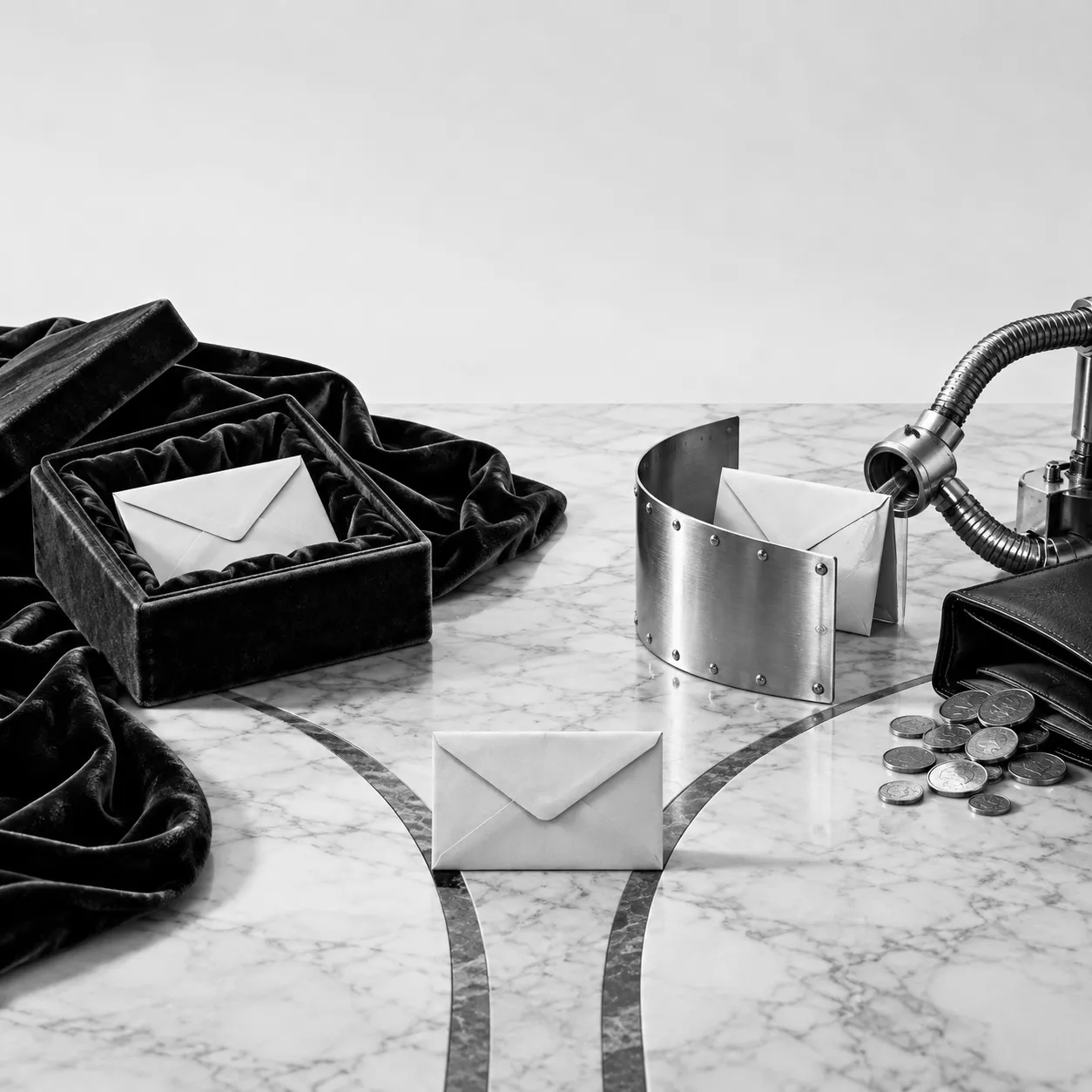
Tesary Lin's separation of two things that get added together and called a taste for privacy. The intrinsic component is a taste for privacy as such, a primitive of what somebody wants. The instrumental component is the economic loss a person expects to suffer because a firm will use what it learns, and it therefore depends on what the firm does with the data rather than on the person's values.
What it is
The payoff is that it explains why every published price for privacy disagrees with every other one. Those figures are mixtures of two quantities, measured at different mixing ratios by different instruments, so a single average price for personal data is not a quantity that exists. The distinction also makes different predictions: an intrinsic preference should be stable across uses of the data, while an instrumental one should move with how the firm is expected to use it.
In effect
Lin combined an experiment with a structural model to measure each component's revealed preference separately. The intrinsic preferences came out with seemingly small mean values, in the range of about fourteen cents to a little over two dollars per demographic variable. They were also highly heterogeneous across people and across categories of data, with consumers at the right-hand tail valuing their own information above what the firm valued it at.
That pattern also overturns a received story. Who selects into sharing data depends on the magnitudes of the two components and on how they correlate, and it often deviates from the familiar argument that it is the low-quality types who most want to hide.
What it does not say
It is one paper, read at the published abstract. The sample size, the recruitment and the identity of the demographic variables priced were not reached and are not stated here.
The decomposition is a modelling result, so it inherits the assumptions of the structural model used to produce it, and a different model of how consumers anticipate a firm's use of data would split the two components differently. The intrinsic figures are means over a distribution the author describes as highly skewed, which is precisely why the mean is the least interesting number in the paper. And this is a separate question from the privacy paradox, the gap between what people say about privacy and what they do; nothing here resolves that.
Sources
- Lin, T. (2022). "Valuing Intrinsic and Instrumental Preferences for Privacy." Marketing Science, 41(4), 663-681. doi:10.1287/mksc.2022.1368. Abstract read in full; sole author. An experiment combined with a structural model to separate the two components; intrinsic mean values of roughly fourteen cents to two dollars and thirty-seven cents per demographic variable, highly heterogeneous, with right-tail consumers valuing their information above the firm's valuation of it. An earlier working-paper version is at doi:10.2139/ssrn.3406412. Sample size, recruitment and the variables priced not reached.
- Winegar, A. G., & Sunstein, C. R. (2019). "How Much Is Data Privacy Worth? A Preliminary Investigation." Journal of Consumer Policy, 42(3), 425-440. doi:10.1007/s10603-019-09419-y. Abstract read in full. Recorded here as one of the mixed measurements the decomposition explains: a survey of 2,416 Americans in which the two elicitation directions produced figures roughly sixteen times apart, and in which priming health-related data raised the amount demanded.