Lean Manufacturing
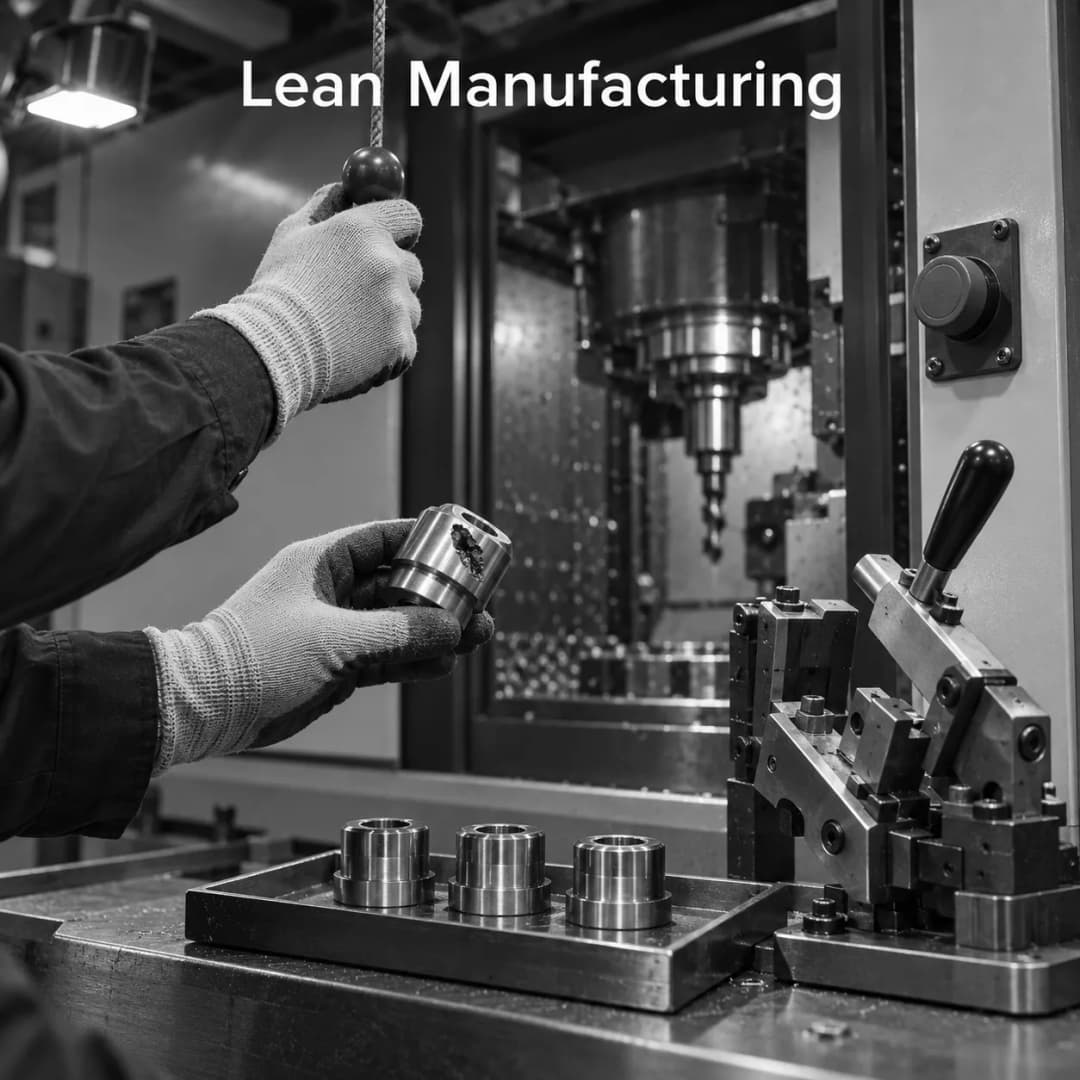
Lean manufacturing is the production philosophy developed at Toyota between roughly 1948 and 1975, built on removing everything that consumes resources without adding value for the customer. Taiichi Ohno is its principal architect, working with Eiji Toyoda, and his Toyota Production System of 1978 is the primary text. The operational core is not seriously disputed. The generalisation of lean beyond the factory floor is a much weaker claim than its popularity suggests, which is why this page is marked mixed.
What it is
Two pillars hold the system up. Just-in-time means making only what is needed when it is needed, so that inventory stops hiding problems. Jidoka means stopping the line the moment a defect appears rather than passing it downstream. Underneath both sits a catalogue of waste, conventionally seven kinds, and a habit of continuous small improvement.
The English word lean is a label applied from outside. What Toyota built was the Toyota Production System, and the two names are not quite interchangeable: the first is observers describing a philosophy, the second is the thing itself.
Five names belong on this page, because lean circulates constantly with nobody attached to it.
Taiichi Ohno is the principal architect, generally credited as the originator of just-in-time production and of the seven wastes. Toyota Production System: Beyond Large-Scale Production appeared in Japanese in 1978 and in English from Productivity Press in 1988. He is also the source of the five whys.
Shigeo Shingo worked with Toyota as an external consultant from 1955 and originated single-minute exchange of die, the setup-reduction method. This is the least famous name on the list and arguably the most load-bearing, because without setup reduction just-in-time does not function at all. If changing a die takes hours you have to run long batches, and long batches are the inventory the whole system exists to remove. He reported average setup times falling to about a fortieth of their original length between 1975 and 1985.
John Krafcik coined the English word, in "Triumph of the Lean Production System", Sloan Management Review, autumn 1988, written out of MIT's International Motor Vehicle Program.
James Womack, Daniel Jones and Daniel Roos popularised it in The Machine That Changed the World in 1990, and Womack and Jones set out the five principles in Lean Thinking in 1996.
Two pieces of vocabulary belong to this tradition and are routinely presented as somebody's personal discovery. Cycle time and touch time are both long-standing industrial-engineering and lean terms. The sticky-note process map that management books present as a workshop technique is value-stream mapping, and it belongs here too.