Logo Complexity
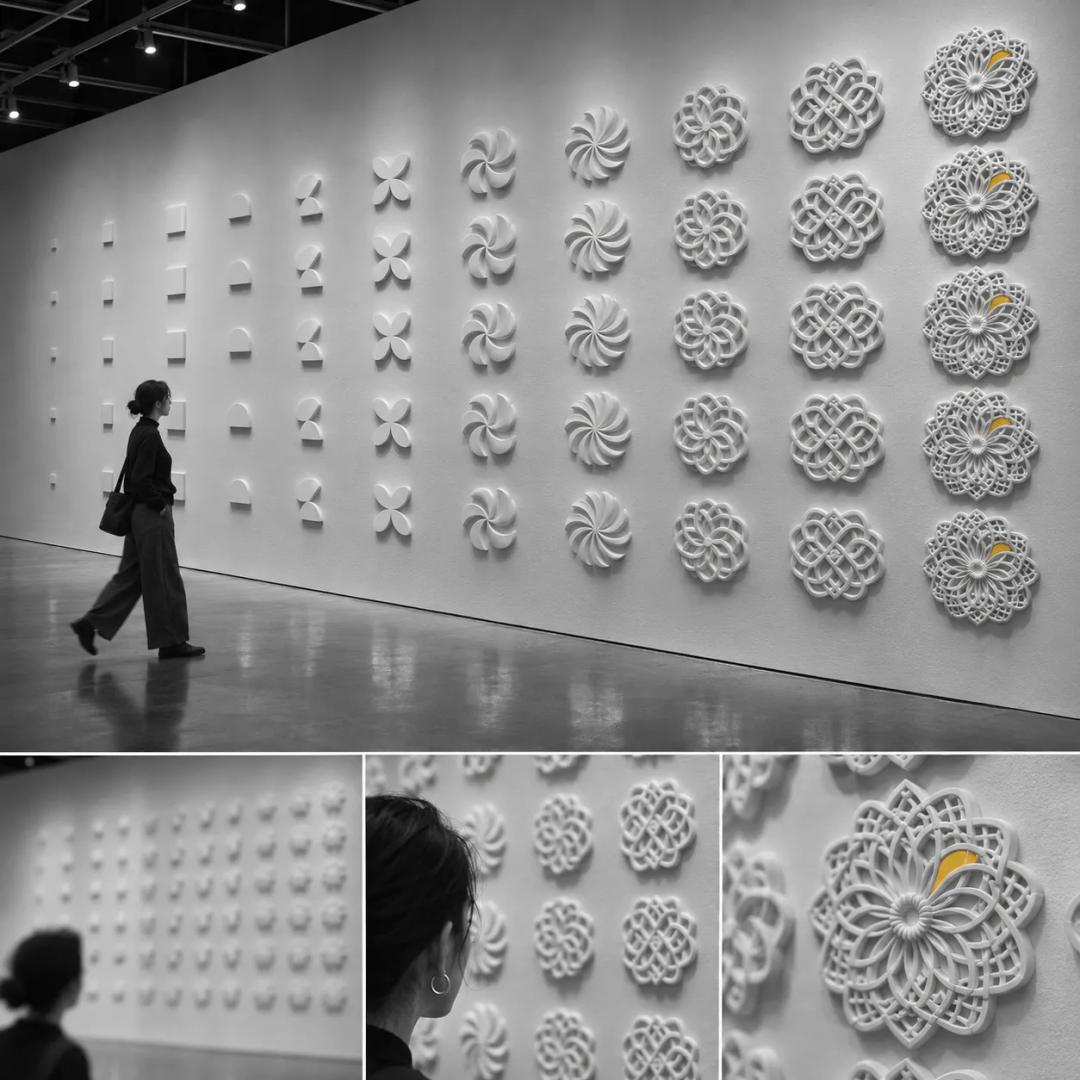
Logo complexity is how much visual detail a logo carries. Two papers treat it as something that changes what repeated exposure does. Chris Janiszewski and Tom Meyvis proposed in 2001 that the characteristics of a stimulus interact with repetition to set how fluent it feels, and Bo van Grinsven and Enny Das reported that logo complexity moderated exposure effects on recognition and attitude, with the effects on attitude stronger for complex logos.
What it is
Logos run from a single plain shape to an intricate mark with many parts, and the amount of detail is a design decision that is made once and then lived with for years. Logo complexity names that variable. It is separate from what a logo depicts, which is the subject of logo descriptiveness, and from the form a logo takes, which is the subject of logo shape.
The question researchers have asked about it is how complexity interacts with repetition. Janiszewski and Meyvis, in a 2001 paper in the Journal of Consumer Research, argued that repeated exposure to a stimulus raises processing fluency at the time of judgment, and that people can misattribute that fluency as preference. They proposed that the characteristics of the stimulus and the way exposures are presented interact with repetition to set how much fluency results. Four studies compared two accounts of how fluency effects arise, and the paper discusses implications for logo design.
van Grinsven and Das, writing in the Journal of Marketing Communications, noted that logo design features have rarely been tested empirically. They reported two experiments, one using unfamiliar logos and one using familiar logos, and found that logo complexity moderated the effects of exposure on brand recognition and brand attitude.
In effect
In the van Grinsven and Das experiments, repeated exposure improved recognition and attitudes. Logo complexity moderated those effects, and the effects on attitudes were stronger for complex logos. The authors suggest that this points to short-term and long-term benefits for brands.
For anyone building a brand identity system, the useful reading is that complexity is a decision to be made together with a plan for repetition, not on its own. A mark that will be met many times, at many sizes, is being asked to work as a repeated stimulus, and the research above is about what repeated exposure does to marks of different complexity. That reading is an application of the papers to a design decision. The experiments tested logos shown to participants, and they did not test a full identity system.
A practical consequence follows from the application. If a complex mark is chosen, the system needs simplified versions for small sizes and single-colour use, so that the mark can still be met as often as the plan assumes. If a simple mark is chosen, the system leans on its other assets for richness.
What it does not say
Neither paper names a best level of complexity. Janiszewski and Meyvis tested how repetition and stimulus features combine, and van Grinsven and Das reported that complexity moderated exposure effects. Neither is a rule that complex logos are better or that simple logos are better.
Both papers were read at the level of their abstracts, so this page states what the abstracts support and no more. The authors' suggestion about short-term and long-term benefits is theirs. Experimental effects on recognition and attitude are not forecasts of sales, and nothing here converts them into one.
Sources
- Janiszewski, C., & Meyvis, T. (2001). Effects of brand logo complexity, repetition, and spacing on processing fluency and judgment. Journal of Consumer Research, 28(1), 18-32. https://doi.org/10.1086/321945
- van Grinsven, B., & Das, E. (2016). Logo design in marketing communications: Brand logo complexity moderates exposure effects on brand recognition and brand attitude. Journal of Marketing Communications, 22(3), 256-270. https://doi.org/10.1080/13527266.2013.866593