Manufactured Disposability
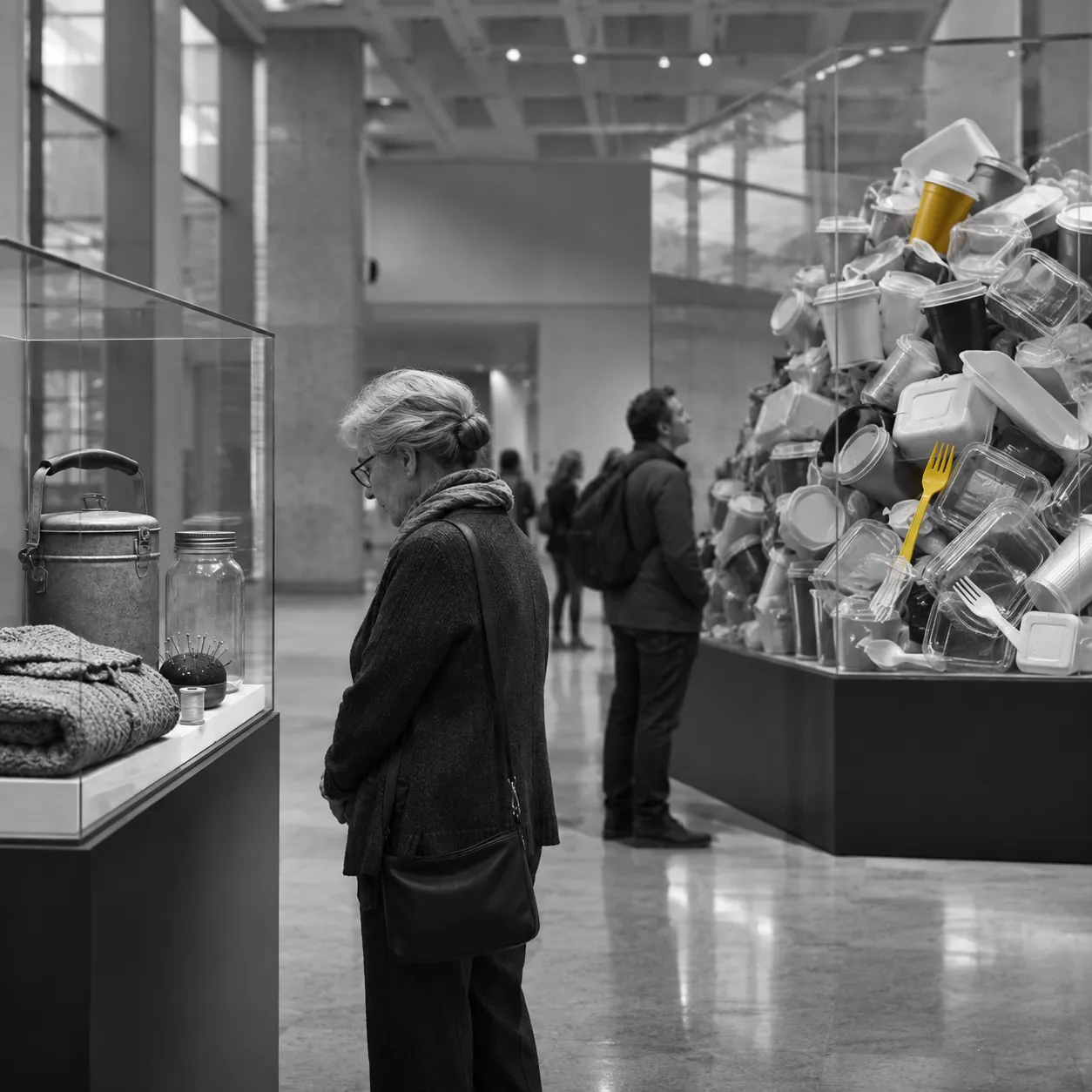
Manufactured disposability is the building of a market for single-use goods after 1945, in which thrift came to look old-fashioned and newness came to stand for cleanliness and status.
What it is
Saabira Chaudhuri's Consumed, the seed book for the article on second-hand goods, describes how wartime thrift came to look old-fashioned after 1945, as post-war prosperity built a market for things used once and thrown away.
Before that shift, a great deal of packaging went back to be washed and refilled. The account concerns packaging rather than clothing, and it is cited here by author and title only.
In effect
The idea gives contagion beliefs a cultural frame. Where bottles routinely came home a second time, an item that had passed through other hands was ordinary. Once single use became the norm, the untouched item came to read as the clean one, and the used item as the suspect one.
In the article, this sits beside the experimental work on contamination. The experiments show how contact with other people lowers a product's value in a shopper's eyes, and manufactured disposability suggests that part of the preference for the untouched is learned, with an economic history behind it.
What it does not say
The idea does not say that shoppers avoid second-hand goods only because of marketing, or that contagion beliefs were created in 1945. Rozin and colleagues describe contagion beliefs as long-standing intuitions that still guide adults. Manufactured disposability concerns one strand, the cultural and commercial setting in which newness gained value. It is a historical account and is not a measured effect.
Sources
- Chaudhuri, S. Consumed. Seed book.
- Rozin, P., Millman, L., & Nemeroff, C. (1986). Operation of the laws of sympathetic magic in disgust and other domains. Journal of Personality and Social Psychology, 50(4), 703-712. doi:10.1037/0022-3514.50.4.703 https://doi.org/10.1037/0022-3514.50.4.703