Marshmallow Test
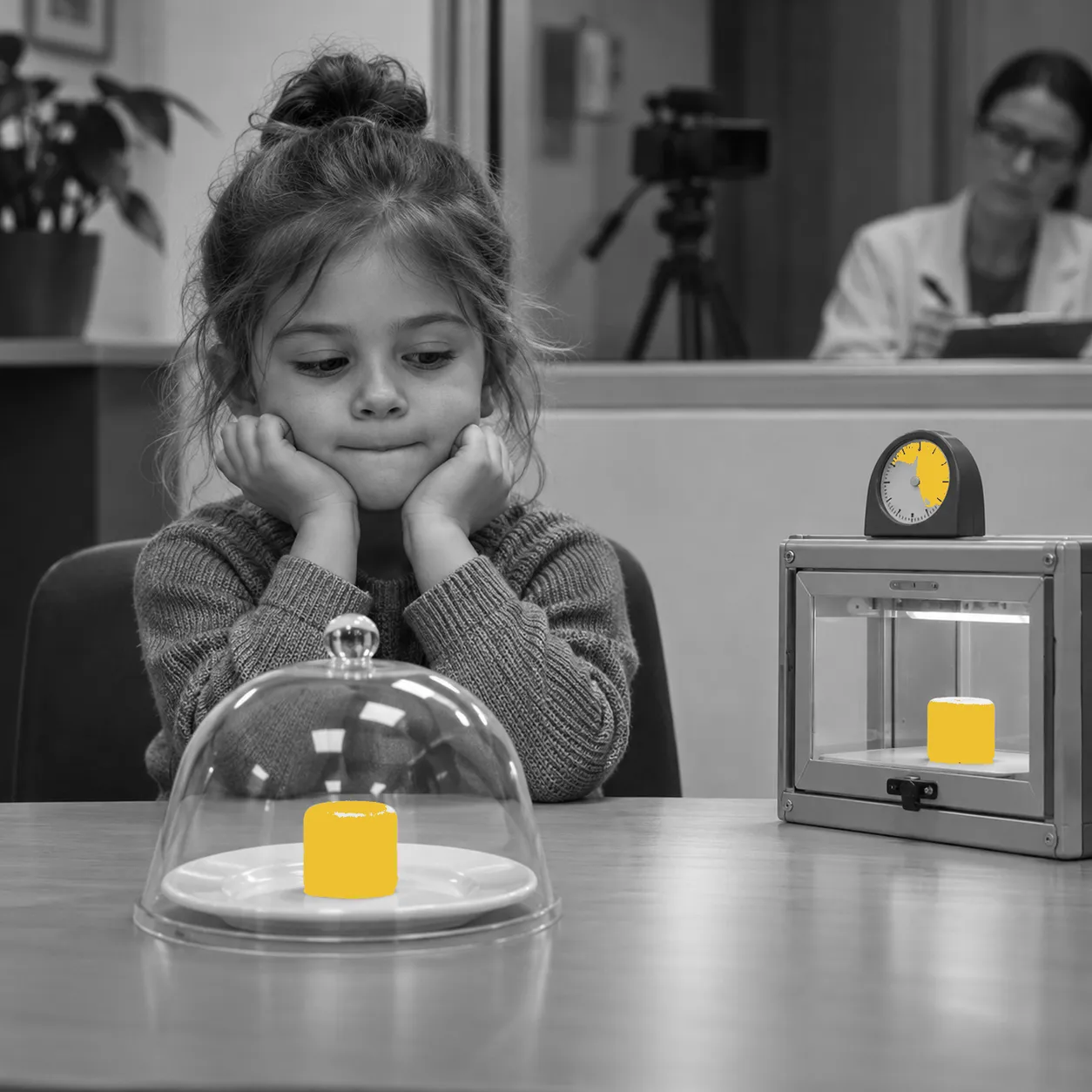
A waiting task in which a child is offered one treat now or a larger one after a wait, used to study how children manage delay.
What it is
In the preschool studies led by Walter Mischel, researchers varied what a child could see and think about during the wait. Shoda, Mischel and Peake reported in 1990 that, in the conditions they identified as most informative, seconds of delay in preschool correlated with cognitive and academic competence and with coping in adolescence. Watts, Duncan and Quan's 2018 conceptual replication, with children whose mothers had not completed college, found a link about half the size of the original associations, reduced by two thirds once family background, early cognitive ability and the home environment were counted.
In effect
In the article on whether the marshmallow test predicts success, the original result and the replication are set side by side.
What it does not say
It is a laboratory task for young children, not a forecast of any one child's future. Waiting time also moved with what children expected from the adult.
Sources
- Shoda, Y., Mischel, W., & Peake, P. K. (1990). Predicting adolescent cognitive and self-regulatory competencies from preschool delay of gratification: Identifying diagnostic conditions. Developmental Psychology, 26(6), 978-986.
- Watts, T. W., Duncan, G. J., & Quan, H. (2018). Revisiting the marshmallow test: A conceptual replication investigating links between early delay of gratification and later outcomes. Psychological Science.
- Kidd, C., Palmeri, H., & Aslin, R. N. (2013). Rational snacking: Young children's decision-making on the marshmallow task is moderated by beliefs about environmental reliability. Cognition, 126(1), 109-114.