Memory Conflict Account of Déjà Vu
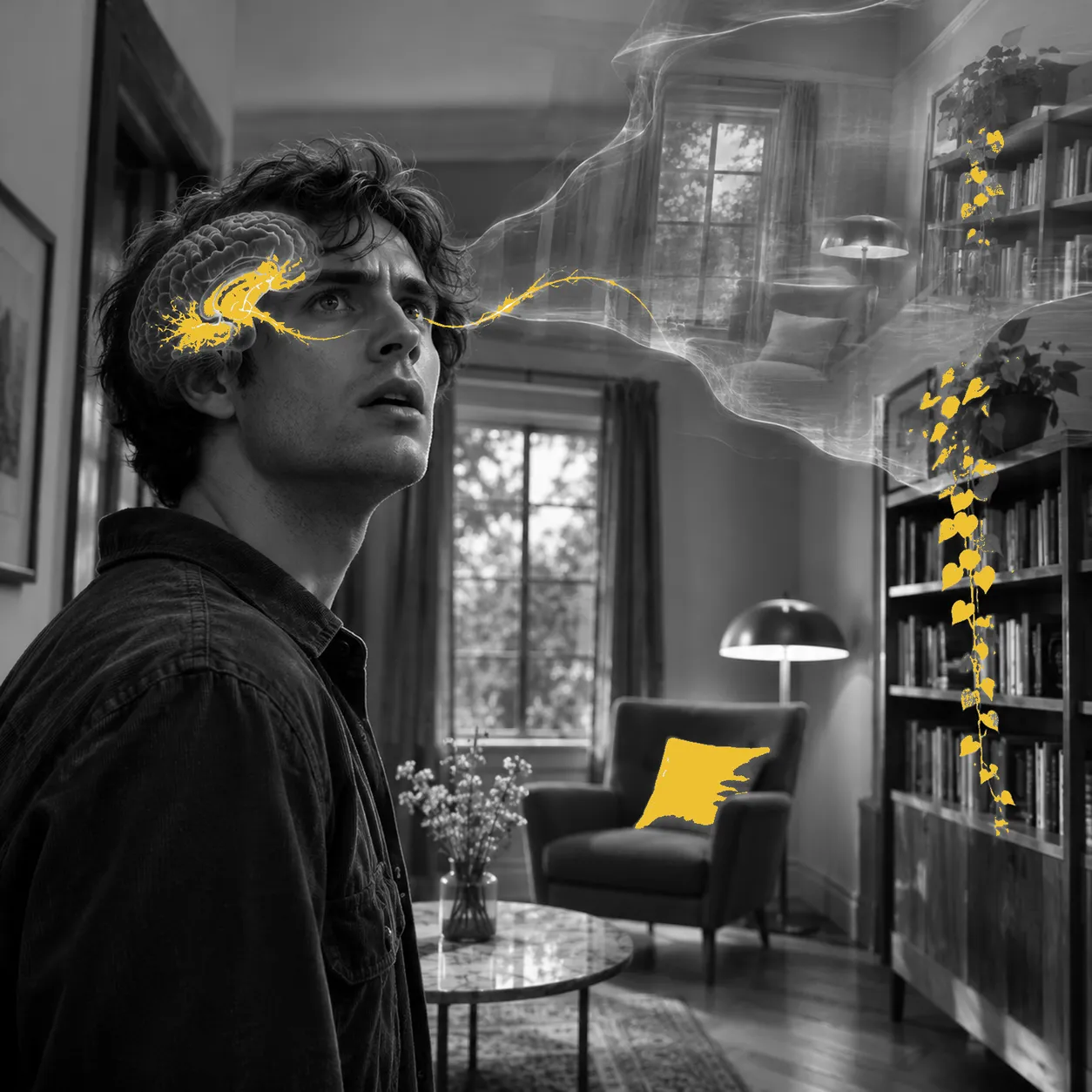
The proposal that déjà vu is a conflict between a feeling of familiarity and a concurrent judgment of novelty.
What it is
Urquhart and colleagues paired false familiarity in a word-list task with cues showing it was mistaken; 16 of 21 participants reported déjà vu, and imaging showed activity in regions linked to conflict. Aitken, Jentzsch and O'Connor set out the conflict account in 2023 and linked the fall in déjà vu with age to the decline of conflict monitoring after young adulthood.
In effect
In the article on déjà vu, it is the newest account of why the feeling comes with the knowledge that it is wrong.
What it does not say
It is a proposal supported by laboratory analogues and imaging; it does not claim to explain every report of déjà vu.
Sources
- Urquhart, J. A., Sivakumaran, M. H., Macfarlane, J. A., & O'Connor, A. R. (2018). fMRI evidence supporting the role of memory conflict in the déjà vu experience. Memory, 29(7), 921-932.
- Aitken, C. B. A., Jentzsch, I., & O'Connor, A. R. (2023). Towards a conflict account of déjà vu: The role of memory errors and memory expectation conflict in the experience of déjà vu. Neuroscience & Biobehavioral Reviews, 155, 105467.