Moral Licensing
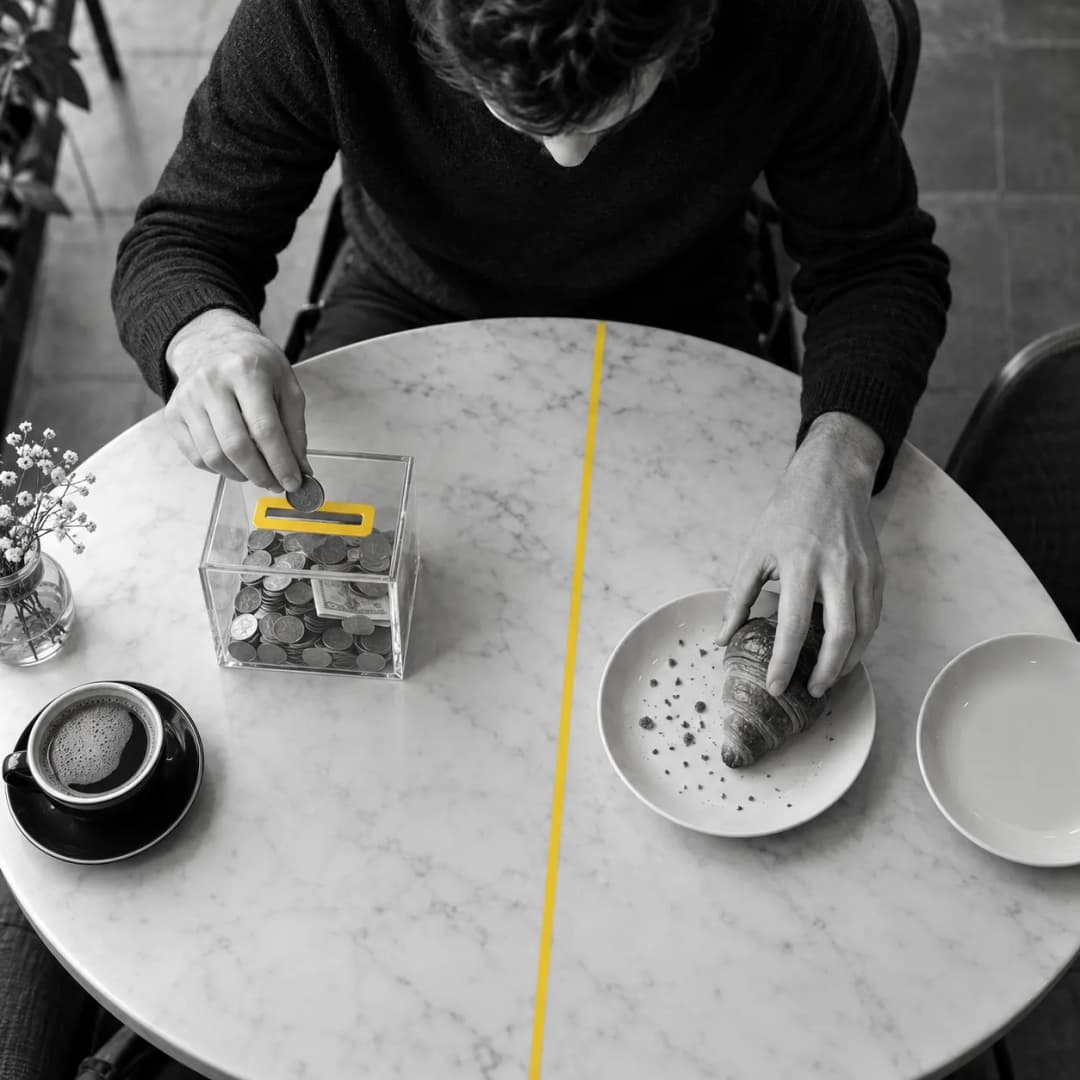
Moral licensing is the idea that a good deed buys permission for a worse one. Pooled across 91 studies and 7,397 participants it is small to medium in size and significantly positive. The same meta-analysis reports a significantly asymmetric funnel plot, twenty-one estimated missing studies, and published studies running about four times the size of unpublished ones. In the green-consumption domain, three replications with 1,274 participants and real money found nothing.
What it is
The mechanism is intuitive, which is part of the problem: do something creditable, and the next decision is taken by a person who feels they have credit to spend. It is the explanation the trade reaches for whenever a virtuous product is suspected of causing a vice.
The headline, and it is real. Irene Blanken, Niels van de Ven and Marcel Zeelenberg pooled 91 studies and 7,397 participants in 2015 and found the effect small to medium in size and significantly positive.
The same paper is the best case against its size, and this publication's rule is that the two halves never travel apart. Substantial variation between studies that none of their theorised moderators explained. A significantly asymmetric funnel plot. Trim-and-fill estimating twenty-one missing studies. And published studies running about four times the size of the unpublished ones.
Niclas Kuper and Antonia Bott re-modelled the larger dataset in 2019 and the bias-adjusted estimates came out at a little over half the original, or at nothing at all, with their own caution that the first may understate and the second exaggerate.
And the version that mattered most to this publication has been tested head on and failed. Jan Urban, with Simon Bahnik and Marketa Braun Kohlova, ran two conceptual and one close replication of the green-consumption licensing study. 1,274 participants in total, with the outcome measured by three validated tasks in which a participant could gain money by misreporting, rather than by self-report. No licensing effect of green consumption on that measure appeared. Their own conclusion is that policies encouraging pro-environmental behaviour trigger cross-domain licensing less often than was thought.
So the honest summary is a shrinking effect with one domain cleared. Positive and publication-biased in the pooled literature, roughly halved or extinguished under bias adjustment, and absent in the best-powered attempt in the domain where this publication needed it.
In effect
In the field: the strongest evidence, at its full weight
Verena Tiefenbeck and three colleagues ran a controlled experiment across 154 apartments at one multifamily residence. Residents given weekly feedback on their water use cut it by 6.0 per cent and raised their electricity use by 5.6 per cent against controls, with income effects excluded. The hedge is theirs and travels with the figures every time: the mechanism needs further research, and the findings are consistent with moral licensing rather than demonstrating it. A real effect, carefully reported, in one building.
In the laboratory: the study that launched the consumer version
Jesse R. Catlin and Yitong Wang proposed that the availability of recycling may raise resource use. Forty-four undergraduates cut shapes from paper; those given only a bin used 9.45 grams on average and those given a recycling bin as well used 17.21 grams. In the field arm, towel use in one men's lavatory monitored fifteen days each side rose from 6.12 grams to 7.13 grams a head after a recycling bin and a sign were added. Forty-four students in one room, and a single site with no control and no randomisation. Three separate searches found no direct replication in either direction. Catlin's own addition, which the coverage drops, is that this does not mean we should scrap recycling bins. The design detail here comes from a contemporaneous magazine report of the study, because the paper's full text stayed out of reach, and it is attributed as journalism rather than as a read of the paper.
In commerce: the bet a promotion makes
A supermarket pairing a sustainability pledge with a volume promotion is betting on licensing, and the evidence says the bet is poorly specified: the pooled effect is positive and publication-biased, the field demonstration is one building, and the closest replication with real money found nothing. Treat any licensing claim attached to a specific product as a hypothesis with a measured history of shrinking.
What it does not say
It does not say the effect is absent. The pooled estimate is positive, and one controlled field experiment found the predicted pattern in energy and water use.
It does not say a good deed has no behavioural consequence. It says the published magnitude is about four times the unpublished one in the same dataset, and that bias-adjusted estimates run from about half to nothing.
It does not say the green-consumption version is dead. It says the best-powered test of it, with 1,274 participants and real financial incentives, found no effect, which is the strongest evidence available in that domain.
And it does not criticise anybody. The 2015 meta-analysis is the source of both the headline and the caveats, which makes it unusually candid, and the criticism recorded here is of designs and samples rather than of researchers.
Sources
- Blanken, I., van de Ven, N., & Zeelenberg, M. (2015), "A Meta-Analytic Review of Moral Licensing", Personality and Social Psychology Bulletin 41(4), 540-558, doi:10.1177/0146167215572134. Full text read at source, including the results section, the publication-bias analysis and the moderator table. Credited to Blanken, who is first author, because the paper is habitually cited by its better-known third author.
- Kuper, N., & Bott, A. (2019), "Has the evidence for moral licensing been inflated by publication bias?", Meta-Psychology. Abstract read in full at the journal's open-access record; full text not read.
- Urban, J., Bahnik, S., & Braun Kohlova, M. (2019), "Green consumption does not make people cheat", Journal of Environmental Psychology 63, 139-147, doi:10.1016/j.jenvp.2019.01.011. Abstract read in full at an institutional record which prints it entire; full text not read.
- Tiefenbeck, V., Staake, T., Roth, K., & Sachs, O. (2013), "For better or for worse? Empirical evidence of moral licensing in a behavioral energy conservation campaign", Energy Policy 57, 160-171, doi:10.1016/j.enpol.2013.01.021. Abstract read in full at an institutional record which prints it entire; full text not read.
- Catlin, J. R., & Wang, Y. (2013), "Recycling gone bad", Journal of Consumer Psychology 23(1), 122-127, doi:10.1016/j.jcps.2012.04.001. Publisher-deposited abstract read in full at Crossref; full text not read.
- Kwok, R. (2012), "Wasteful Thinking", Conservation Magazine, 13 September 2012. Read in full at source. Science journalism reporting the study above, and the source of its design detail and gram figures, labelled as such.