Naive Realism
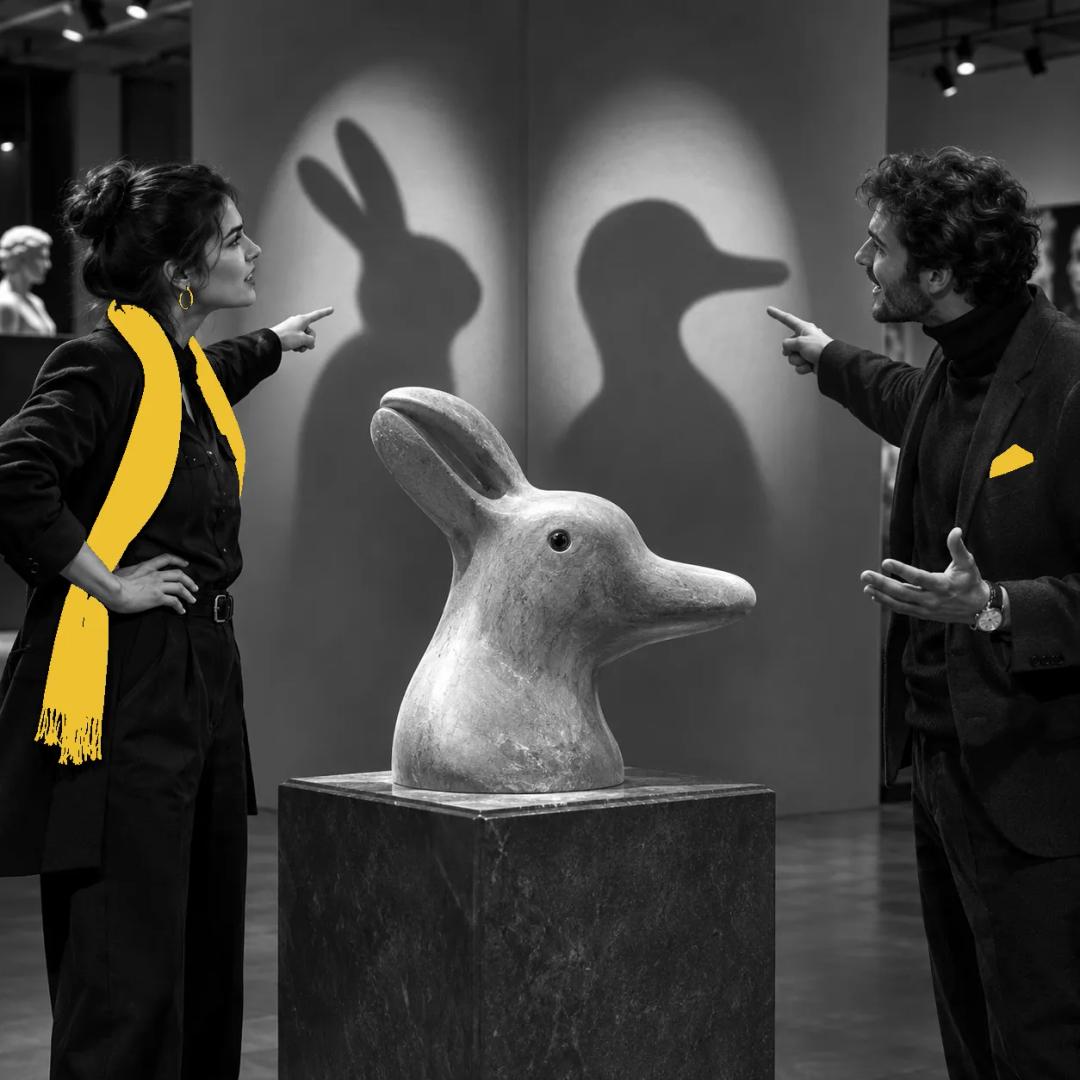
The sense that we see the world as it is, so people who see it differently must be uninformed or biased.
What it is
Lee Ross and colleagues used the term for a set of everyday assumptions: that one's own view reflects plain perception of the facts, that reasonable people will share it once they have the same information, and that those who still disagree are uninformed, unreasonable or biased. Pronin, Gilovich and Ross set out in 2004 how this reading of one's own and other people's views produces divergent perceptions of bias.
In effect
In the article on seeing bias in everyone but ourselves, naive realism is the mechanism behind the bias blind spot: people rated themselves less prone to bias than others, and treated a personal stake as a threat to other people's objectivity but a source of accuracy in their own case.
What it does not say
It does not say that every view is as good as any other or that nobody is ever right; it describes how people read disagreement, not who is correct.
Sources
- Pronin, E., Gilovich, T., & Ross, L. (2004). Objectivity in the eye of the beholder: Divergent perceptions of bias in self versus others. Psychological Review, 111(3), 781-799.
- Pronin, E., Lin, D. Y., & Ross, L. (2002). The bias blind spot: Perceptions of bias in self versus others. Personality and Social Psychology Bulletin, 28(3), 369-381.
- Ehrlinger, J., Gilovich, T., & Ross, L. (2005). Peering into the bias blind spot: People's assessments of bias in themselves and others. Personality and Social Psychology Bulletin, 31(5), 680-692.
- Hastorf, A. H., & Cantril, H. (1954). They saw a game: A case study. Journal of Abnormal and Social Psychology, 49(1), 129-134.