Nostalgia
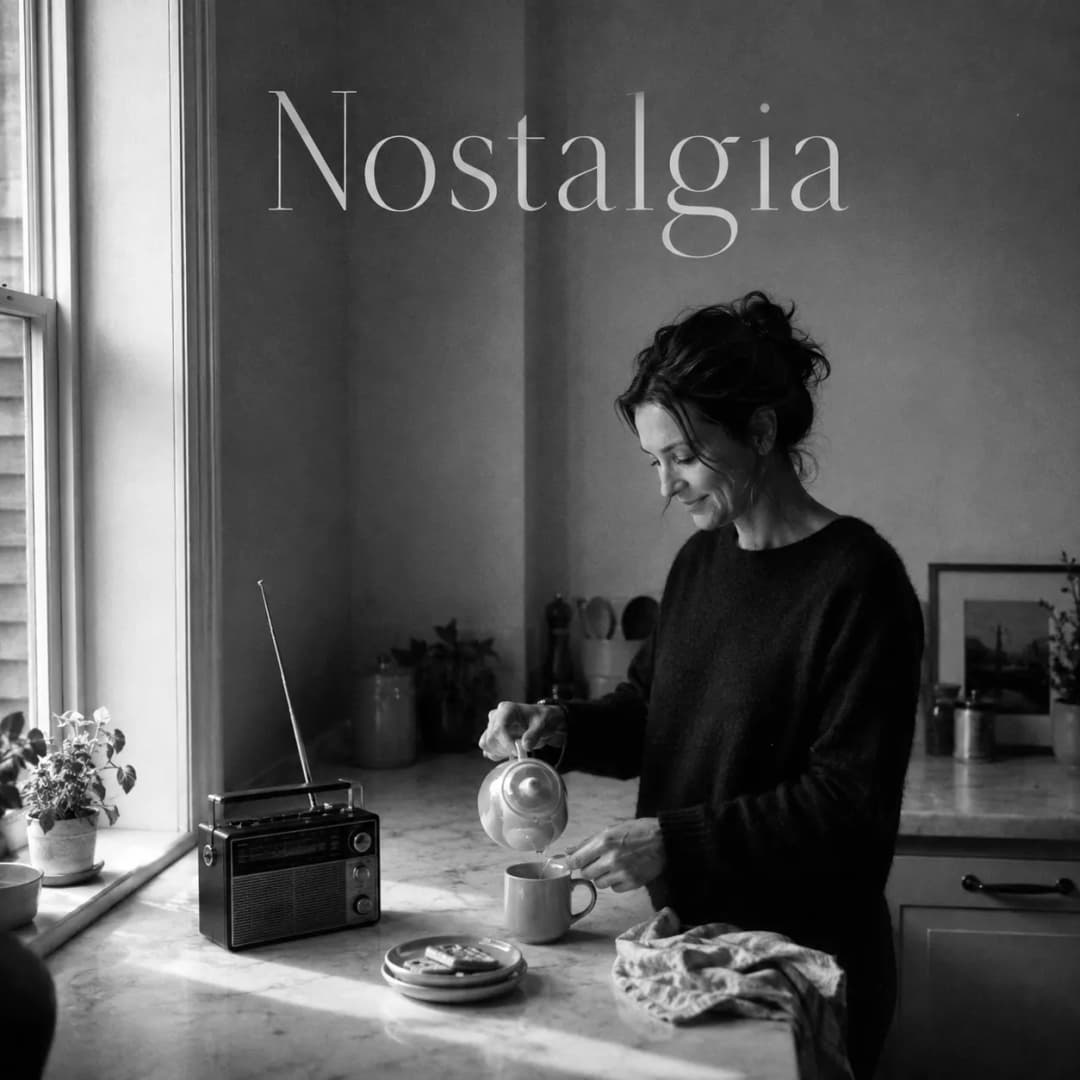
Nostalgia is a past-oriented, self-relevant and bittersweet emotion, a fond remembering of one's own history with loss inside the pleasure. Johannes Hofer coined the word in a 1688 Basel dissertation, from nostos, homecoming, and algos, ache, and he was describing a disease. It stayed one for the better part of two centuries. Constantine Sedikides, Tim Wildschut and colleagues at Southampton have spent two decades reversing that, and the reversal is well evidenced rather than merely fashionable.
What it is
Hofer was a Swiss medical student when he named it. His 1688 dissertation at Basel describes mercenaries serving in foreign armies who became genuinely ill with longing for home, and his case notes include emotional collapse, refusal of food and suicidal ideation. The treatment was discharge, or the Alps. The word is his construction: nostos, homecoming, joined to algos, ache.
That framing held for a long time, which is worth holding onto when the current one feels self-evident. Nostalgia was a medical condition before it was an emotion, and a defect before it was a resource.
The modern account is the inverse and it is well supported. Julius Frankenbach, working with Tim Wildschut, Jacob Juhl and Constantine Sedikides, pooled 116 studies of nostalgia's functions and 39 of its affective consequences in 2021, covering 3,556 participants. The main effects held across the board: self-esteem, optimism, meaning in life, self-continuity and social connectedness. Separately, Joost Leunissen with Wildschut, Sedikides and Clay Routledge combined 41 experiments that induced nostalgia, with 4,659 participants between them, and found the inductions raised positive and ambivalent affect while leaving negative affect unmoved. Two independent pooled analyses, thousands of participants, effects that hold. Take the finding seriously and the practical advice follows: indulge the feeling deliberately, because it works.
Follow that through and the question becomes what exactly is being indulged.
The memory research has an answer, and the two literatures do not cite each other. Memory does not store and retrieve; it assembles at the moment of asking, from fragments, shaped by present mood and everything learned since, which is covered on Reconstructive Memory. The assembly has a measured direction, established by Mitchell, Thompson, Peterson and Cronk on real events in 1997 and covered on Rosy Retrospection. And what gets selected for nostalgia is decided partly by a retrieval artefact, the Reminiscence Bump, which clusters important autobiographical memories roughly between ages 10 and 30.
Put the two bodies of work beside each other and the interesting possibility is not that the benefit survives the distortion. It is that the benefit may require it. Continuity is easier to feel about an edited past than an accurate one, connectedness easier to draw from a memory in which people were warmer than they were, meaning easier to find in a period whose boredom has been deleted. That is not proven, the two literatures have not been run against each other, and the experiment would be awkward to design. It follows naturally from both, which is a different and weaker thing than being established.