Outsider Art
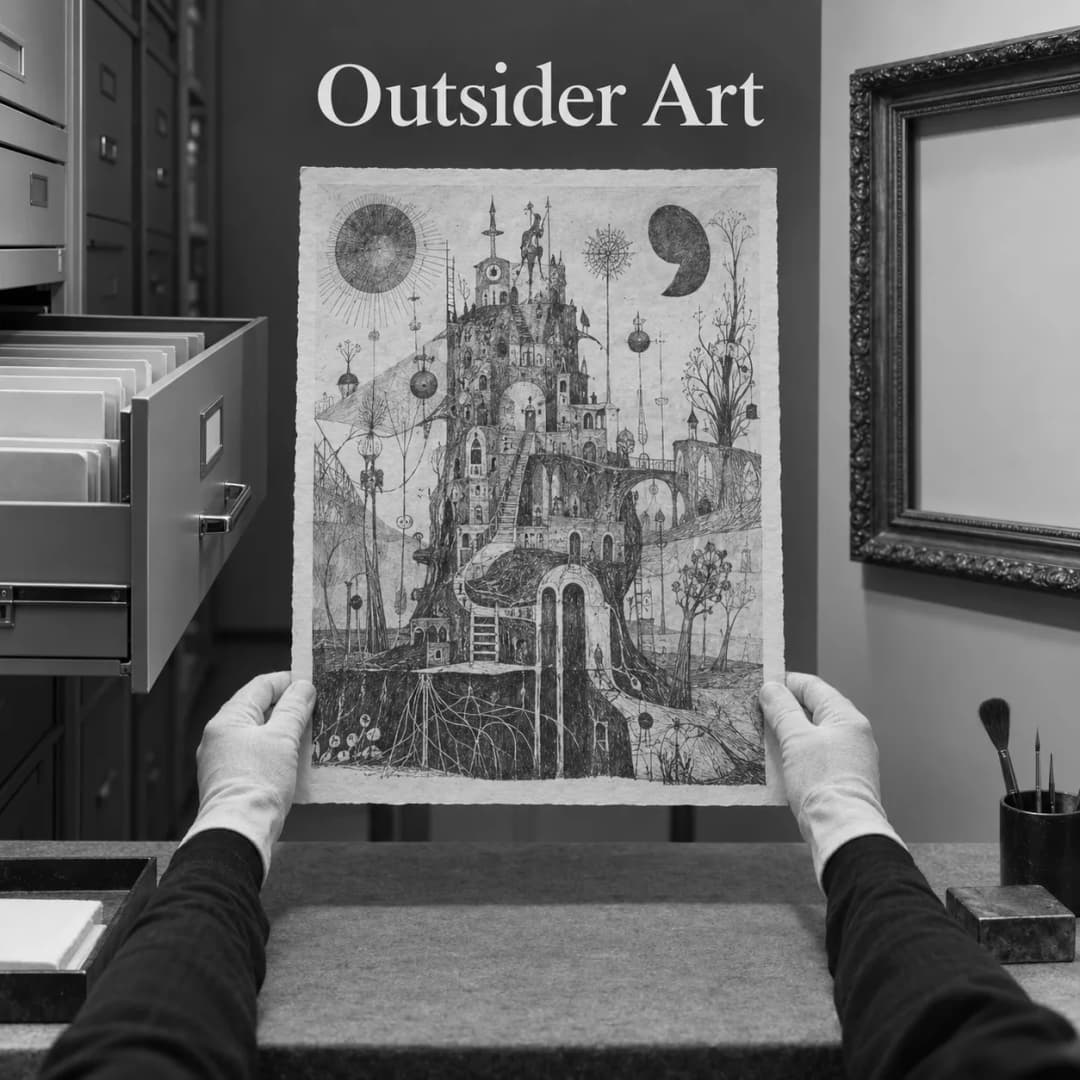
Outsider art is art made by people outside the art world's training and institutions, historically including psychiatric patients, and valued on its own terms. Jean Dubuffet coined art brut in 1945 and Roger Cardinal gave the English term in his 1972 book. It is a category rather than a research claim, and it matters because the label decides whether a patient's painting is read as a work or as a symptom. That choice is the fault line running through the history of art therapy.
What it is
The same drawing by a long-stay psychiatric patient can be filed as a diagnostic record in a case note or hung in a gallery as a work. Nothing about the drawing changes. What changes is the frame the viewer brings, and outsider art is the name for insisting on the second frame.
Dubuffet's art brut, coined in 1945, is the original. Roger Cardinal's Outsider Art, published by Studio Vista in 1972, gave the English-speaking world its term, and Cardinal is the credit that gets dropped most often in popular accounts.
Behind both sits Hans Prinzhorn, whose Bildnerei der Geisteskranken of 1922 collected and analysed the work of psychiatric patients in Heidelberg. Prinzhorn's position is contested and this page carries the dispute rather than settling it. He can be read as cataloguing pathology, with the art as evidence of the illness. The specialist reading is anti-diagnostic, taking the works seriously as art and treating the diagnosis as beside the point. McNiff's Art Heals lands on the anti-diagnostic side. Readers should know that both readings are live.
There is a darker fact attached to the collection and it belongs on the page. Many of the artists Prinzhorn gathered were later victims of Nazi psychiatry, and works from the collection were exhibited in the 1937 Degenerate Art show. The category that was meant to dignify the work was available to be used against the people who made it.
In effect
The commercial afterlife is substantial. Auction houses now sell outsider art at high prices, which raises the obvious question of who benefits from the label, given that the defining feature of the artists is that they stood outside the institutions now trading the work.
Inside art therapy, the category is load-bearing in a different way. A profession that reads patient work as clinical material inherits Prinzhorn's problem directly, and the argument about interpretation, between reading the image and letting it stand, runs from the founding split between Margaret Naumburg and Edith Kramer straight through to current practice.
The category also feeds the romantic story about madness and creativity, which is a separate claim and a much weaker one.
What it does not say
It does not say that mental illness produces art, or better art. That is the mad genius myth, it is a research claim rather than a category, and the evidence for it is poor.
It does not say the label is neutral. Calling an artist an outsider is a judgement made by insiders, and the history of the Prinzhorn collection shows how fast such a judgement can be turned.
It does not settle what Prinzhorn meant. The diagnostic and anti-diagnostic readings of his 1922 book both have support, and this page reports the disagreement rather than resolving it.
Sources
- Cardinal, R. (1972). Outsider Art. Studio Vista. The English coinage.
- Dubuffet, J. (1945). Coined "art brut".
- Prinzhorn, H. (1922). Bildnerei der Geisteskranken. The Heidelberg collection. Not read here; both readings of Prinzhorn are recorded, and neither is settled.
- Vault note on Art Heals, 2026-09-27. Prinzhorn (1922) as a named intellectual source.