Perceived Realism
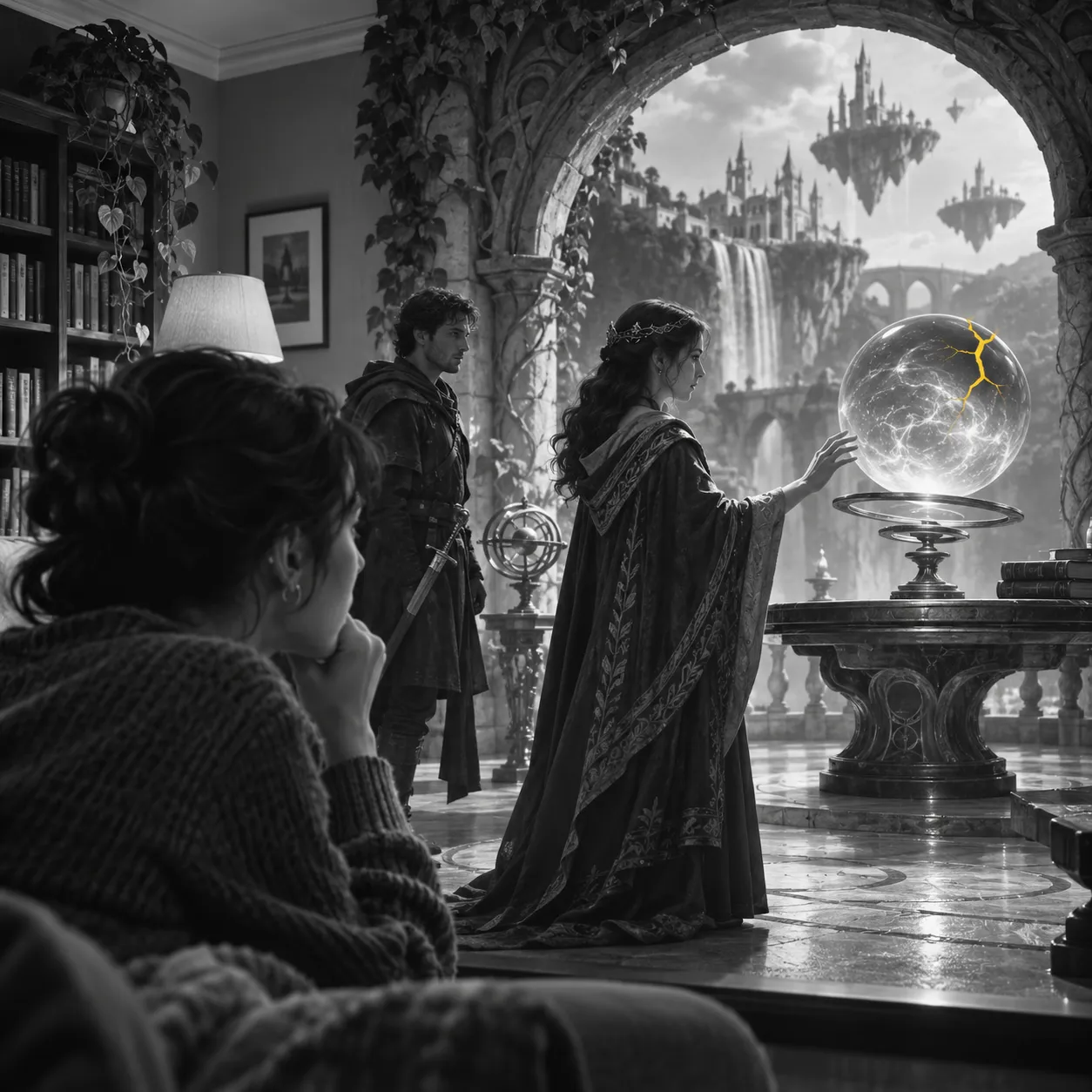
Perceived realism is how real a story world seems to the person inside it. Rick Busselle and Helena Bilandzic separated two kinds in 2008: external realism, the match between a story and the real world, and narrative realism, the consistency of a story with its own rules. Their account holds that clashes with either kind can break absorption, while the plain fact that a story is invented does not.
What it is
Busselle and Bilandzic proposed a mental-models framework for how audiences follow stories. As a story unfolds, viewers and readers build representations of its events, characters and setting, and they become absorbed when that building runs smoothly. Knowing that a story is fiction does not interrupt the process.
What does interrupt it is a mismatch. If a story contradicts what the audience knows about the world, external realism suffers. If a story contradicts something it established earlier, narrative realism suffers. Either gap forces the audience to stop building and start repairing, and absorption drops.
The idea matters for invented worlds because it moves the question away from whether a world is true and toward whether it holds together. A world with its own languages, maps and histories gives the audience many fixed points to build on, and each fixed point is a place where the story can stay consistent with itself.
In effect
In the article on why readers call The Lord of the Rings the best book ever written, perceived realism is used to read the book's maps, languages and histories as sources of internal consistency. A reader who meets a place name on page one and finds it on a map, with a past that stays the same across the story, has little to repair and much to follow. That reading is an interpretation: the 2008 paper is a theoretical synthesis and does not study any single title.
The concept sits next to narrative transportation, the state of being absorbed in a story. Perceived realism describes one condition that helps that absorption continue.
What it does not say
It does not say that realistic stories are better stories. Narrative realism is about consistency, and a fantasy world can be fully consistent. It does not say that audiences must believe a story is true; the framework states the opposite. And because the paper is a theoretical framework, it offers a way of reading stories, not a measured effect size for any particular book or film.
Sources
- Busselle, R. W. and Bilandzic, H. (2008), a mental-models framework of narrative comprehension and engagement, Communication Theory.