Present Bias
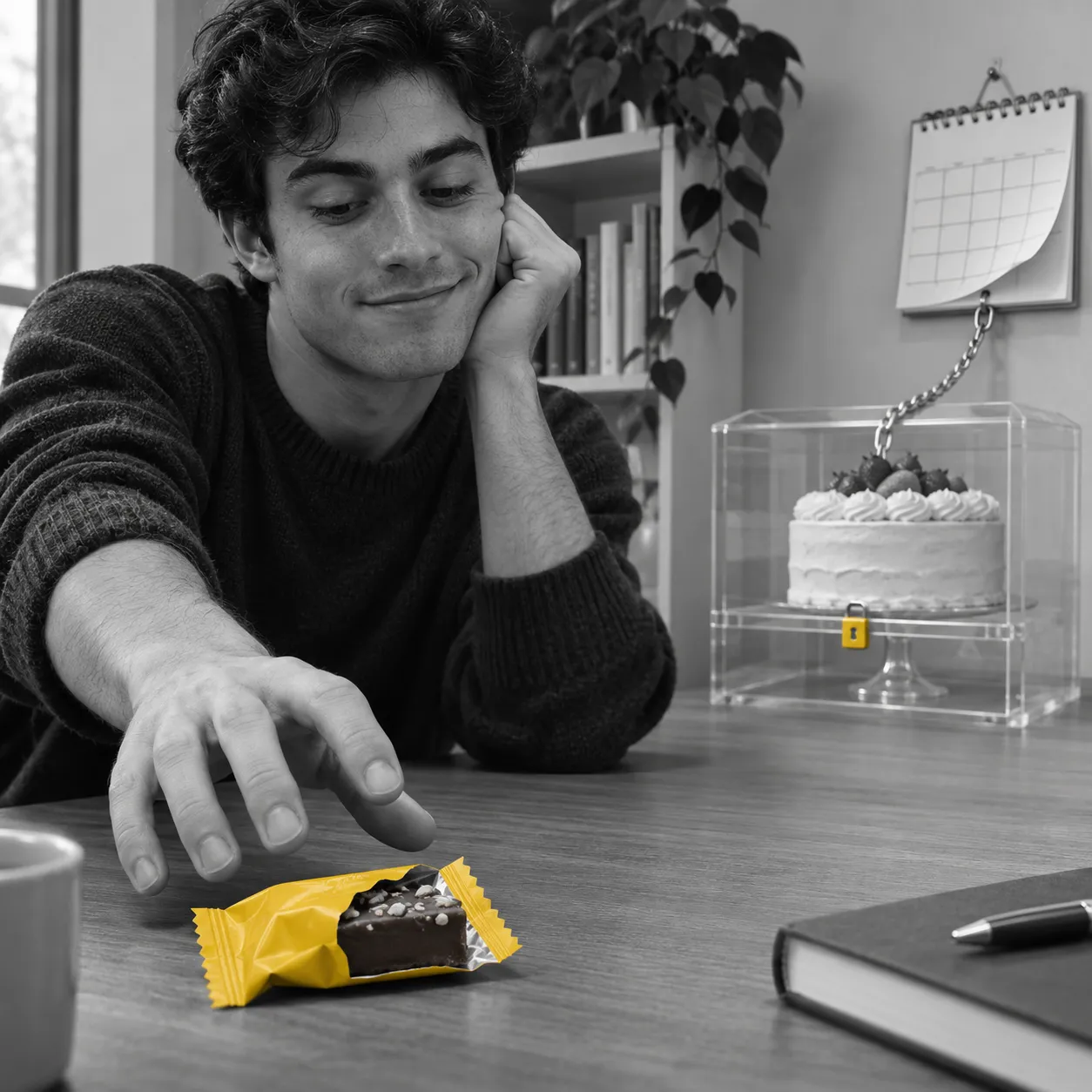
Present bias is a preference that overweights the present against the future. It is the starting point of Ted O'Donoghue and Matthew Rabin's 1999 model of doing an activity now or later, published in the American Economic Review.
What it is
O'Donoghue and Rabin model self-control problems as preferences that overweight the present. They study a person who has a single activity to complete, and their analysis turns on two distinctions. The first is whether the activity's immediate effects are costs or rewards. The second is whether the person is naive or sophisticated, meaning unaware or aware of their own future self-control problems.
In effect
For a naive person, the model predicts delay when the activity carries immediate costs, and completion that comes too early when it carries immediate rewards. Sophistication reduces the delay but makes the early completion of rewarding activities worse. A small present bias can seriously reduce a person's welfare in only two cases: for a naive person when costs are immediate, and for a sophisticated person when rewards are immediate. The authors point to saving and other behaviours as places the analysis applies.
David Laibson's 1997 paper in the Quarterly Journal of Economics belongs to the same family of models. It studies hyperbolic discounting, which causes preferences to shift over time, and shows that a person with such preferences may gain from a partial commitment tool, an illiquid asset that must be put up for sale a period before the proceeds arrive.
What it does not say
The model concerns one activity and the immediate sign of its effects. It predicts early completion of a rewarding activity, whereas Suzanne Shu and Ayelet Gneezy's 2010 field data and experiments found delay in visits to desirable landmarks and in redeeming gift certificates and cards when the window was long. The two sources agree that timing and the width of the window shape behaviour and differ on the direction for a pleasant activity. This site reads the field data as the more direct evidence on that question and reads the model as a statement of what present bias alone predicts for a single activity.
Sources
- O'Donoghue, T., & Rabin, M. (1999), Doing it now or later, American Economic Review, 89(1), 103-124. https://doi.org/10.1257/aer.89.1.103
- Laibson, D. (1997), Golden eggs and hyperbolic discounting, Quarterly Journal of Economics, 112(2), 443-478. https://doi.org/10.1162/003355397555253
- Shu, S. B., & Gneezy, A. (2010), Procrastination of Enjoyable Experiences, Journal of Marketing Research, 47(5), 933-944. https://doi.org/10.1509/jmkr.47.5.933
In these themes
- Saving, Debt and Budgets
How we sort, save and lose track of our own money.
- Impulse and Self-Control
Why we give in, how we feel afterwards, and what helps.