Prestige Signals
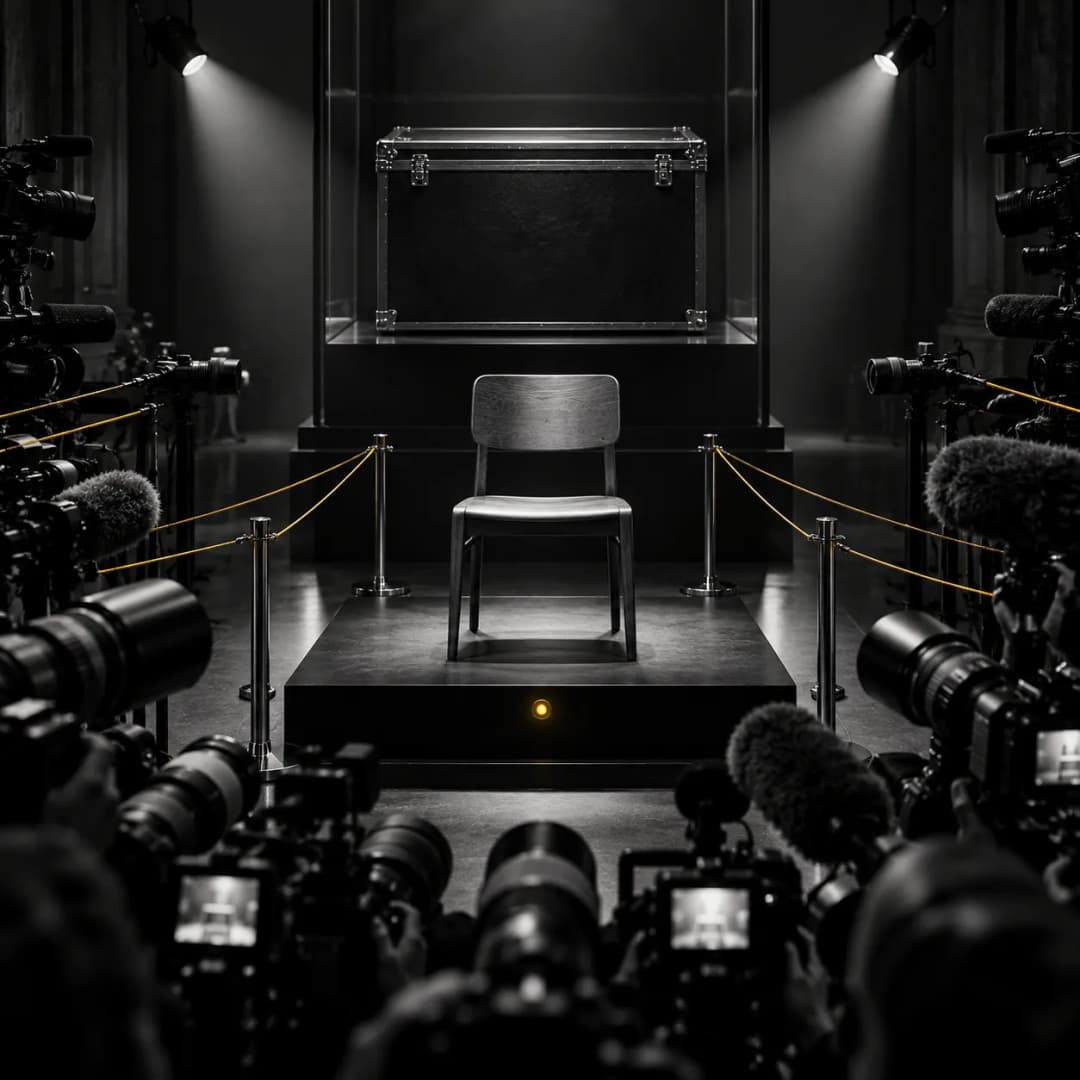
A prestige signal is information about who a group admires, and about what the admired do. Michael Morris's sharp version of the mechanism is that prestige is inferred from third-party attention rather than from demonstrated competence: no titles, no track record required, just the observation that other people are looking. That makes the instinct efficient and hackable, and it explains why fictional characters can function as status figures.
What it is
Where a symbol triggers an existing ideal, a prestige signal changes the ideal itself, by changing who registers as exemplary.
The mechanism is the useful part. Prestige is inferred from third-party attention. Morris's own observation: a million followers by itself confers prestige and thereby influence, which is why for influencers revelations of faked accomplishments are less damaging than revelations of fake followers.
It also means prestige transfers to people who do not exist. The entertainment-education literature in his chapter five rests on fictional characters registering as status figures because other characters defer to them and audiences talk about them.
The pathology is monopoly rather than strength, and this is the part that matters most commercially. In Morris's structural definition, cults are not merely strong cultures; they are communities that severely restrict the prestige signals their members receive, so that leaders acquire extreme mystique and control. Plural membership is the ordinary protection: people take part in several communities with differing heroes and ideals, which creates dissonance and, in his words, empowers us to question any one of these heroes.
The gating condition is a different shape of claim and easy to lose. An out-group messenger does not merely persuade less; suspicion suspends the automatic social inference that otherwise updates a hero code.
Prestige signals do not check which trait is being copied, which is why unintended-prestige cases recur: characters written to be satirised are admired by the audiences they were written to satirise.
In effect
In research: the trial where prestige was the manipulation
An anti-bullying programme across more than fifty New Jersey high schools had students design and deliver the message rather than receive it from an administrator, and peer conflicts measured by school disciplinary records declined. The design does the work the theory needs: in some schools the researchers recruited high-status students, operationalised as those who get the most attention from their peers, and in others a random cross-section, and the effect was much stronger with the high-status messengers. Objective outcome measure, large school-level sample, and the causal variable varied experimentally. Morris reports no sample size, interval or effect size, as nowhere in the book.
In commerce: the community that cannot own a customer
Scott A. Thompson and Rajiv K. Sinha, following 7,506 members across four brand communities, found that where memberships overlap, higher participation in one community may raise the likelihood of adopting a rival's products, which they call disconcerting. That is prestige monopoly measured from the other side: plural membership is what stops any one community owning a person, and it is also what stops a firm owning a customer. A brand that genuinely became someone's only tribe would have built a pathology and booked it as an asset.
In everyday life: the follower count as a credential
The instinct works without any ability to evaluate expertise, which is its elegance, and it therefore works on people who have achieved nothing, which is its failure mode. The practical check on any prestige signal is to ask what the attention is evidence of, and in most cases the answer is other people's attention.
What it does not say
It does not supply effect sizes. Morris reports no sample size, no interval and no effect size anywhere in the book, and the studies behind his chapter five are described rather than quantified in it.
It does not license several figures in the same chapter, which this publication declines to carry: a widely quoted testing-rate rise with no stated window or denominator, national pre-post programme outcomes with no control, and a celebrity-endorsement meta-analysis reported for its moderators with no magnitude.
It does not say prestige is the only route to influence. The same chapter distinguishes prestige from prevalence and from precedent, and the three operate differently.
And the cult material is a structural definition rather than a claim about any named group or person. This page describes a mechanism and makes no assertion about anybody's conduct.
Sources
- Tribal: How the Cultural Instincts That Divide Us Can Help Bring Us Together, Michael Morris, third printing 2025. Chapter 5, pp. 103 to 125, for prestige signals, the influencer asymmetry at p. 106, the status-inference study at pp. 106 to 107, the New Jersey anti-bullying trial at pp. 113 to 114, cults and prestige monopoly at pp. 114 to 117, and the suspicion gate at p. 120. Not re-read at source on this pass; carried from this publication's eight digests of the book, read in full. The book has no bibliography, and the primary sources behind chapter 5 are recorded as still to be acquired.
- Thompson, S. A., & Sinha, R. K. (2008), Journal of Marketing 72(6), 65-80, doi:10.1509/jmkg.72.6.065. Abstract read in full at Crossref; full text not read.
- Algesheimer, R., Borle, S., Dholakia, U. M., & Singh, S. S. (2010), Marketing Science 29(4), 756-769, doi:10.1287/mksc.1090.0555. Published abstract read in full; full text not read, four routes failed. For what happens to commerce when membership is assigned rather than chosen.