Proteus Effect
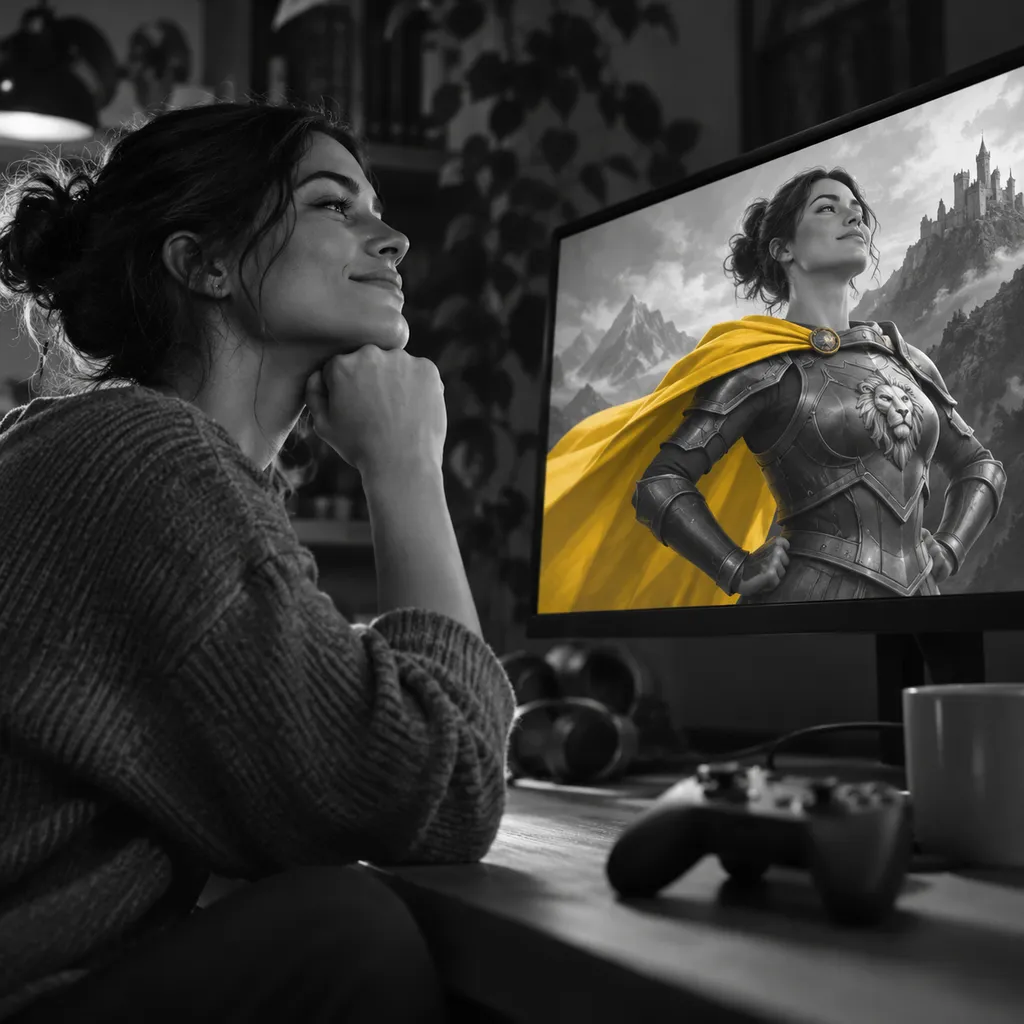
The finding that people act in line with the look of their avatar.
What it is
Nick Yee and Jeremy Bailenson named it in 2007 after two experiments in which people given more attractive avatars were more intimate with a stranger and people given taller avatars negotiated more confidently. A 2009 paper with Nicolas Ducheneaut added two studies: in an online game, avatar height and attractiveness predicted performance, and a taller avatar went with more assertive negotiation in a later face-to-face meeting.
In effect
In the article on why players pay for skins, the Proteus effect is the strongest evidence that the look of a character can reach the player behind it.
What it does not say
It does not say a purchased skin changes how a player behaves; the experiments assigned avatars rather than studying bought ones.
Sources
- Yee, N., & Bailenson, J. N. (2007). The Proteus effect: The effect of transformed self-representation on behavior. Human Communication Research, 33(3), 271-290.
- Yee, N., Bailenson, J. N., & Ducheneaut, N. (2009). The Proteus effect: Implications of transformed digital self-representation on online and offline behavior. Communication Research, 36(2), 285-312.