Proust's Madeleine, Reinterpreted
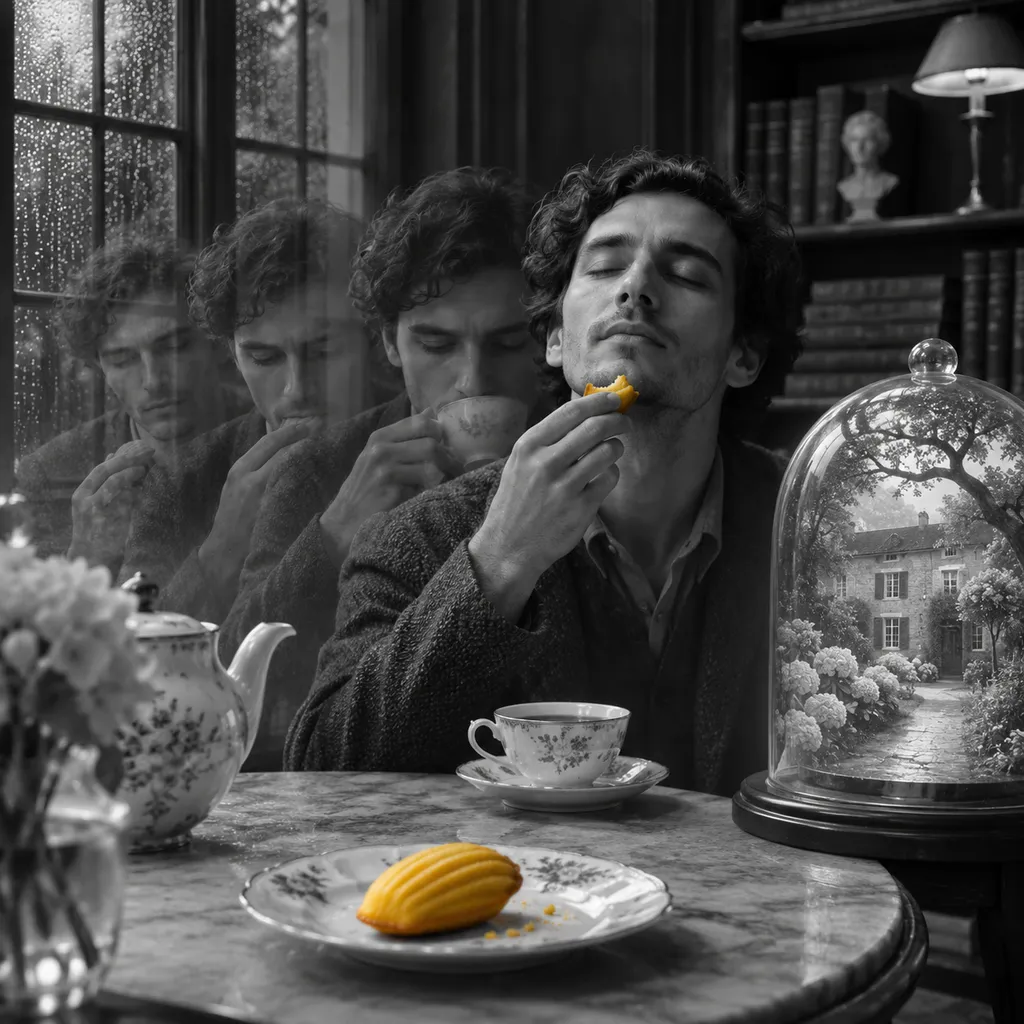
A neuroscience reading of the cake-and-tea passage in Marcel Proust's novel, in which the memory arrives after repeated effort rather than all at once.
What it is
Gordon Shepherd argues in Neurogastronomy that the recall in the passage was driven by flavour, which combines smell from inside the mouth with taste, and that it came only after the narrator tried again and again. On this reading the episode is effortful, flavour-driven recall rather than a sudden involuntary flash.
In effect
In the article on why a smell brings the past back, the reinterpretation is the seed book's reading, set beside the laboratory studies of odour-cued memory.
What it does not say
It is a reading of a literary passage, not a finding; the studies of odour and memory test the general pattern rather than the passage itself.
Sources
- Shepherd, G. M. Neurogastronomy.
- Chu, S., & Downes, J. J. (2000). Odour-evoked autobiographical memories: Psychological investigations of Proustian phenomena. Chemical Senses, 25(1), 111-116.