Psychological Acceptance
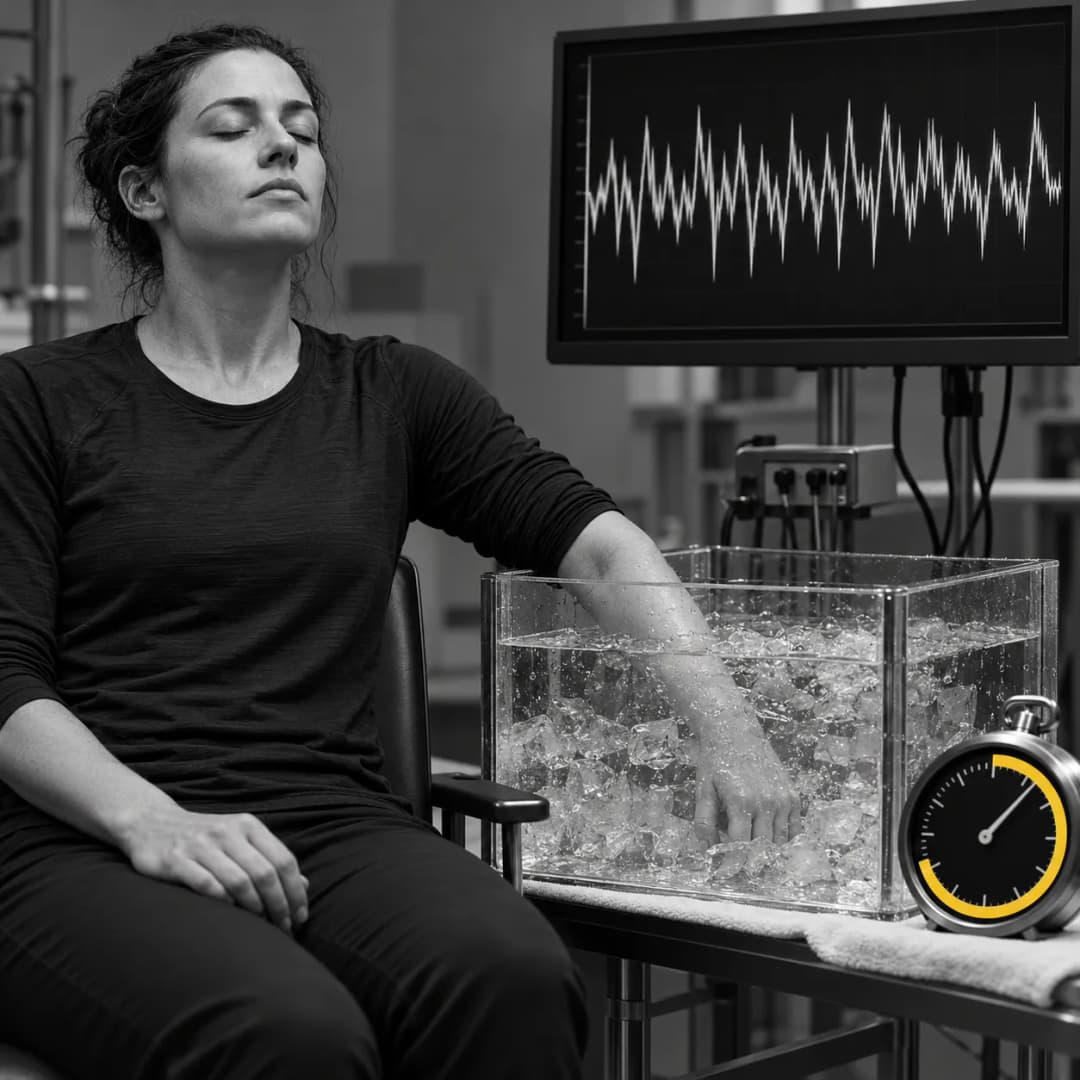
Psychological acceptance is allowing an unwanted internal state to be present without acting to change it. Pooled across experiments in which people are instructed to do exactly that, acceptance comes out superior to its rivals on how long an unpleasant state can be tolerated, and not superior on how unpleasant it feels. Those are different outcomes, and almost every popular promise built on acceptance sells the second one. The relevant number in the meta-analysis is the one that is not significant.
What it is
As a clinical process, acceptance sits inside a larger therapy. As an experimental manipulation it is something much smaller and much easier to study: an instruction, given once, before an unpleasant task. Notice the sensation. Let it be there. Do not fight it. Then the experimenters measure what happens, and compare it against people given a different instruction.
That design is what makes the construct testable, and it is also what makes the results so often misreported. An experiment of this kind can measure at least three things separately, and they come apart.
It can measure tolerance, meaning how long a person will keep their hand in iced water, or keep going at an aversive task before stopping. It can measure intensity, meaning how much the thing hurts while it is happening. And it can measure affect, meaning how the person feels in general afterwards. A single instruction can move one of those without moving the others, and in the pooled record that is precisely what it does.
Annika Kohl, Winfried Rief and Julia A. Glombiewski gathered the experimental literature in 2012 and compared instructed acceptance against other emotion-regulation strategies. On pain tolerance, acceptance was superior, at a Hedges g of 0.43 with a 95 per cent confidence interval running from 0.12 to 0.73. On pain intensity, there was no significant advantage. On negative affect, there was no significant advantage.
Read those three results in order and the shape of the finding is clear. Acceptance instructions reliably change how long an unwanted state can be borne. They do not reliably change how bad it feels.
The comparison condition is the whole point, and it has to travel with the numbers. The alternatives in these experiments are not nothing. They include cognitive reappraisal, which is the deliberate reinterpretation of what a situation means, and distraction, which is the deliberate removal of attention from it. Both of those work. A null result against them is therefore a statement about ranking, not about efficacy. Being no better than a good thing is not the same as being no good, and this page is careful not to let a reader slide from one to the other.
What the record does not support is the stronger claim, which is that acceptance is the superior route to feeling better. That claim is extremely common, it is the organising promise of a large commercial category, and the pooled experiments on acceptance instructions do not deliver it.
A single controlled experiment has the same shape at a smaller scale and is worth having alongside the pooled result, because it separates frequency from distress rather than tolerance from intensity. Brook A. Marcks and Douglas W. Woods compared a suppression group, an acceptance group and a monitor-only group on personally relevant intrusive thoughts. The suppression group could not suppress and reported more distress. The acceptance group reported less discomfort and no change in how often the thought arrived. Acceptance altered the relationship to the experience and left the experience in place.
The therapy that uses acceptance as one of six named processes is a different object again, with its own and much larger pooled record, set out at Experiential Avoidance. A review of twenty meta-analyses is not evidence about a one-off instruction, and a one-off instruction's effect size is not evidence about a multi-session treatment. Keeping those two apart is the main service this page performs.
The read depth is worth stating, because it bounds everything above. This publication read the 2012 meta-analytic review at abstract and snippet level. The full text was not retrieved.
In effect
The pooled acceptance experiments (Kohl, Rief and Glombiewski)
The research case is the meta-analysis itself, and the reason it is useful is that it reports the three outcomes separately rather than pooling them into a single verdict about acceptance. Superior on tolerance, at a Hedges g of 0.43 against other emotion-regulation strategies, with the confidence interval not crossing zero. No significant advantage on intensity. No significant advantage on negative affect. A reader who takes only the headline, that acceptance beat the alternatives, will come away with the opposite impression of what the study found about distress.
The cold shower you decide not to fight
The everyday version is familiar and it is a tolerance effect, not an intensity effect. A person standing under cold water who stops flinching and braces into it will usually last longer. Very few would say it feels warmer. That is the finding in miniature, and it is a genuinely useful thing to know: if the task is to get through something, acceptance has measured support. If the task is to make something hurt less, the evidence is thinner than the advice.
A trade paperback that promises less distress
Commercially, this is the point at which a claim and its evidence come apart. A book whose organising promise is that giving up control over other people will reduce the reader's distress is selling an intensity and affect outcome. The pooled experimental record on acceptance instructions supports a tolerance outcome. The gap is not a quibble; it is the difference between being able to bear something and minding it less. Testing The Let Them Theory traces one such case in detail, and the audit there is of warrants rather than of anyone's character: three independent search passes of the published and press record found no trial, no registry entry, no pre-post evaluation and no peer-reviewed critique of the named method. Two bibliographic databases were unreachable on that pass and a subscription index was not queried, so that absence is an open-web and press result rather than a final one. The strongest clause is the checkable one: the book presents no outcome data of its own.
What it does not say
It does not say acceptance is useless, or that it should not be taught. On tolerance it has the better of its rivals, and a tolerance effect is a real clinical good.
It does not establish a mechanism. These are single-session instructions with outcomes measured minutes later, so the record is silent on durability and silent on how the effect is produced.
It cannot be transferred to an instruction about other people's behaviour. Every experiment pooled here manipulated a person's stance towards their own sensation, and nothing in the design speaks to what happens when the unwanted thing is somebody else's conduct. The nearest academic frame for that case is the fit-focused account of secondary control, which holds that acceptance has to be paired with adjustment to be adaptive, because acceptance on its own is hard to distinguish from resignation. This publication has not read the review that defines it, not even its abstract, so it is described here and nowhere relied upon.
It does not inherit the therapy's effect sizes. The acceptance and commitment therapy record describes a structured, multi-session, clinician-delivered protocol, and this page does not borrow it.
This page reports clinical figures and is handled at the highest tier of care for that reason. The article it supports carries a medical review line, with the reviewing clinician still to be named. Nothing here is advice, and a reader in distress should speak to a clinician.
Who developed it
The pooled experimental definition used on this page is Annika Kohl, Winfried Rief and Julia A. Glombiewski's, from their 2012 review. The construct itself is older and this publication does not fix its origin. The single-experiment version is Brook A. Marcks and Douglas W. Woods, and the therapy that uses acceptance as one process of six belongs to Steven Hayes, with its pooled record reviewed by Andrew T. Gloster and colleagues.
Sources
- Kohl, A., Rief, W., & Glombiewski, J. A. (2012). "How effective are acceptance strategies? A meta-analytic review of experimental results." Journal of Behavior Therapy and Experimental Psychiatry, 43(4), 988-1001. Read at abstract and snippet level only; the full text was not retrieved. Author order was not confirmed at Crossref or OpenAlex on the verification pass, because the endpoints rate-limited, and the forenames are recorded as the supporting article's own sources block gives them.
- Marcks, B. A., & Woods, D. W. (2005). "A comparison of thought suppression to an acceptance-based technique in the management of personal intrusive thoughts: A controlled evaluation." Behaviour Research and Therapy, 43(4), 433-445. Read at abstract level only.
- Gloster, A. T., Walder, N., Levin, M. E., Twohig, M. P., & Karekla, M. (2020). "The empirical status of acceptance and commitment therapy: A review of meta-analyses." Journal of Contextual Behavioral Science, 18, 181-192. Accepted manuscript read in full at a university repository. Cited here only to mark the boundary between a therapy and an instruction.
- Robbins, M. (2024). The Let Them Theory. Hay House. ISBN 978-1-78817-618-7. Read in full by this publication on 2026-10-17. Cited for the shape of the promise and for the absence of outcome data in the book, and for nothing empirical.