Public Versus Private Consumption
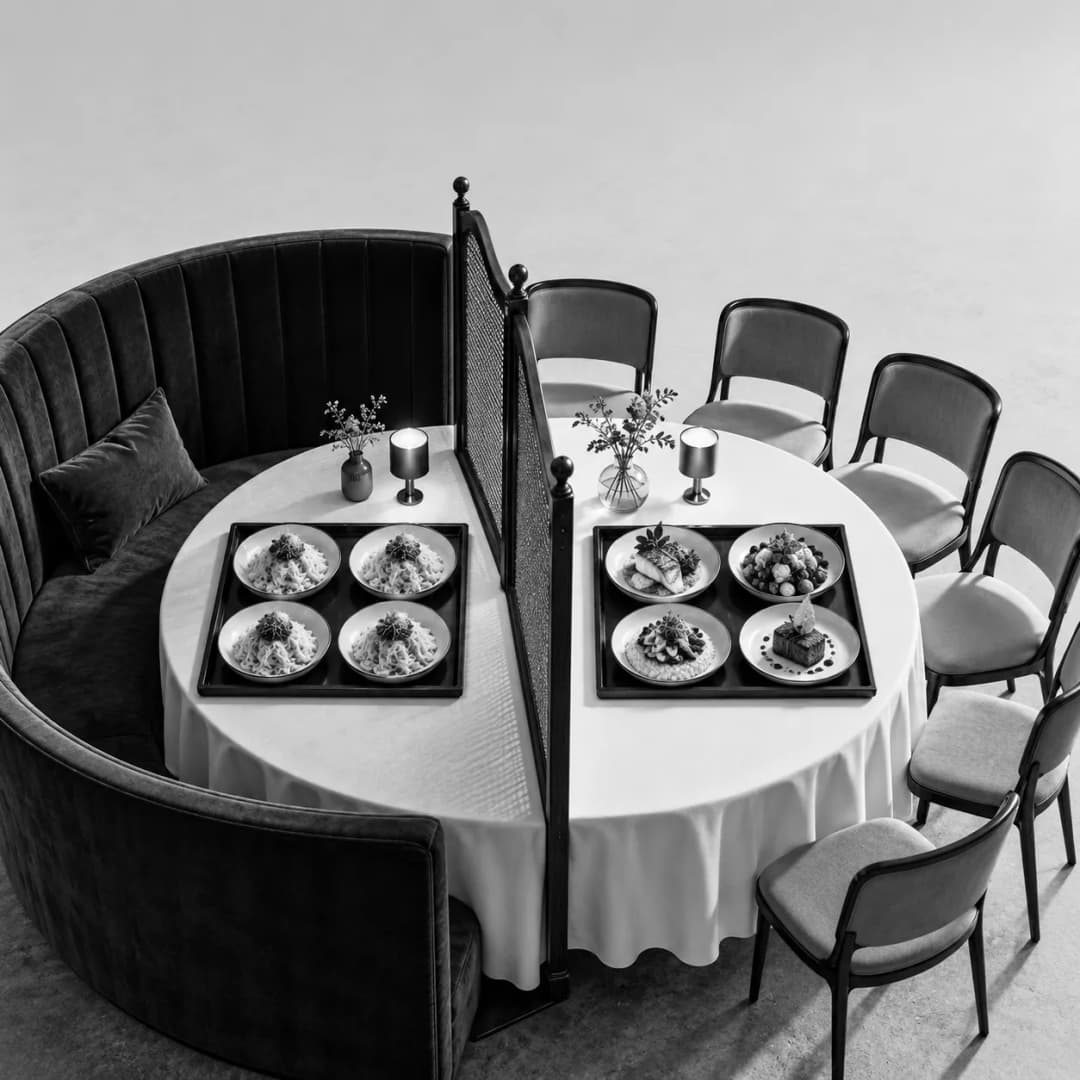
Rebecca K. Ratner and Barbara E. Kahn found that choices made where other people can see them carry more variety than private ones. The reason is anticipated judgement rather than taste: people expect to be evaluated more favourably if they choose variety, so they build more of it into a public decision than they would into the same decision made alone. It is the most portable mechanism available for what happens to a shopping basket in company.
What it is
The paper reports three experiments. The first two established that consumers expect others to evaluate their decision more favourably when it shows variety, and that this sometimes leads them to put more variety into public decisions than into private ones, with self-monitoring moderating the effect so that the people most attentive to how they come across do the most of it. The third located the off switch, finding that the pressure to choose variety in public disappears when a social cue signals that consuming one's favourites is appropriate.
In effect
The third result is what makes the mechanism useful rather than merely interesting, because it is a cue and not a disposition that does the work. It also makes this the independent line of evidence sitting underneath the better-known finding that tables order more varied dishes than their members would alone, which matters given that the table finding rests largely on a single paper. Ratner and Kahn arrive at the same place from expected evaluation rather than from group interaction, and the two accounts are compatible without either depending on the other.
What it does not say
It does not say people prefer variety, only that they expect to be judged better for displaying it. It does not establish magnitudes, since the full text is paywalled and the three studies' sample sizes are not reported here. And it does not explain the table result on its own, since the beer study in that work located the effect in members hearing each other order, which is a group-interaction mechanism rather than an anticipated-evaluation one, and no study in reach pits the two against each other.
Sources
- Ratner, R. K., & Kahn, B. E. (2002). "The Impact of Private versus Public Consumption on Variety-Seeking Behavior." Journal of Consumer Research, 29(2), 246-257. doi:10.1086/341574. Abstract read in full; full text paywalled and not read, so the three studies' sample sizes are not printed.
- Ariely, D., & Levav, J. (2000). "Sequential Choice in Group Settings: Taking the Road Less Traveled and Less Enjoyed." Journal of Consumer Research, 27(3), 279-290. doi:10.1086/317585. The table finding this mechanism is a candidate explanation for.
- Quester, P. G., & Steyer, A. (2010). "Revisiting Individual Choices in Group Settings: The Long and Winding (Less Traveled) Road?" Journal of Consumer Research, 36(6), 1050-1057. doi:10.1086/644750. The one published re-examination of that finding.