Reciprocity
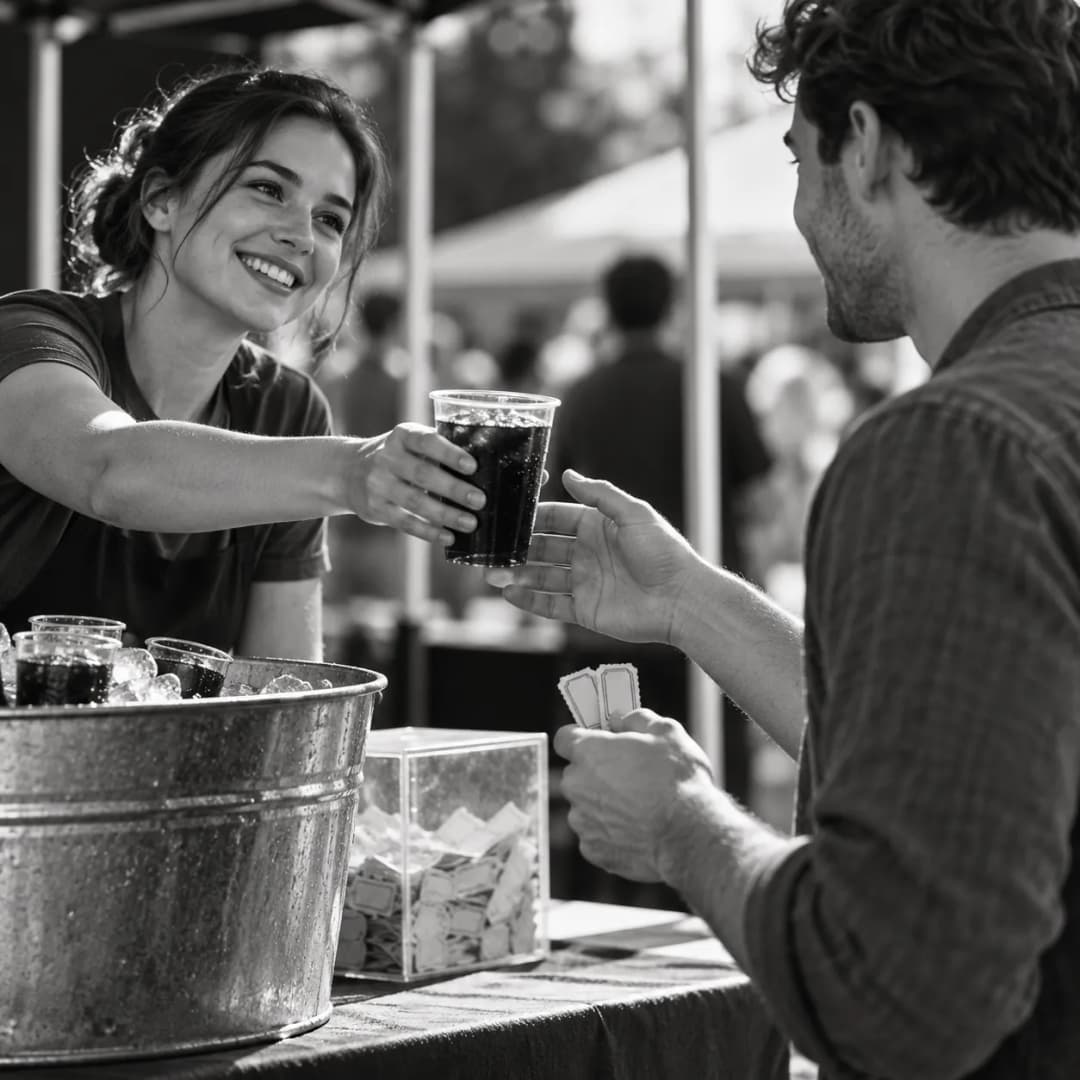
Reciprocity is the felt obligation to repay what someone has given us. In persuasion it becomes a tactic: give first, even something small and unasked for, and the other person feels a pull to give something back. Robert Cialdini made it the first principle in Influence. The classic laboratory test is Dennis Regan's 1971 study, in which an unasked-for Coke nearly doubled raffle ticket purchases.
What it is
In Regan's study, first-year men at Stanford rated paintings beside a confederate posing as another participant. When the confederate brought them a Coke during a break, they later bought 1.73 of his raffle tickets on average, against 0.92 when there was no drink. When the experimenter supplied the Coke instead, they bought 1.08, so the debt was to the giver. Liking for the confederate predicted buying overall, but not among people who had received his favour. Regan concluded the effect ran through "normative pressure to reciprocate" rather than liking.
Field studies show the same pull. David Strohmetz and colleagues found in 2002 that diners given a sweet with the bill tipped more, and argued reciprocity explained this better than mood or impression management. In a 1991 study of a chocolate shop, a free sample on entry raised sales, and the extra buying went to varieties other than the one tasted.
In effect
Reciprocity is the logic behind free samples, mints with the bill, gifts in charity mailings and free trials. Cialdini's point about samples is that a sample looks like information while also working as a gift.
What it does not say
Reciprocity does not create an open-ended debt. Jerry Burger and colleagues found in 1997 that a free drink raised agreement to a request when the request came about five minutes later, 93.8 per cent against 65.6 per cent with no drink, but not reliably when it came a week later. Burger's team concluded that the norm "does not mandate an open-ended obligation to return a favor."
Nor does it explain every effect of giving. A free sample also lets people learn that they like a product, and field experiments find long-run sales effects of samples that look more like learning than debt. The strong claim that reciprocity overrides liking rests mainly on Regan's single 1971 study.
Sources
- Regan, D. T. (1971). Effects of a favor and liking on compliance. Journal of Experimental Social Psychology, 7(6), 627-639. doi:10.1016/0022-1031(71)90025-4
- Strohmetz, D. B., Rind, B., Fisher, R., & Lynn, M. (2002). Sweetening the till: the use of candy to increase restaurant tipping. Journal of Applied Social Psychology, 32(2), 300-309. doi:10.1111/j.1559-1816.2002.tb00216.x
- Lammers, H. B. (1991). The effect of free samples on immediate consumer purchase. Journal of Consumer Marketing, 8(2), 31-37. doi:10.1108/07363769110034992
- Burger, J. M., Horita, M., Kinoshita, L., Roberts, K., & Vera, C. (1997). Effects of time on the norm of reciprocity. Basic and Applied Social Psychology, 19(1), 91-100. doi:10.1207/s15324834basp1901_7
- Cialdini, R. B. (2021). Influence, New and Expanded: The Psychology of Persuasion. Harper Business.