Reintegrative Shaming
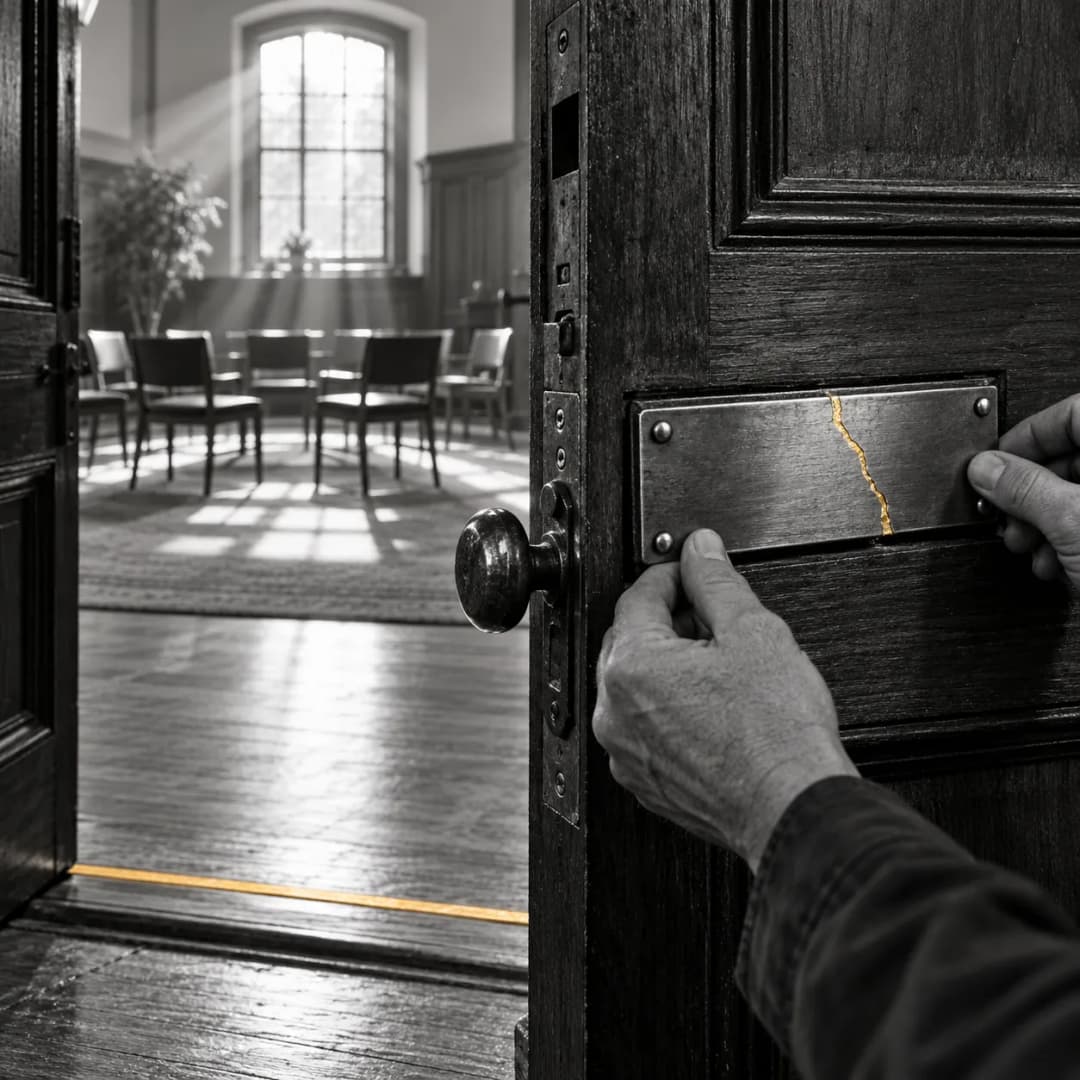
Reintegrative shaming is John Braithwaite's name for disapproval that condemns what a person did while leaving the person inside a relationship of respect, and that ends with the person being welcomed back. He set it against stigmatising shaming, which labels the person as bad and leaves the label in place. The theory, set out in Crime, Shame and Reintegration in 1989, predicts that the first kind reduces offending. It has been tested less often than it is cited. The best-known test in a regulatory setting is a survey of 652 tax offenders, and it found an association rather than an effect that anyone had assigned.
What it is
Braithwaite's starting question was not whether societies should shame offenders but how disapproval is delivered. He placed shaming on a continuum with two poles. At the reintegrative pole, disapproval is directed at the deed and the relationship of respect between the person and the people disapproving is sustained. Ceremonies that mark a person as having done wrong are followed by ceremonies that mark the matter as finished, so deviance does not become the thing the person is known for. At the stigmatising pole the disapproval is disrespectful, it labels the person and not only the act, the label is never lifted, and deviance becomes what sociologists call a master status.
In his own later summary, Braithwaite describes the reintegrative version in concrete terms: friends and family confront an offender about the harm done and allow remorse, so that the offender can rejoin the community. He states the core prediction in one line, that social disapproval can either stigmatise offenders, which increases crime, or reintegrate them, which reduces it. The book appeared from Cambridge University Press in 1989, and Braithwaite later linked the idea to restorative justice and to responsive regulation in Restorative Justice and Responsive Regulation (2002).
Two features of the definition matter for anyone testing it. First, the distinction is about the relationship, not the audience. A reintegrative rebuke can be delivered in front of family, and a stigmatising one can be delivered in private. Second, it is a distinction about how the person experiences the process. Whether an enforcement encounter was reintegrative or stigmatising is, in the studies that have measured it, something the person reports.
In effect
The tax offenders who reported on their own treatment
Kristina Murphy and Nathan Harris tested the theory in 2007 in the British Journal of Criminology, in what they called the white-collar crime context. They surveyed 652 tax offenders. Those who felt that their enforcement experience had been reintegrative, not stigmatising, were less likely to report having evaded their taxes two years later. Shame-related emotions partly accounted for the link between the experience and the later behaviour. The authors opened by noting that reintegrative shaming theory is popular in criminology but has seldom been empirically tested.
What it adds to the tax-letter experiment
In a separate line of work, Ricardo Perez-Truglia and Ugo Troiano wrote to 34,334 delinquent taxpayers in three US states and varied how visible their delinquency would be. Greater visibility raised payment among people owing under $2,500 and had no significant effect on larger debts. The two studies do not contradict each other. The letter study measured one payment after exposure. The survey measured self-reported evasion two years later in relation to how the person felt they had been treated. Read together they separate two things that popular talk about shaming runs together: how many people know, and how the person is treated by the people who know.
The nearest relative in the research on guilt
June Tangney and colleagues found in 2014 that, among 476 jail inmates, guilt-proneness predicted less reoffending in the year after release, while shame-proneness predicted more only through its link to blaming others. Reintegrative shaming describes a treatment, and guilt-proneness is a trait, so the two are not the same claim. They point the same way: what helps is attention to the act, with the self left intact.
What it does not say
It does not say that publicity reduces offending. The theory is silent on how many people see the sanction and puts its weight on whether the person is treated as someone who can return.
It does not say that agencies can create the reintegrative experience by changing procedure. The tax-offender finding is an association between how people described an experience and what they later reported. People who were already less likely to evade may have been more likely to describe their treatment as respectful, and a survey cannot settle the direction.
It does not say that stigmatising shaming has been shown to cause crime in these data. The 2007 result is that reintegrative experiences were linked with less later evasion.
It does not carry over automatically from tax offenders to other offences or to children, and the studies cited here do not claim that it does.
Evidence status on this site: mixed. The distinction is clear and widely used, and the supporting evidence reviewed here is a single survey with self-reported outcomes.
Sources
- Braithwaite, J. (1989). Crime, Shame and Reintegration. Cambridge University Press. The 1989 book was not read in full for this page. The wording of the two poles comes from Braithwaite's later summary of the theory and from an International Institute for Restorative Practices profile.
- Murphy, K., & Harris, N. (2007). Shaming, shame and recidivism: A test of reintegrative shaming theory in the white-collar crime context. British Journal of Criminology, 47(6), 900-917. doi:10.1093/bjc/azm037 (abstract read).
- Perez-Truglia, R., & Troiano, U. (2018). Shaming tax delinquents. Journal of Public Economics, 167, 120-137. doi:10.1016/j.jpubeco.2018.09.008 (abstract read).
- Tangney, J. P., Stuewig, J., & Martinez, A. G. (2014). Two faces of shame: The roles of shame and guilt in predicting recidivism. Psychological Science, 25(3), 799-805. doi:10.1177/0956797613508790 (abstract and press release read).