Resonance
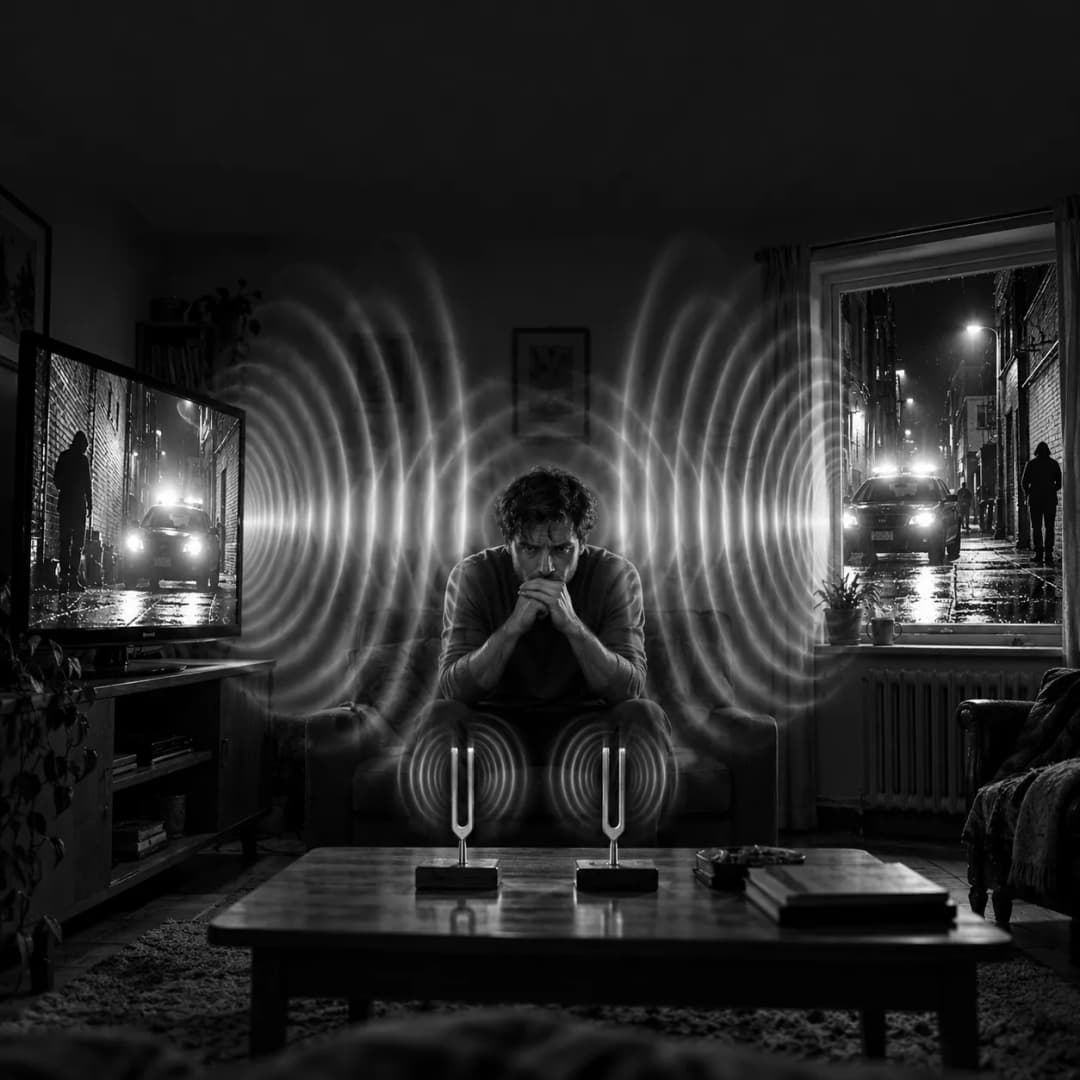
Resonance is the second of the two amendments George Gerbner, Larry Gross, Michael Morgan and Nancy Signorielli added to cultivation theory in 1980. The claim is that the cultivation effect is amplified where a viewer's own circumstances echo what is on screen, so that somebody living in a high-crime area and watching a great deal of televised crime is moved further than either condition alone would move them. Like mainstreaming, it arrived in the Violence Profile No. 11 paper, after the first reanalyses.
What it is
Resonance is an interaction claim, saying that the slope relating viewing to belief is steeper for viewers whose lived circumstances match the content because the content and the circumstance reinforce one another, and stated that way it is testable in principle by comparing slopes between a group whose environment echoes the content and a group whose environment does not. It sits in an awkward relation to the result that most damaged the original claim, because Anthony N. Doob and Glenn E. Macdonald found in 1979 that the viewing and fear correlation reproduced across four Toronto areas and became undetectable within them, which is to say that the apparent relationship was carried by the difference between neighbourhoods rather than by anything inside them. Resonance proposes that living somewhere dangerous should strengthen the relationship within that place, and their within-area correlations did not show it. L. J. Shrum's work gives the amendment a plausible mechanism without testing it, since if television stocks the examples available at the moment of judgement then a viewer whose own street supplies matching examples has more of them to draw on.
In effect
The practical reading is that a media effect should not be expected to be uniform, because whoever already has the circumstance has a different relationship to the content, which is a sensible prediction and the right shape for anybody applying this literature. It is also the amendment most easily confused with its own alternative explanation, since somebody in a dangerous place who both watches more and fears more because of the place produces exactly the pattern resonance predicts, with the environment doing all the work, and separating those requires the within-place comparison that came out null. The pooled analyses report that the overall effect varies only within a fairly narrow range across many potential moderators, which is the authors' own phrasing, and a narrow moderator range is not what a strong amplification claim would predict.
What it does not say
It does not rest on evidence of its own, because resonance was specified from the same cross-sectional survey material as the claim it modifies, and no study in this record manipulated viewing, so it carries the same unresolved question about direction. It does not survive the one direct test in this record untouched either, since Doob and Macdonald's within-area null is the sharpest available evidence about whether matching circumstances amplify the relationship and it points away from the amendment rather than towards it, though their sample size, response rate and fear item were not retrievable, so the strength of that null is not quantified here. It does not explain why the effect should amplify rather than saturate, because a viewer with ample first-hand evidence about their own street has less need of televised examples rather than more, and nothing in the amendment says which of those two tendencies wins. Together with mainstreaming it also makes the theory harder to falsify rather than better supported, since one amendment predicts convergence and the other predicts divergence by circumstance, and which applies in a given dataset is decided after the data are in.
Sources
- Gerbner, G., Gross, L., Morgan, M., & Signorielli, N. (1980). 'The "Mainstreaming" of America: Violence Profile No. 11.' Journal of Communication, 30(3), 10-29. doi:10.1111/j.1460-2466.1980.tb01987.x. Bibliographic record verified; abstract not deposited.
- Doob, A. N., & Macdonald, G. E. (1979). 'Television viewing and fear of victimization: Is the relationship causal?' Journal of Personality and Social Psychology, 37(2), 170-179. doi:10.1037/0022-3514.37.2.170. Abstract read in full. Sample size, response rate and fear item not retrievable.
- Shrum, L. J., Wyer, R. S., Jr., & O'Guinn, T. C. (1998). 'The Effects of Television Consumption on Social Perceptions.' Journal of Consumer Research, 24(4), 447-458. doi:10.1086/209520. Abstract read in full.
- Hermann, E., Morgan, M., & Shanahan, J. (2021). 'Television, Continuity, and Change: A Meta-Analysis of Five Decades of Cultivation Research.' Journal of Communication, 71(4), 515-544. doi:10.1093/joc/jqab014. Abstract read in full.