Rosy Projection
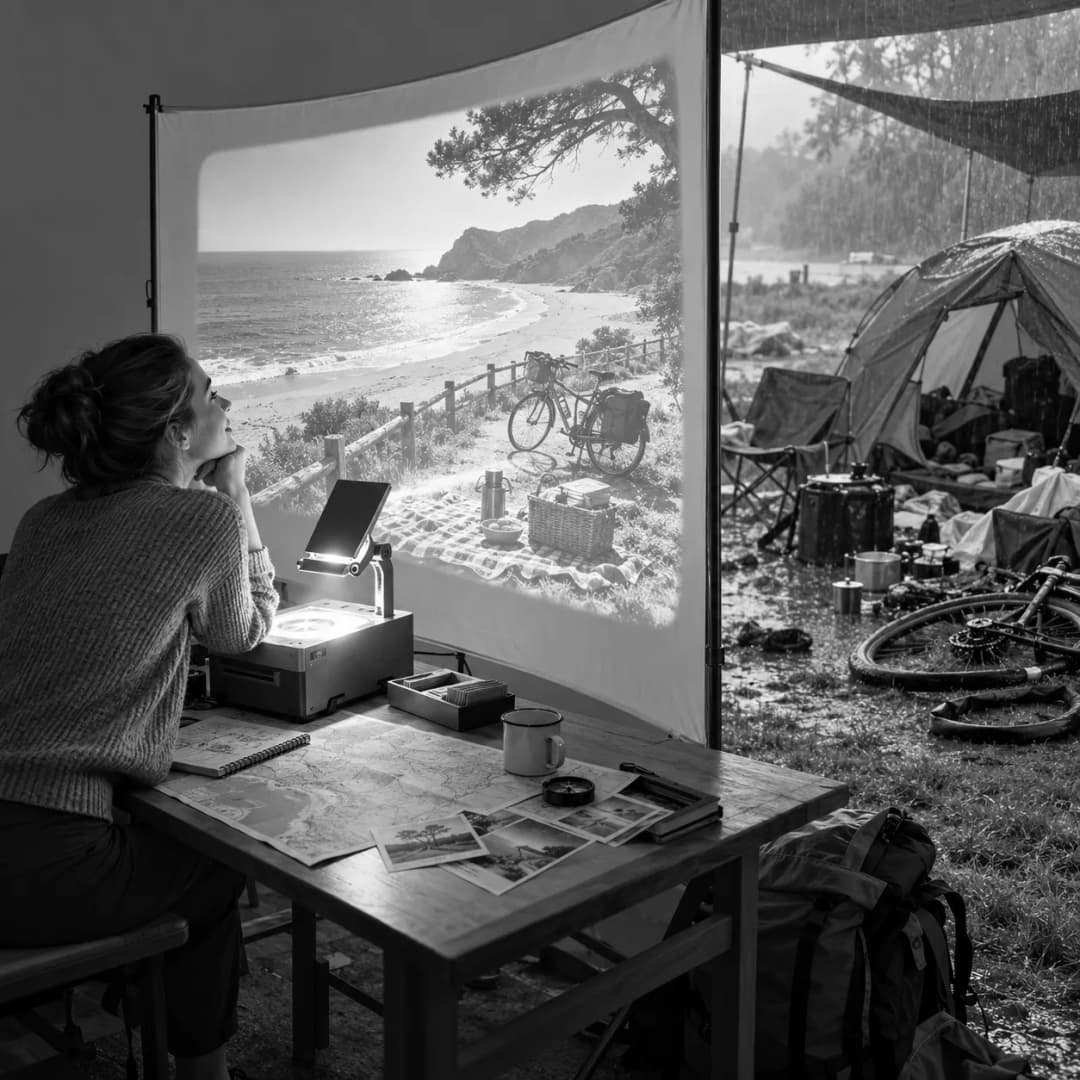
The forward half of the rosy-view finding: expectations of a personal event are more positive than the event as rated while it is happening. The event is the low point of its own life cycle, with anticipation above it on one side and recollection above it on the other. This is the sibling of rosy retrospection rather than a duplicate of it, and it is the half an argument about anticipation needs.
What it is
Terence Mitchell, Leigh Thompson, Erika Peterson and Randy Cronk's 1997 paper in the Journal of Experimental Social Psychology tracked people before, during and after three events: a trip to Europe, a Thanksgiving holiday and a three-week cycling trip in California. In all three, expectations ran more positive than the experience, and recollection ran more positive than the experience. The authors attribute the dip to a rise in negative thoughts during the event, caused by distractions, disappointment and a less positive view of the self, and they note it is short-lived, with people evaluating the event much more positively again within days.
In effect
Partial independent support comes from a spring-break study in which remembered enjoyment exceeded ratings taken at the time and predicted wanting to repeat the trip. Jeroen Nawijn and colleagues' holiday study found that vacationers reported higher pre-trip happiness than non-vacationers, which the authors say is possibly anticipation; it compares groups rather than a person's own before and after, so it is suggestive of an anticipatory benefit rather than a demonstration of one. The practical reading is that the forward view is systematically too favourable, and that the gap closes again almost immediately once the event is over.
What it does not say
No figure may be carried from the original. Sample sizes, measures and effect sizes are not established here, the design is correlational and within-person, and no large replication has been located. It is also not the same claim as anticipation being emotionally intense: Leaf Van Boven and Laurence Ashworth's five experiments found anticipation more evocative than retrospection for positive, negative, routine and hypothetical events alike, mediated by how extensively people mentally simulated the future event, which is a claim about intensity in both directions. Rosy projection is about the sign, that forward views are too favourable, and the two must be kept apart because the intensity result runs in both valences and this one does not.
Sources
- Mitchell, T. R., Thompson, L., Peterson, E., & Cronk, R. (1997). "Temporal Adjustments in the Evaluation of Events: The 'Rosy View'." Journal of Experimental Social Psychology, 33(4), 421-448. Abstract read in full, retrieved from an institutional research record because neither OpenAlex nor Crossref deposits one. Mitchell is first author.
- Van Boven, L., & Ashworth, L. (2007). "Looking forward, looking back: Anticipation is more evocative than retrospection." Journal of Experimental Psychology: General, 136(2), 289-300. Abstract read in full. Van Boven first; the rendering of his forename as an initial in one index is a data error.
- Nawijn, J., Marchand, M. A., Veenhoven, R., & Vingerhoets, A. J. (2010). "Vacationers Happier, but Most not Happier After a Holiday." Applied Research in Quality of Life, 5(1), 35-47. Open access; Nawijn first author. Compares groups rather than a person's own before and after.