Self-Distancing
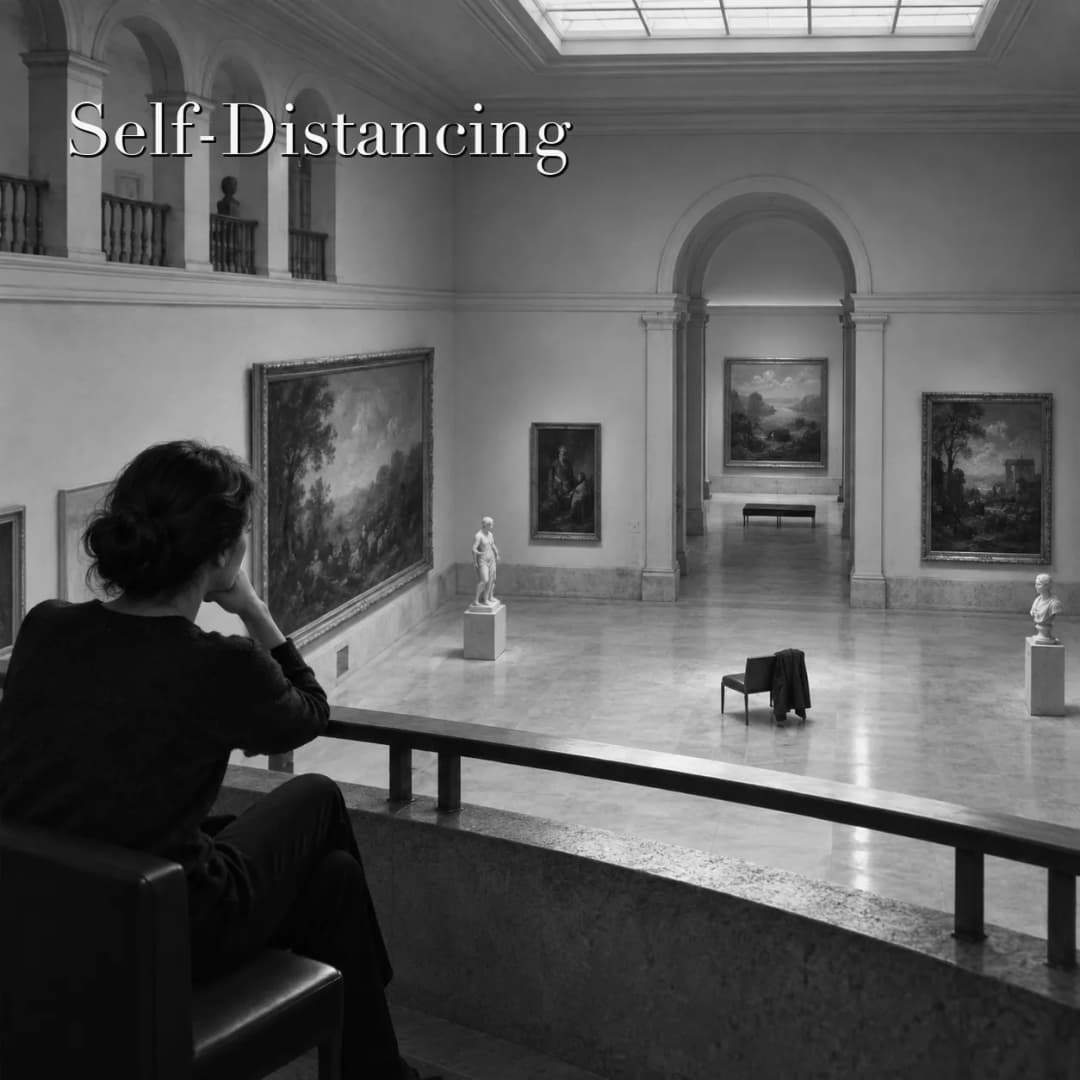
Self-distancing is thinking about your own experience from outside it, as an observer would, rather than from behind your own eyes. It is a change of camera angle, not a change of subject, and it is not distraction or suppression, both of which involve looking away from the thing entirely. It is the one demonstrated lever in this literature: a one-sentence instruction that closed the gap described at Solomon's paradox.
What it is
In the experiments that established Solomon's paradox, people reasoned poorly about their own relationship conflict and well about a friend's. When the researchers asked them to step back and consider their own conflict as an outsider would, the gap disappeared. The instruction was a sentence long and cost nothing, and it produced reasoning of the quality those same people had previously reserved for other people.
The strongest evidence here is experimental rather than correlational, which is unusual in this territory. A manipulation produced a change, rather than two questionnaires agreeing with each other, which is the usual complaint recorded at the self-report problem.
Two things to keep apart. Self-distancing changes who is looking at the feeling. Affect labelling changes what you call it. Popular writing merges the two constantly, and the merge is wrong: they are different manipulations with different signatures and different literatures. Erik Nook and colleagues found that naming an emotion before trying to reframe it made the reframing work worse, which is not something you would predict if the two were the same lever.