Self-Focus Cue
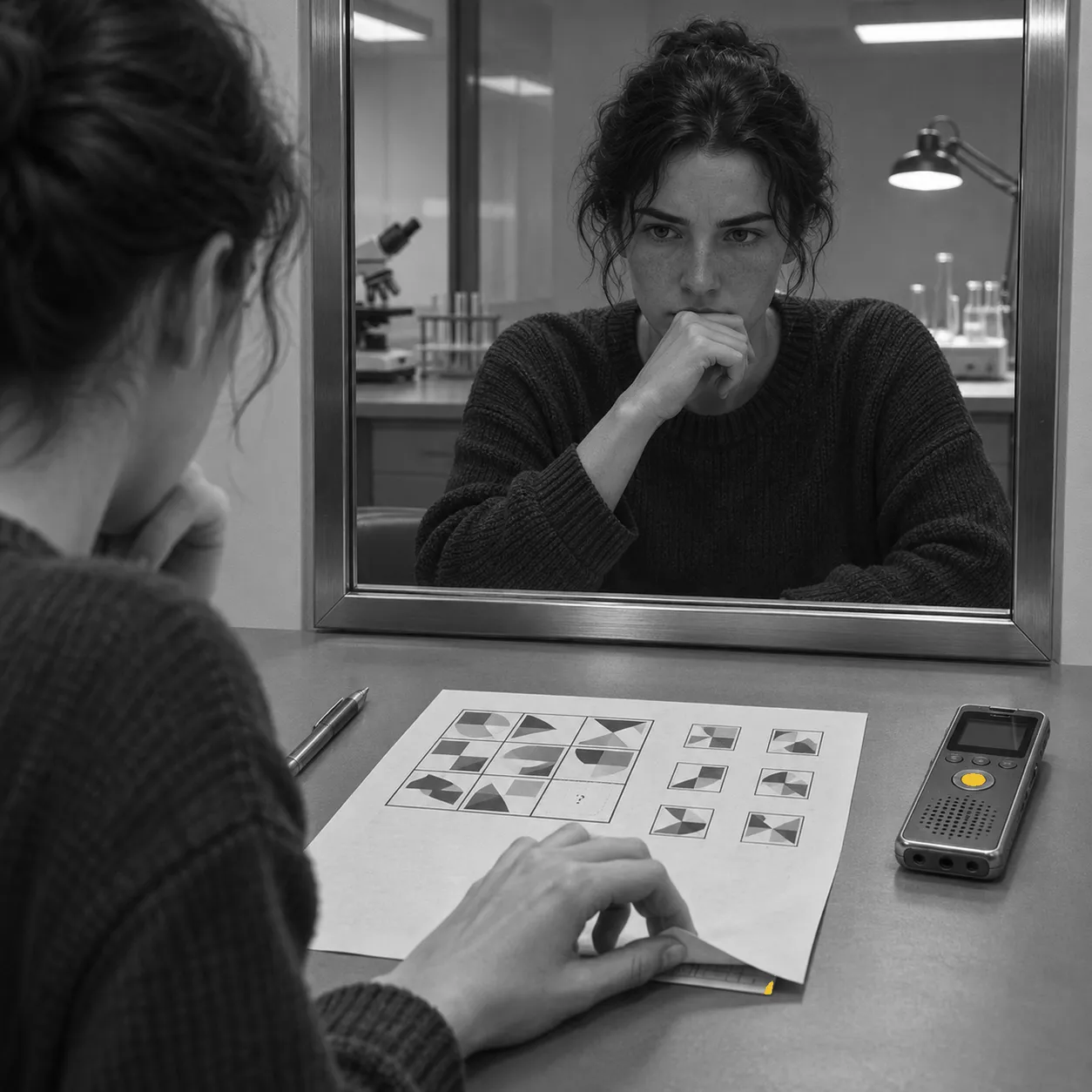
A mirror, a camera or a recording of one's own voice, used to turn a person's attention toward themselves.
What it is
In the 1976 anagram experiment by Diener and Wallbom, a mirror together with a recording of the participant's own voice went with less rule-breaking than a condition with neither.
In effect
A mirror behind a candy bowl on Halloween reduced rule-breaking among children who had given their name and address.
What it does not say
A cue does not work the same way for every person or setting. In the Halloween studies the mirror reduced rule-breaking only among children first identified by name and address, and in later work with participants in Japan a mirror alone had no effect on rule-breaking while an own-voice recording had a partial one.
Sources
- Beaman, A. L., Klentz, B., Diener, E., & Svanum, S. (1979). Self-awareness and transgression in children: Two field studies. Journal of Personality and Social Psychology, 37(10), 1835-1846.
- Diener, E., & Wallbom, M. (1976). Effects of self-awareness on antinormative behavior. Journal of Research in Personality, 10(1), 107-111.
- Narita, A., & Ishii, K. (2020). My voice capturing my attention to myself: The effects of objective self-awareness on Japanese people. Frontiers in Psychology, 11, 1596.