Sensory Processing Sensitivity
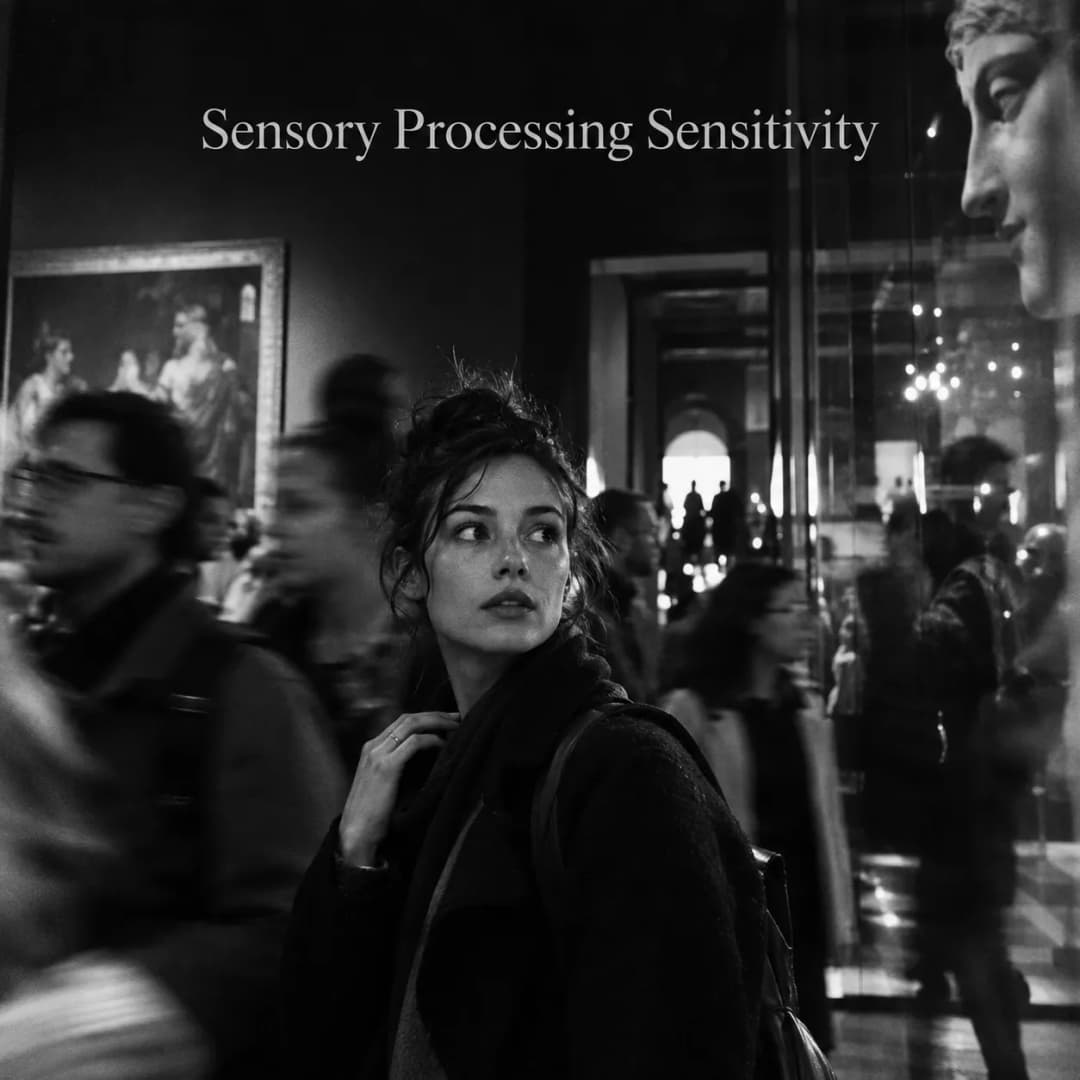
Sensory processing sensitivity is a proposed trait of heightened central-nervous-system sensitivity, popularised under the label highly sensitive person. Elaine Aron originated the construct and coined that label. Four factors are usually given: deep and complex processing of sensory information, regular over-arousal from many simultaneous inputs, strong emotional reactivity and empathy, and heightened awareness of subtle change. The underlying phenomenon is well attested in temperament research. Whether the scale measures it on one dimension is disputed, which is why this page is marked contested.
What it is
The interesting question is not whether some people are more reactive to noise, light and other people's moods. Plainly some are. The question is whether that reactivity is one thing, measurable on one dimension, and different from traits psychology already had.
Credit needs stating because the source this page draws on does not state it. Elaine Aron originated the construct, and she is never named anywhere in the prose of the chapter used here, which dates the concept vaguely to twenty-five years ago and leaves it there. Aron, Aron and Jagiellowicz's 2012 paper sits in that chapter's bibliography and is never brought into the argument. The identification is this publication's. A reader of that chapter alone cannot follow the construct upstream to anybody.
The figure usually printed is that around a quarter of the general population are classified as high on the trait. That is surprising on its face, because a quarter of everybody is not what most readers understand by the word sensitive. In the source used here no study, no sample, no year and no researcher is attached to the figure. It is carried on this page with that caveat and should not be published from this source; anyone wanting it needs the primary scale-development work, opened and read.
In effect
The contest is about measurement, and it has two halves.
The half the secondary source states honestly is the factor structure. The Highly Sensitive Person Scale measures the concept on a single dimension, and there has been considerable debate about whether that dimensional structure holds. May and colleagues, writing in 2022, addressed exactly this, and their paper too sits in the bibliography without being engaged. The debate matters practically rather than technically: a one-dimensional scale that is really measuring two or three things will produce a headline prevalence figure that means nothing, which bears directly on the quarter above.
The half the source does not state is discriminant validity against neuroticism and introversion. That is the same incremental validity question that sinks grit twenty chapters earlier in the same book, and it simply is not asked here. High sensitivity overlaps visibly with both traits, and a construct that adds nothing once they have been measured is a label rather than a trait.
This publication agrees with the measurement critics about the structure of the scale, and holds the underlying phenomenon open. Heightened reactivity is well attested in temperament research. Whether this scale is the right instrument for it is not settled.
One claim in that chapter should be graded separately. It states without hedge that being a highly sensitive person encompasses a person's entire being and identity. That is characterisation presented as finding. It has the grammar of a research conclusion and none of the apparatus, and it also explains a good deal of the label's popularity, since a trait framed as an identity is a trait people will adopt and defend.
What it does not say
It does not say heightened reactivity is not real. Temperament research documents large individual differences in how much a given input costs a person.
It does not establish that a quarter of people are highly sensitive. The figure arrives unsourced in the material read here and depends on a factor structure that is itself disputed.
It does not answer the incremental validity question. The overlap with neuroticism and introversion has not been ruled out, and the source used here does not ask.
It is not an identity, whatever the label implies. The claim that the trait encompasses a person's entire being is an assertion and is graded here as one.
Sources
- Aron, E. N., Aron, A., & Jagiellowicz, J. (2012). In the bibliography of the chapter used here and never engaged with. Aron originated the construct and coined the popular label; the identification is this publication's, not the book's.
- May, A. K., et al. (2022). On the dimensional structure of the Highly Sensitive Person Scale. Also bibliography only in the source used here.
- Furnham, A. The New Psychology, ch. 24. Four factors, the vague dating, the quarter figure and the claim about entire being and identity, all uncited in the prose. Sample sizes, study designs and years are not given anywhere in the chapter.