Shrinkflation
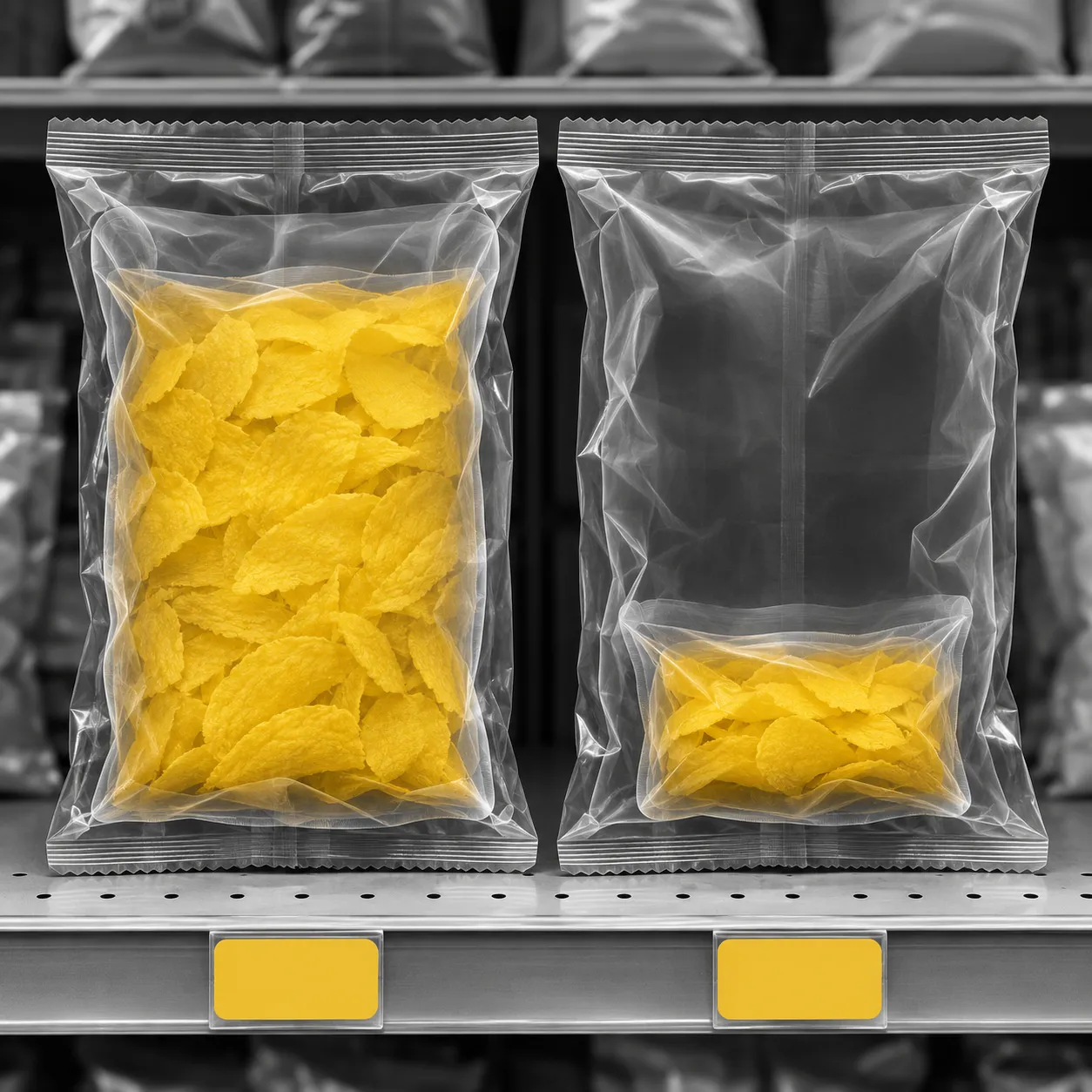
A smaller quantity sold at an unchanged price, which raises the price per measure without changing the ticket.
What it is
Shrinkflation moves the price through the pack instead of the label. Çakır and Balagtas reported in 2014, from household scanner data on bulk ice cream in one city, that shoppers responded to a change in package size about one quarter as strongly as to a change in price. Janssen and Kasinger used a decade of grocery scanner data in 2025 and found that consumers scarcely adjusted demand when per-ounce prices rose through smaller packs.
In effect
In the article on why the same price buys a smaller pack, shrinkflation is the core idea: the change sits in a number shoppers watch less closely than the price.
What it does not say
It does not say shoppers cannot see a smaller pack. Yao, Oppewal and Wang reported in 2020 that when the unit price was shown, choices followed the ticket price and the unit price more than the size.
Sources
- Çakır, M., & Balagtas, J. V. (2014). Consumer response to package downsizing: Evidence from the Chicago ice cream market. Journal of Retailing, 90(1), 1-12.
- Janssen, A., & Kasinger, J. (2025). Shrinkflation and consumer demand. Marketing Science, 45(1), 142-158.
- Yao, J., Oppewal, H., & Wang, D. (2020). Cheaper and smaller or more expensive and larger: how consumers respond to unit price increase tactics that simultaneously change product price and package size. Journal of the Academy of Marketing Science, 48(6), 1075-1094.
- Neal, C. M., Quester, P. G., & Hawkins, D. I. Consumer Behaviour.