Social Goods
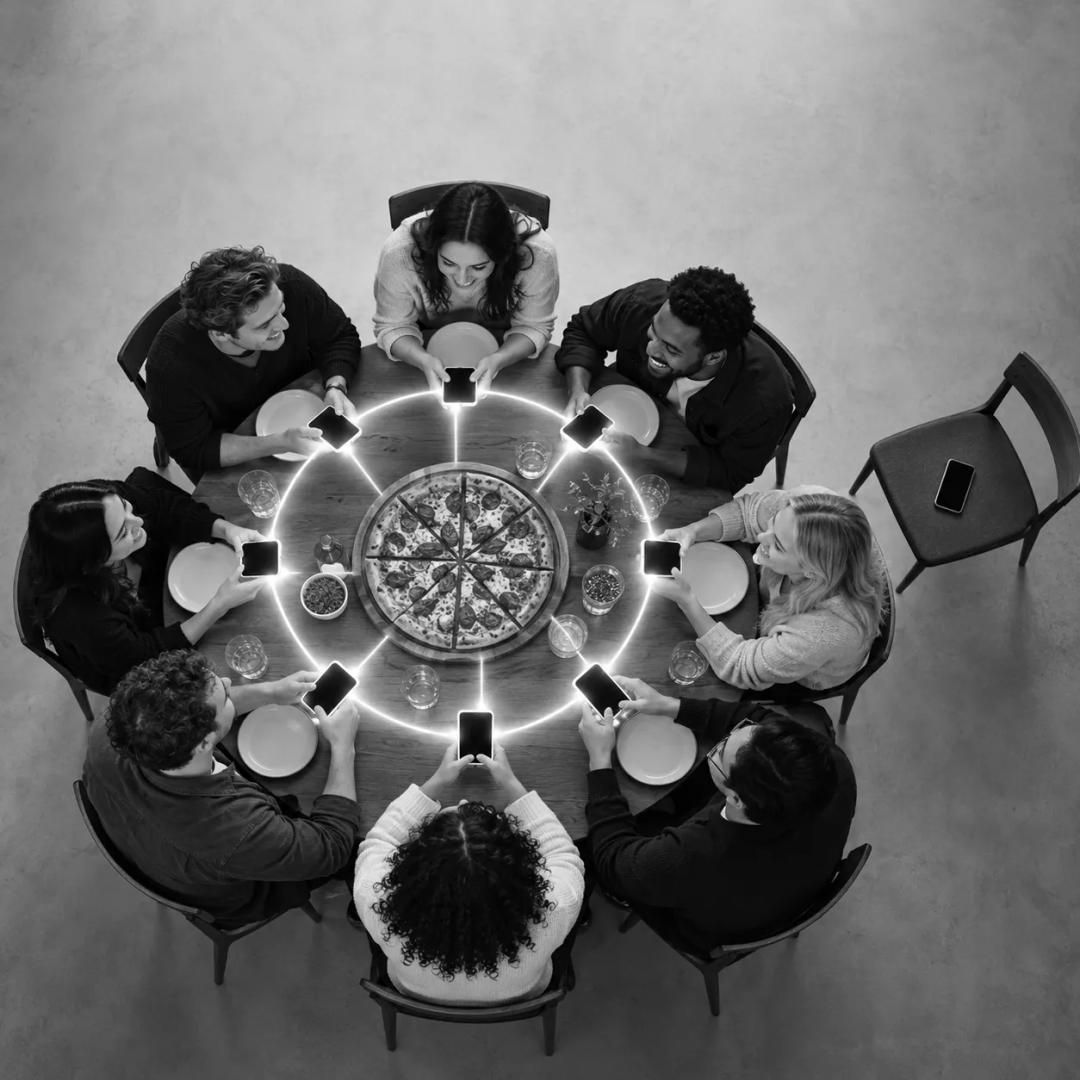
Social goods is Michael Chwe's category for goods usually consumed with people outside the household: the beer, the pizza, the phone that is only worth having if other people have one too. The argument that follows is that advertising such a good has to make the message public rather than merely widespread, because what each buyer needs to know is that everyone else knows as well. Chwe is unusually honest about how little support the definition has, writing that social goods are defined here in a very ad hoc way.
What it is
The evidence is a regression in an unpublished 1998 working paper, and it must be labelled as one. Chwe classified 119 brands advertised on the three major American networks across three months of one television season, eighteen of them social and 101 not, giving 357 monthly campaign observations. The eighteen were Apple Macintosh, IBM hardware, the US Army, Domino's Pizza, Gallo Wines and thirteen beers. Social brands paid roughly twice as much per thousand households and bought larger audiences, and with more than forty demographic categories controlled the premium fell to about a fifth of the base rate.
In effect
The caveat is the author's own and it is the thing to quote. The sample of social goods is dominated by male-oriented products and beer in particular, so, in Chwe's words, there remains the possibility that instead of describing a social good effect he is simply describing a beer drinker effect. He also names his own rival explanation without dismissing it: it is difficult to tell whether somebody buys a good because he expects others to buy it, or more simply because he knows other people have heard of it.
What it does not say
It does not measure sales or persuasion. The outcome is what advertisers were willing to pay per thousand viewers, taken from Nielsen's estimates of slot cost, which are reports from the networks rather than records of transactions. Chwe calls the result more suggestive than definitive because of data limitations, and this page keeps that wording. No Super Bowl data appear in the regressions anywhere; the Super Bowl is the illustration rather than the evidence. And the category itself is not a validated construct: it is a hand-sorted list of eighteen brands, most of them beer.
Sources
- Chwe, M. S.-Y. (1998). 'Believe the Hype: Solving Coordination Problems with Television Advertising.' Unpublished working paper, Department of Economics, University of Chicago, January 1998. Full text read. 119 brands, 357 monthly campaign observations, October 1988, February 1989 and July 1989; outcome is average cost per thousand households from Nielsen slot-cost estimates.
- Chwe, M. S.-Y. (1998). 'Culture, Circles, and Commercials: Publicity, Common Knowledge, and Social Coordination.' Rationality and Society, 10(1), 47-75. doi:10.1177/104346398010001002.
- Chwe, M. S.-Y. (2001). Rational Ritual: Culture, Coordination, and Common Knowledge. Princeton University Press. Paperback reissue with new afterword 2013, doi:10.23943/princeton/9780691158280.001.0001.