Spandrel
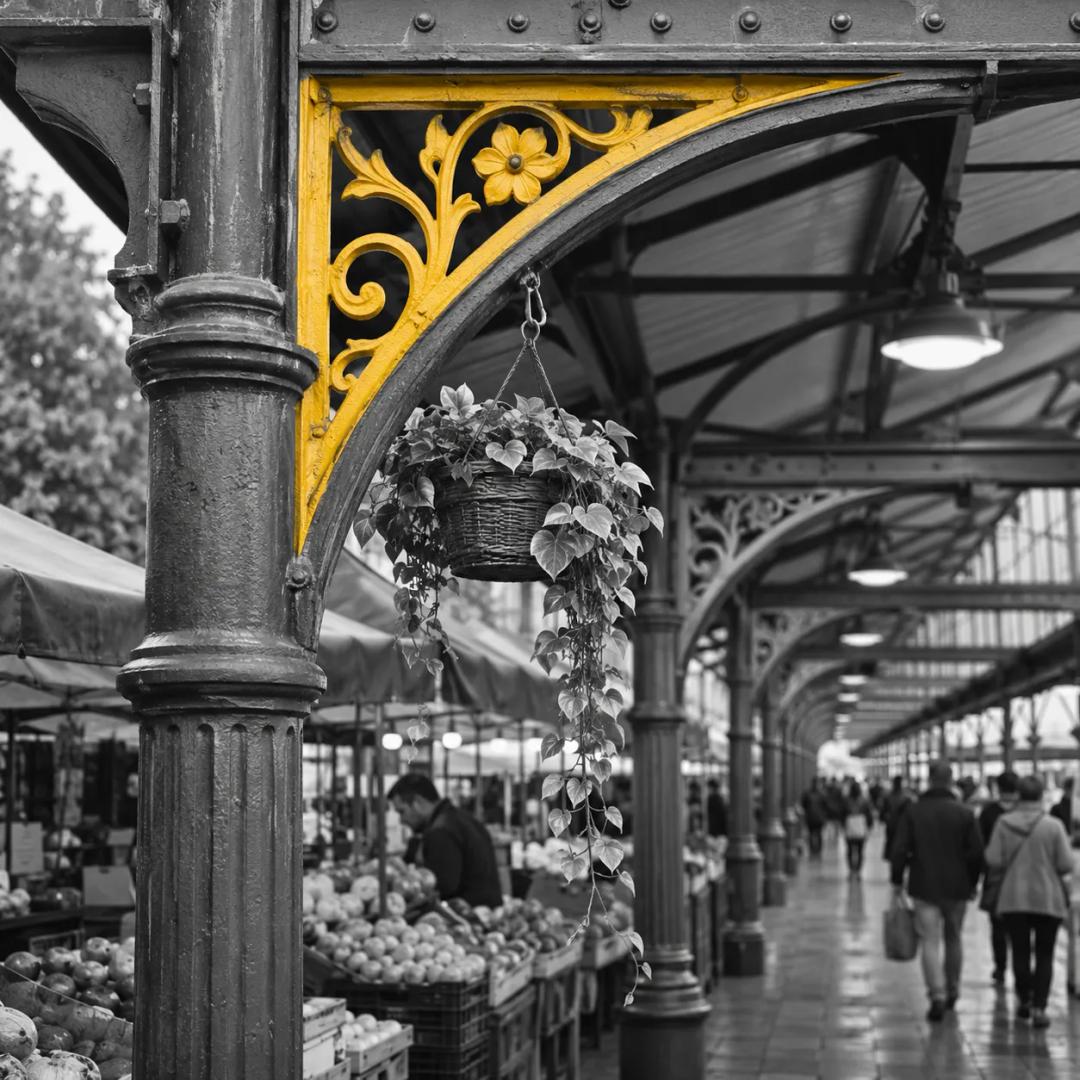
A spandrel is a trait that arises as a by-product of other structures and may later be put to use. Gould and Lewontin took the word from architecture in 1979 to argue that a feature can be useful without having been selected for that use.
What it is
A spandrel is the curved space left where two arches meet. It carries mosaics and decoration, yet it exists because of the arches, not because someone designed a surface for the mosaics. In their 1979 paper, Gould and Lewontin used the image to press biologists to treat by-products and developmental correlations as serious explanations alongside adaptation.
In effect
In the shopping debate the image supports the critics' reading. The pleasure of finding a bargain could be a by-product of capacities that exist for other reasons, and a plausible adaptive story would not distinguish that case from a true adaptation. Whether such a by-product is later recruited for a new job is the question the concept of exaptation addresses.
The evolutionary reader can accept the image and still ask for tests on both sides. A by-product claim is also a claim, and it is open to the same demand for evidence.
What it does not say
The spandrel image does not show that any particular consumer trait is a by-product. It names a possibility that has to be weighed, and the 1979 paper makes that argument for biology in general. Applying it to shopping is our reading.
Sources
- Gould, S. J., & Lewontin, R. C. (1979). The spandrels of San Marco and the Panglossian paradigm: a critique of the adaptationist programme. Proceedings of the Royal Society of London. Series B. Biological Sciences, 205(1161), 581-598. https://doi.org/10.1098/rspb.1979.0086