Status Quo Bias
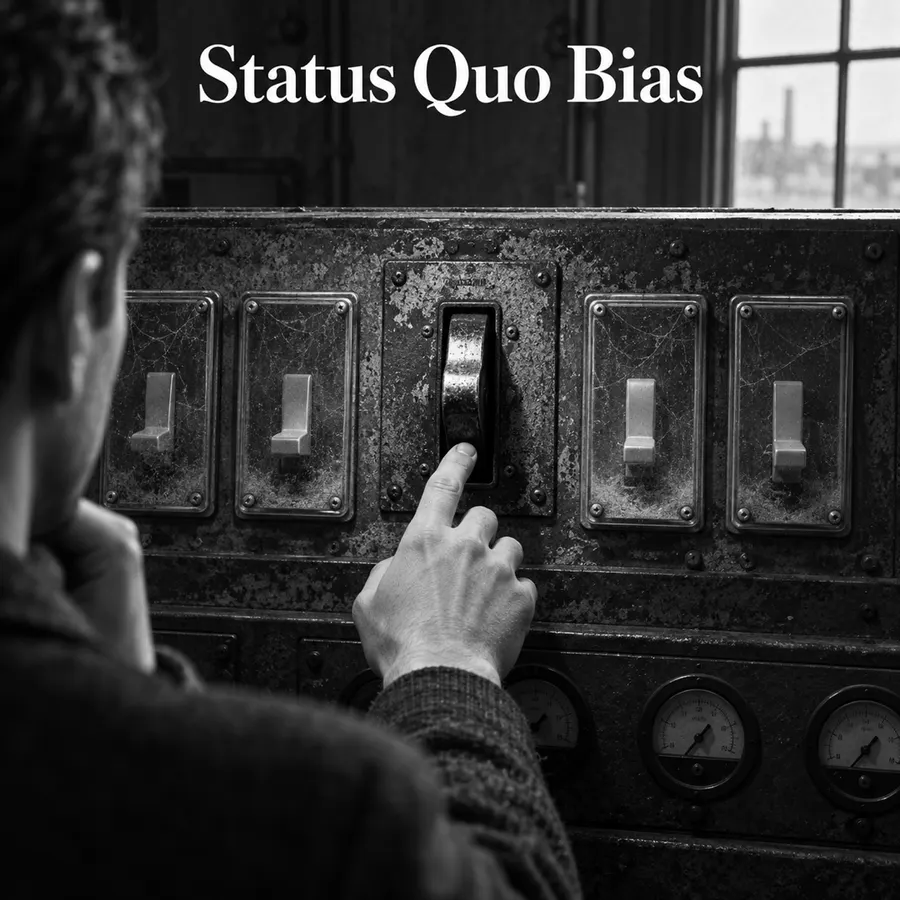
The arrangement already in place is preferred to the alternatives beyond what its merits justify. It is why a default, once set, is so difficult to shift.
What it is
Status quo bias is the disposition to leave things as they are. It is close to the default effect and not the same thing. The default effect concerns the power of the option that arrives pre-selected. Status quo bias concerns the preference for whatever is currently the case, however it got that way.
The two compound. A default sets the current state, and the bias then defends it.
In effect
The setting you have never opened. Not because you examined it and approved of it, but because it was there, it appeared to be working, and changing it would have required a decision.
The practical consequence for anyone choosing is that the effort of changing something is a poor guide to whether it is worth changing. The practical consequence for anyone designing is that what you set on day one is likely to be what most people live with.
What it does not say
This publication has not yet audited the founding literature for this term, so the page carries no originator and no evidence grade. Treat it as a useful description rather than as an established finding, and do not cite it as though this site had checked it.
It does not say that leaving things alone is irrational. Often the existing arrangement is fine, and the cost of reviewing every setting you meet would exceed the benefit. The bias is the gap between how often that is true and how often it is assumed.
Sources
- This page has no verified primary source on this site yet. The concept is described here because it was needed to explain The Default Effect, and the audit is outstanding.
- For the default literature it sits alongside, see Madrian, B. C., & Shea, D. F. (2001). doi:10.1162/003355301753265543
- Where this came from
- No book in this library is the source of this concept. It entered the vault from Why You Never Change the Setting, built from primary sources rather than from a book.