Stimulus Control
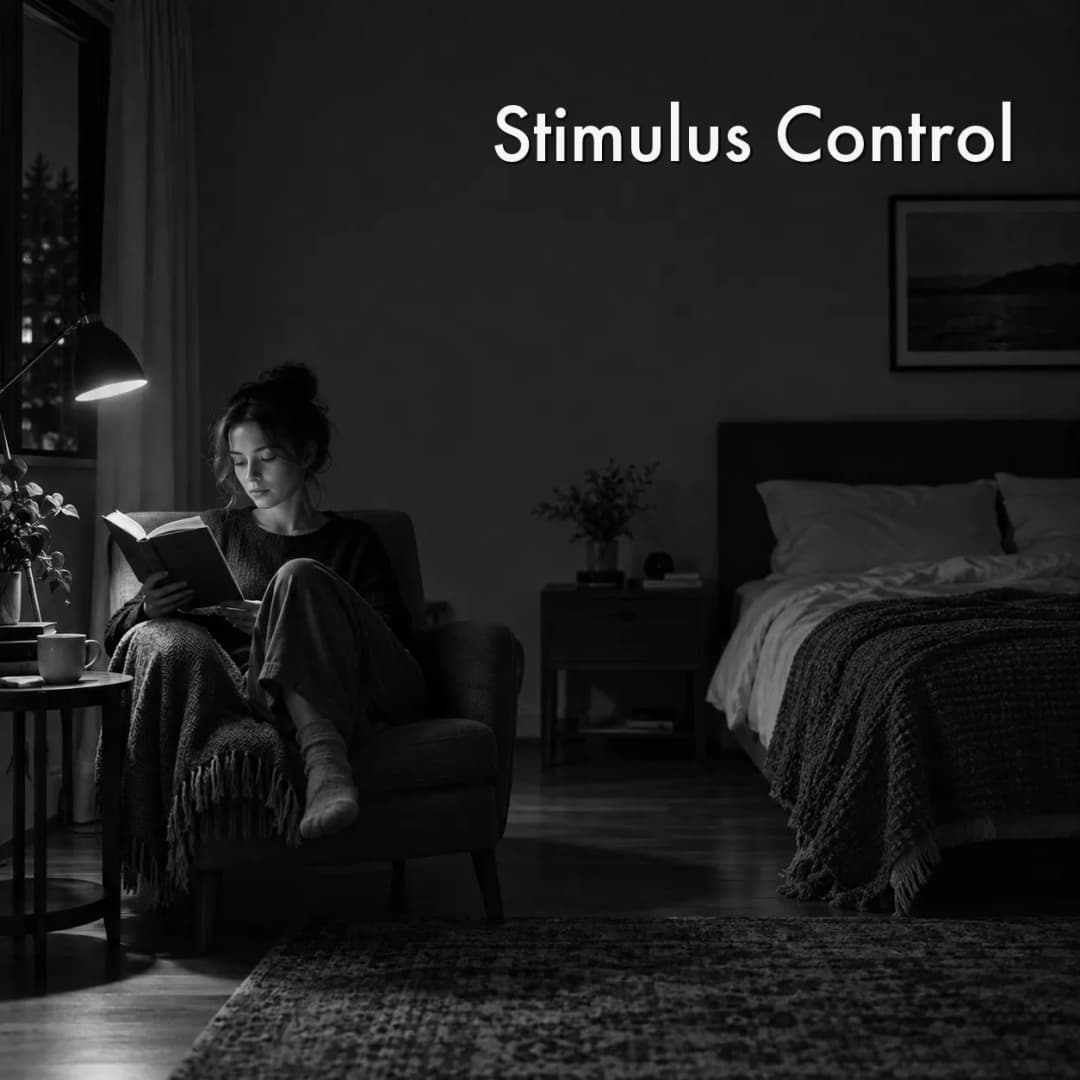
Stimulus control means breaking the learned link between the bed and being awake. The reasoning is ordinary conditioning: spend hours in bed thinking, and the bed stops being a cue for sleep and becomes a cue for thinking. It is one of the best-supported components of the treatment that works for chronic insomnia. The documented threshold for getting up is 30 minutes, not the 20 that circulates online.
What it is
The instructions, as they appear in the guideline literature, are to go to bed only when sleepy, to use the bed for sleep and sex only, and to get out of bed and go to another room if you cannot sleep. The logic is about rebuilding a cue, not about trying harder to sleep, and that difference is the whole point. Effort is the one thing that reliably fails at three in the morning.
A number to get right. The guideline text says 30 minutes. The 20-minute version is repeated everywhere online and no source for it could be found. Where a piece of writing needs the threshold and cannot source it, the honest form is to write it without a number: if you have been lying there a while, get up.
No originator is recorded. The technique is attributed in the literature to the behavioural sleep medicine tradition, and the founding paper was not verified in this pass, so the field is credited and no individual is.
It is constantly confused with sleep hygiene, which is a list of environmental tidying with no demonstrated stand-alone efficacy. Stimulus control is not on that list and does not share its evidence.
In effect
Research: where the support actually sits
Stimulus control and sleep restriction are the components of cognitive behavioural therapy for insomnia with the clearest support, and that therapy is the guideline-recommended first-line treatment for chronic insomnia, ahead of medication. The evidence status here is robust as a component, within the treatment it belongs to, rather than as a technique somebody applies on their own from an article.
The learning principle underneath
This is operant conditioning applied to a room. A cue that has been paired with one behaviour often enough starts to produce it. Lying awake in bed pairs the bed with wakefulness, and the technique breaks the pairing by refusing to let the two keep company. The same logic applied outside the bedroom has no page on this site yet.
Not prescriptive here
This page describes a technique used inside a structured treatment delivered by a clinician. Sleep restriction in particular is not something to attempt from an article. Anyone meeting the pattern described at insomnia disorder should be pointed at a GP rather than at a list.
What it does not say
It does not say 20 minutes. That figure is unsourced and is not printed on this site.
It does not carry evidence as a stand-alone self-help instruction. The support is for the component inside the treatment.
It does not make the bedroom the cause of insomnia. The learned association is one contributor. Pre-sleep cognitive arousal is a separate and better-measured one.
It is not a plan. Describing a clinical technique is not recommending it, and this pillar keeps that line. See YMYL.
Sources
- American Academy of Sleep Medicine, behavioural and psychological treatments guideline for chronic insomnia. Stimulus control and sleep restriction identified as supported components; the get-out-of-bed threshold given as 30 minutes.
- The 20-minute figure is unsourced. It is recorded here only so that its absence is deliberate rather than accidental.
- Vault verification record, 2026-09-11. Evidence status robust as a component. No originator recorded.
- Where this came from
- No book in this library is the source of this concept. It entered the vault from Why You Lie Awake at 3am, built from primary sources rather than from a book.