Strategic Self-Deception
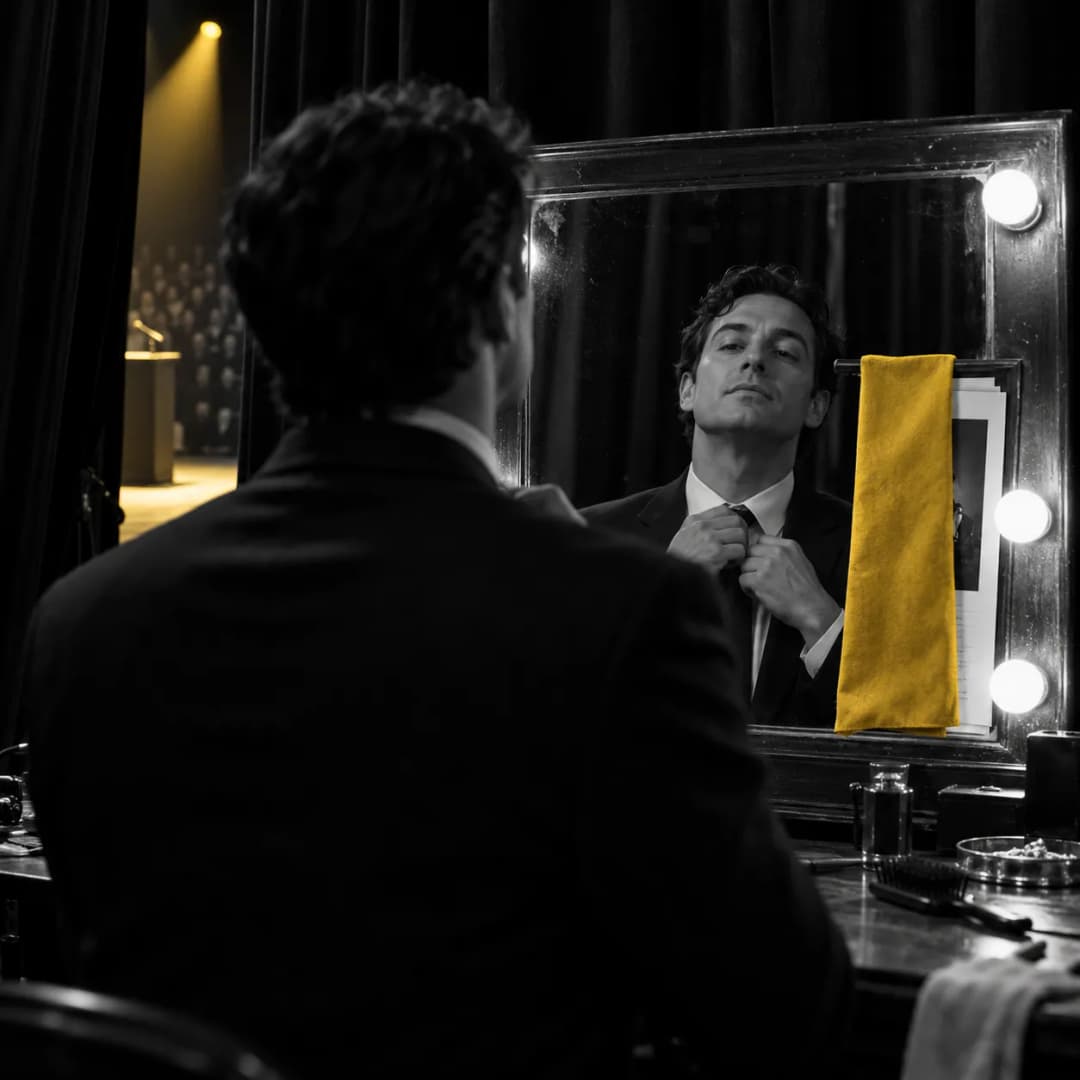
Strategic self-deception is a proposal by Robert Trivers: that people deceive themselves in order to deceive others better. William von Hippel developed it with him. A speaker who believes the story leaks fewer of the cues that give a conscious liar away. Two experiments reported in 2019 and 2020 found that people who expected to persuade became more confident about their own performance. The incentive effect is shown. Whether evolution built self-deception for that purpose is argued, and the evidence status is mixed.
What it is
The older view treats self-deception as protection for the ego: a person who cannot face a fact stops looking at it. The strategic view turns the direction round. Trivers argued that self-deception evolved to make interpersonal deception more effective. The 2011 article that sets this out, in Behavioral and Brain Sciences, was written with von Hippel. By hiding the truth from the self, a person hides the cues that could reveal a conscious lie, lowers the cognitive load of lying, and can limit retribution if the lie is discovered. Self-enhancement, in their account, lets people appear more confident than the evidence warrants, and confidence brings social advantages.
The article proposes that the self can be both the one misled and the one misleading through dissociations between conscious and unconscious memories, between conscious and unconscious attitudes, and between automatic and controlled processes. The article surveys types of self-deception, its interpersonal and intrapersonal aspects and the levels of consciousness at which it operates, and it considers its costs.
The Elephant in the Brain (2018, Chapter 5, pp. 73 to 89), by Kevin Simler and Robin Hanson, gives the idea a picture. Trivers's line "We deceive ourselves the better to deceive others" is quoted at pp. 74 and 80. A general who erases a blocking mountain range from his map feels relief, but the enemy still surrounds him, and he loses to a general who did not (pp. 76 to 77). If comfort were the aim, the authors say, a brain could be built to feel less anxious, and distorting the map is a "sloppy hack" (p. 76). The book's answer to why a brain would do it anyway is an audience.
In effect
The theory predicts that people who expect to need persuading should hold more inflated beliefs about themselves than people who do not. Two experiments tested that prediction.
Peter Schwardmann and Joël van der Weele reported two experiments, with 688 participants combined, in Nature Human Behaviour in 2019. After a difficult task, half of the participants were told they could earn money by convincing a partner, in a brief face-to-face exchange, that they had performed better. Their private beliefs were significantly more overconfident than those of the control group. The authors then used a noisy feedback signal to raise some participants' confidence, and the boost made those participants more persuasive in later interactions. A press release from LMU Munich describes a study of this kind, with 288 participants, as an IQ test followed by a conversation in which the counterpart had to identify and reward the best performers. It reports that participants given positive feedback became more confident and did better in the conversation, which the release attributes to a more positive verbal self-assessment and more engaging body language.
Alice Soldà, Changxia Ke, Lionel Page and von Hippel published a related design in Experimental Economics in 2020. Participants were paid either for forming accurate beliefs about their test performance or for convincing others that they had performed well, and the researchers varied how much participants could learn about their results. Those who expected to persuade overestimated their performance more and, given the chance, biased their information search toward more positive feedback. The authors report suggestive evidence that the higher confidence made participants more persuasive.
What it does not say
It is not a replication casualty and should not be filed as one. It is a framework, and a framework is judged on coherence and on what it predicts. The incentive effect is supported by the two experiments above. The evolutionary claim, that selection built self-deception for the purpose of persuasion, is not something those experiments can show.
A rival reading predicts the same movement in confidence. The philosopher Alfred Mele, in Self-Deception Unmasked (Princeton University Press, 2001), argues that it is a mistake to treat self-deception as a trick one part of the mind plays on another with intent. Motivation and emotion can bias how a person assesses evidence for a belief without the person knowing, and no inner trickster is needed. The biased information search reported by Soldà and colleagues is the kind of behaviour such an account expects. That is a reading of the two literatures side by side, not a finding of either.
Neil Van Leeuwen, in Philosophical Psychology in 2007, criticised Trivers's adaptationist account and proposed that self-deception is a spandrel, in the sense of Gould and Lewontin: a byproduct of other features of human cognitive architecture. In a commentary in the same issue as the 2011 article, Ryan McKay, Danica Mijović-Prelec and Drazen Prelec argued that the evolutionary view overlooks the subjective moral costs of fooling oneself and the question of how credible self-deceptive statements are. They proposed a self-signalling interpretation, in which the audience is the self. The article's authors answered the commentaries in a response, "Reflections on self-deception" (pages 41 to 56), concluding that the ten major questions raised did not compel major modifications to their theory.
The label that fits is theoretically motivated and empirically underdetermined. The phenomena it builds on, motivated attention, motivated memory and rationalisation, are real. The function laid over them is Trivers's.
Sources
- von Hippel, W., & Trivers, R. (2011). The evolution and psychology of self-deception. Behavioral and Brain Sciences, 34(1), 1-16. doi:10.1017/S0140525X10001354. Abstract and publisher record.
- von Hippel, W., & Trivers, R. (2011). Reflections on self-deception. Behavioral and Brain Sciences, 34(1), 41-56. doi:10.1017/S0140525X10003018. Abstract and publisher record.
- Schwardmann, P., & van der Weele, J. (2019). Deception and self-deception. Nature Human Behaviour, 3(10), 1055-1061. doi:10.1038/s41562-019-0666-7. Abstract via the RePEc record, with design details from the LMU Munich press release.
- Soldà, A., Ke, C., Page, L., & von Hippel, W. (2020). Strategically delusional. Experimental Economics, 23(3), 604-631. doi:10.1007/s10683-019-09636-9. Abstract via the RePEc record.
- McKay, R., Mijović-Prelec, D., & Prelec, D. (2011). Protesting too much: Self-deception and self-signaling. Behavioral and Brain Sciences, 34(1), 34-35. doi:10.1017/S0140525X10002608. Abstract.
- Mele, A. R. (2001). Self-Deception Unmasked. Princeton University Press. Publisher description.
- Van Leeuwen, N. (2007). The spandrels of self-deception: Prospects for a biological theory of a mental phenomenon. Philosophical Psychology, 20(3), 329-348. Abstract.
- Simler, K., & Hanson, R. (2018). The Elephant in the Brain: Hidden Motives in Everyday Life. Oxford University Press. Chapter 5, pp. 73-89, taken from the vault's audited book notes.