Stress Reduction Theory
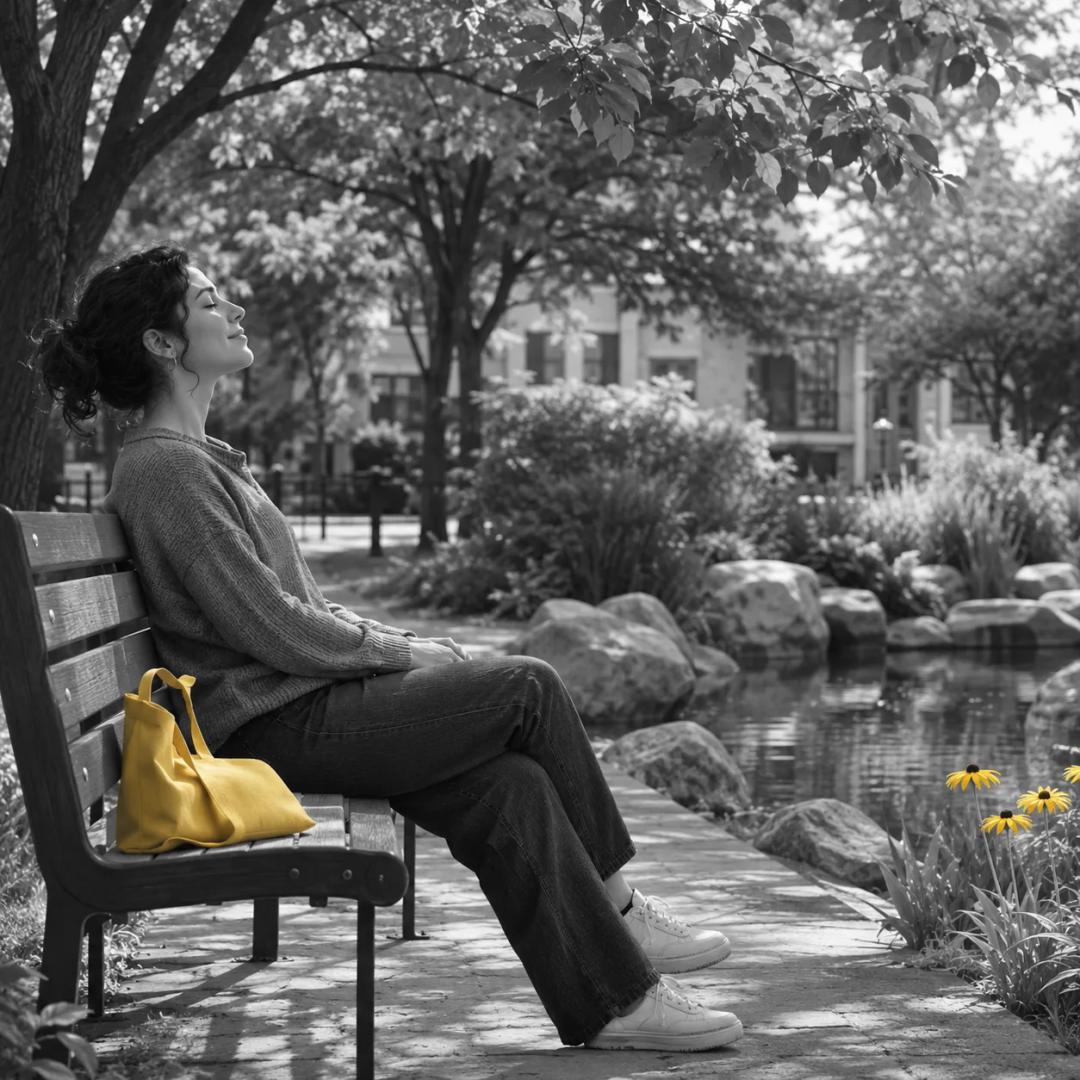
Stress reduction theory is a psycho-evolutionary account of why natural scenes can lift mood. It holds that unthreatening natural settings prompt a quick shift towards a calmer, more positive emotional state, ahead of deliberate thought.
What it is
Roger Ulrich and colleagues set the theory out in a 1991 paper in the Journal of Environmental Psychology. The core claim is about order of events. A natural scene is read quickly as safe and undemanding, and that reading changes feeling before any careful thinking about the scene begins. The word psycho-evolutionary signals the underlying idea that human responses to settings carry a long history, so the response is treated as fast and general rather than learned one setting at a time.
The study behind it used 120 participants. They first watched a stressful film. They then watched a colour and sound videotape of one of six settings, some natural and some urban. Self-rated feelings and physiological measures, namely heart period, muscle tension, skin conductance and pulse transit time, were taken during recovery.
In effect
Recovery was faster and more complete after the natural settings than after the urban ones. The authors also noted that the responses suggested a parasympathetic component with natural settings that was absent with urban ones.
The paper also bears on a rival account. Both the stressful film and the natural scenes held involuntary attention strongly. If fascination alone restored people, the film should have helped as much as the scenes did. The authors read this as challenging the view that restoration comes from involuntary attention, and as favouring an emotional route.
In Why a Walk Among Trees Lifts Your Mood, the theory is set beside attention restoration theory. Stress reduction theory says natural scenes shift emotion directly. Attention restoration theory says they rest the effort of concentrating. The article notes that studies support parts of both.
What it does not say
The 1991 evidence is from videotapes of settings, not from walks, so it speaks to viewing rather than to being outdoors. It does not settle the question against attention restoration theory, and later studies cited in the article, such as walking and picture experiments on directed attention, fit the other account. The theory describes shifts in feeling and in physiological measures in a laboratory. This page makes no health or clinical claim.
Sources
- Ulrich, R. S., Simons, R. F., Losito, B. D., Fiorito, E., Miles, M. A., & Zelson, M. (1991). Stress recovery during exposure to natural and urban environments. Journal of Environmental Psychology, 11(3), 201-230.https://doi.org/10.1016/S0272-4944(05)80184-7