The Aesthetic Triad
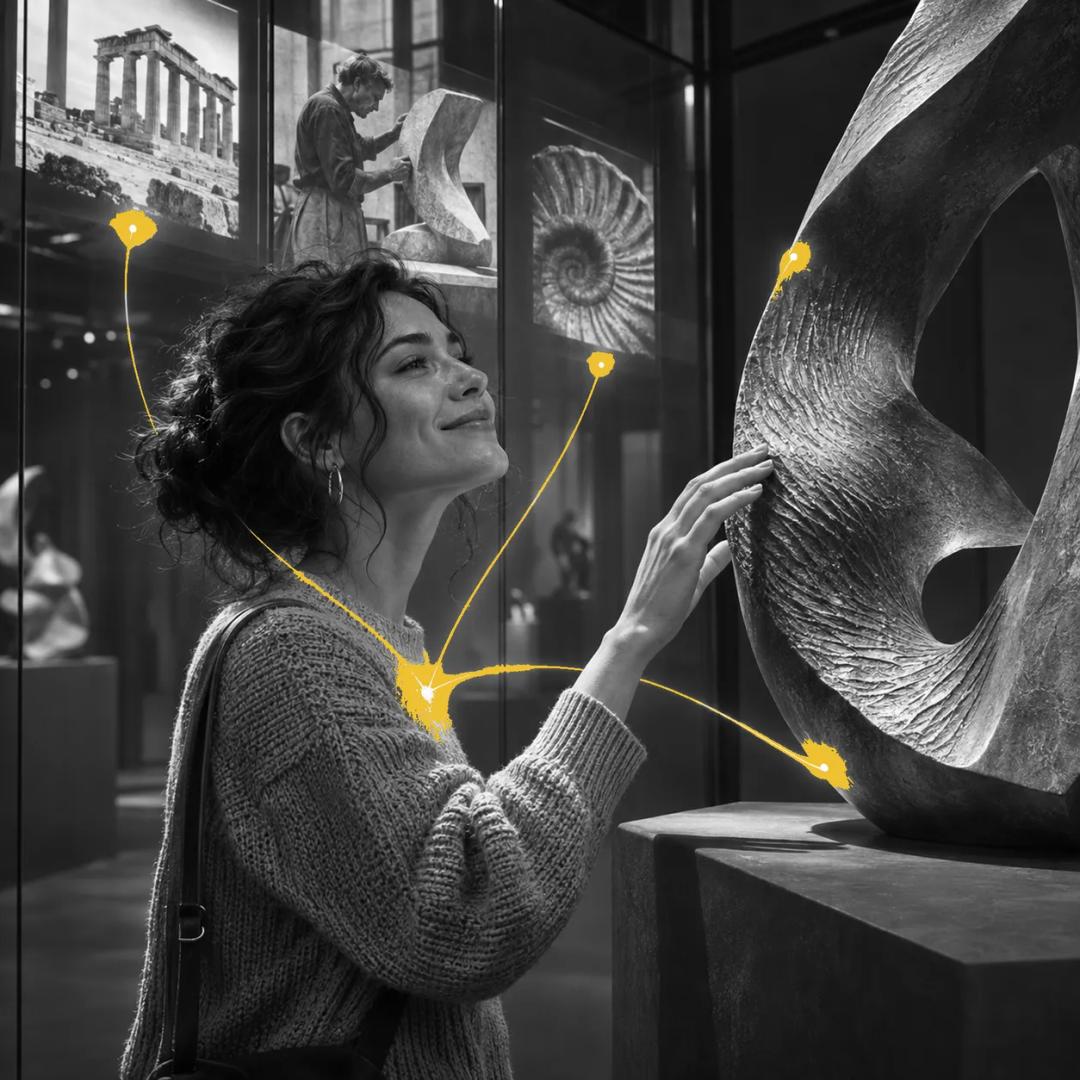
The aesthetic triad is a three-part account of aesthetic experience drawing on sensory, reward and meaning-making systems at once. It is described in Your Brain on Art by Susan Magsamen and Ivy Ross.
What it is
The aesthetic triad is a three-part account of aesthetic experience. It holds that an encounter with a work of art arises from three interacting systems and not from a single centre for beauty. Sensorimotor systems take in what is seen, heard and felt, including the body's simulation of what is perceived. Reward systems respond with liking, wanting and emotional valuation. Knowledge and meaning-making systems bring what a person already has: expertise, context, culture and expectation. The experience of a work is the product of the three working together.
The framework is associated with the neuroscientist Anjan Chatterjee, who set it out with Oshin Vartanian in a 2014 paper on neuroaesthetics. Susan Magsamen and Ivy Ross describe it for general readers in Your Brain on Art.
In effect
In the article on why we like sad films, the triad is a frame for how an image, a pleasure and a meaning combine in one scene. A sad scene can be seen, can reward and can mean something, all at once. The application to a sad scene is the article's interpretation.
An example in the framework's spirit: two people stand in front of the same painting. What they see is close to identical. The reward they take may differ. What they know about the period, the painter and the subject can differ greatly. On the triad, the experience is the product of all three, so there is no single answer to the question of what a painting does to the brain.
What it does not say
It does not make a testable claim about sad films, and it is not a finding from one study. It is a way of organising an experience, used here to show that enjoyment and meaning can arrive together. It cannot be used to license any specific intervention. A three-system framework does not tell a reader that a particular room, song or painting will do a particular thing to a particular person.
Where it comes from
Chatterjee and Vartanian's 2014 paper in Trends in Cognitive Sciences, Neuroaesthetics, is the source usually cited for the triad. The book Your Brain on Art brought it to a wider audience and describes it as theoretical. Chatterjee, who directs the Penn Center for Neuroaesthetics, declines in the book to universalise the account. He points out that human artefacts have existed in their present form for only a few thousand years, against the long period in which brains evolved, so the arts show nothing like the consistency of perception found in, for example, face perception.
What the research found
The triad is a theoretical model and not a measured effect, so no single result supports it. It organises findings from vision science, the study of reward and the study of memory and knowledge. Its main practical use is to dissolve a question the field has struggled with, whether beauty has a place in the brain. The model answers that it does not, and should not be expected to. The field continues to debate that question, which makes the triad a live position and not a settled one.
Where opinion differs
The triad takes the position that aesthetic experience can be explained by general systems working together and does not need a system specific to art. The field is still debating whether beauty has a place of its own in the brain, and the book records that debate as open. The reward component is also described in different ways: the book uses a general term, while research on wanting and liking separates the two, and this site covers that distinction under wanting versus liking. Both positions are reported here without ranking.
How this site uses it
The Why We Project uses the triad in its piece on why we like sad films, as a frame and not as evidence. It sits beside the measured finding on being moved and does not replace it.
Sources
- Magsamen, S. and Ross, I., Your Brain on Art.
- Chatterjee, A. and Vartanian, O. (2014), Neuroaesthetics, Trends in Cognitive Sciences.