The Attractiveness Premium
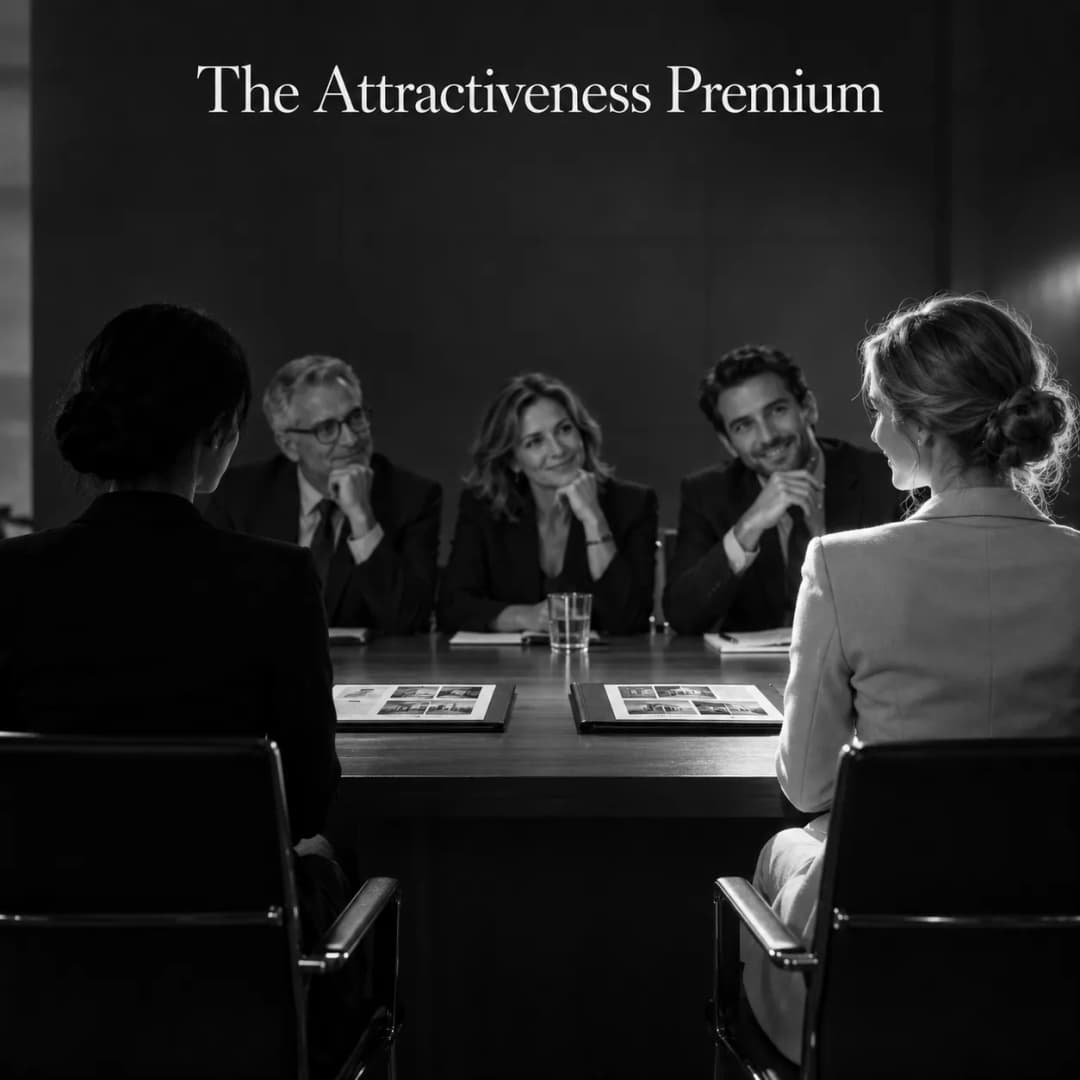
The attractiveness premium is the systematically better treatment physically attractive people receive across situations that have nothing to do with appearance. It is the applied face of the beautiful-is-good bias: an impression formed in a fraction of a second spreads into judgements about intelligence, warmth, competence and trustworthiness, and then into decisions with money and status attached. The premium is real. Its size is where the arguments are, and the source this page draws on overstates it.
What it is
The catalogue of the premium in ordinary life is the useful part of the account. Attractive people are given more personal space. They win more arguments. They are trusted with secrets more often. They are judged more intelligent, happier and more successful. They are assumed to have a better personality. They are more likely to marry, and more easily forgiven. And they reach better jobs and higher incomes.
That list should be read as a set of directions rather than a set of findings. In the source this page draws on, no study is attached to any item on it.
Attribution has to be flagged. The chapter calls this one of the most ubiquitous findings and says such studies leave us in no doubt, and it credits nobody at all. Not one researcher, year or paper appears against any claim in the section. The beautiful-is-good bias is standardly credited to Karen Dion, Ellen Berscheid and Elaine Walster in 1972, and that identification is this publication's rather than the book's. It is recorded here so the chain can be followed, not so it can be cited from this page; anyone using it needs the primary paper.
The underlying mechanism is the halo effect, with appearance as the first observed feature and everything else inferred from it.